


A pilot randomized controlled trial of hearing aids to improve mood and cognition in older adults
- PMID: 32291802
- PMCID: PMC7656495
- DOI: 10.1002/gps.5311
A pilot randomized controlled trial of hearing aids to improve mood and cognition in older adults
Abstract
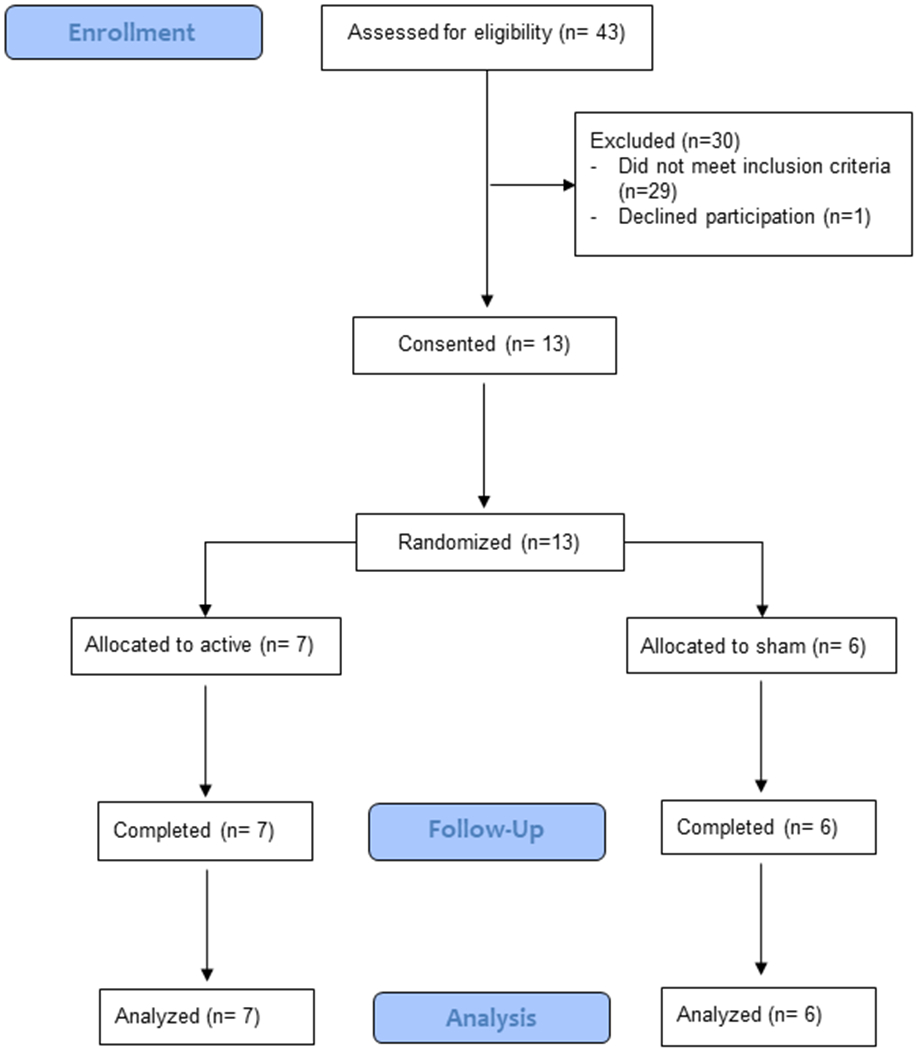
Objectives: Age-related hearing loss (ARHL) is a prevalent condition associated with increased risk for depression and cognitive decline. This 12-week prospective, double-blind pilot randomized controlled trial (RCT) of hearing aids (HAs) for depressed older adults with ARHL evaluated the feasibility of a novel research design.
Methods/design: N = 13 individuals aged ≥60 years with Major Depressive Disorder or Persistent Depressive Disorder and at least mild hearing loss (pure tone average ≥ 30 dB) were randomized to receive full- (active) vs low-amplification (sham) HAs added to psychiatric treatment as usual. Duration of HA use in hours/day, adverse events frequency, attrition rate, and maintenance of the study blinding were the primary outcome measures.
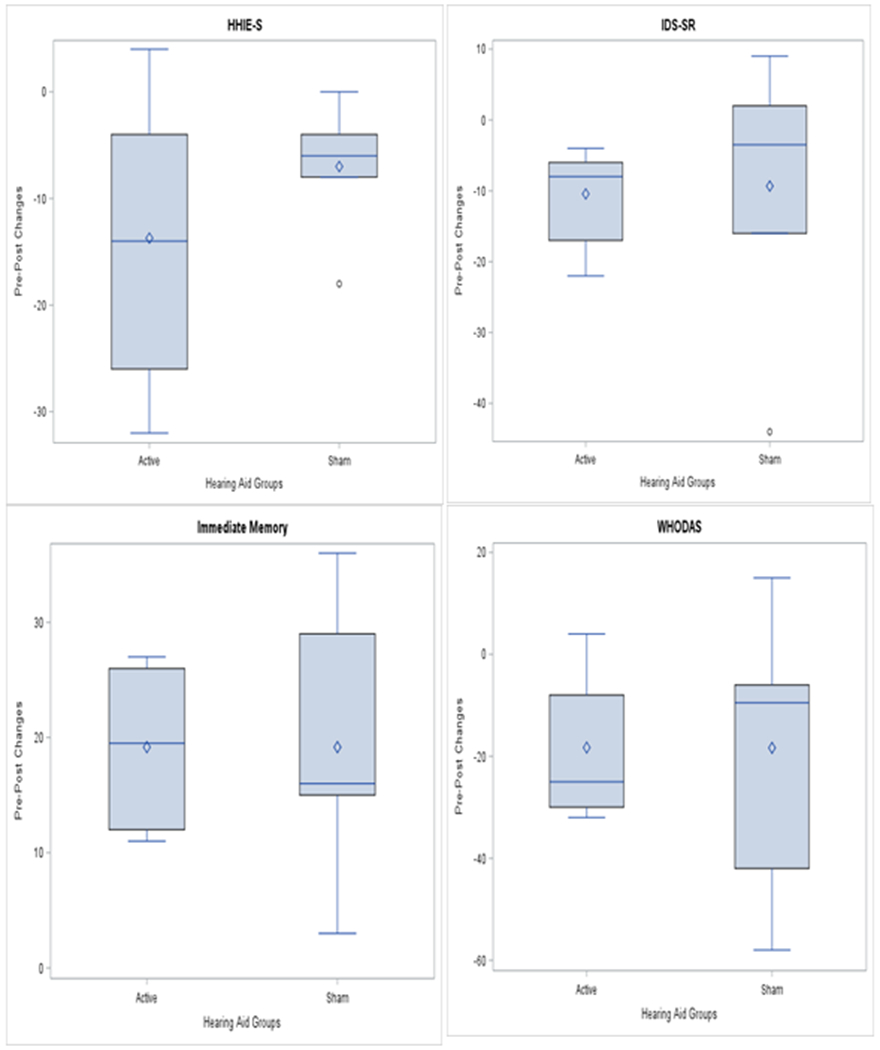
Results: Compliance with HAs was excellent (>9 hours/day for both groups) and rates of adverse events and drop-outs did not differ between groups. Preliminary data demonstrated differential improvement for active vs sham HAs on hearing functioning (Hearing Handicap Inventory for the Elderly [nonparametric effect size (np-ES) = 0.62]), depressive symptoms (Inventory for Depressive Symptomatology [np-ES = 0.31]), cognition (Repeatable Battery for the Assessment of Neuropsychological Status Immediate Memory [np-ES = 0.25]), and general functioning (World Health Organization Disability Assessment Schedule [np-ES = 0.53]). Significantly greater than 50% of both groups correctly guessed their treatment assignment, indicating incomplete concealment of treatment allocation.
Conclusions: This pilot RCT for ARHL and late-life depression was feasible to execute and showed clinical promise, but improved methods of blinding the experimental treatments are needed. Larger studies should investigate whether hearing remediation may be an effective preventative and/or therapeutic strategy for late-life depression and cognitive decline.
Keywords: cognitive impairment; depression; hearing aids; hearing loss.
© 2020 John Wiley & Sons Ltd.
Figures
References
-
- Collins JG: Prevalence of selected chronic conditions: United States 1990–1992. Vital Health Statist 10 1997; 194:1–89. - PubMed
-
- Cooper JC, Gates GA: Hearing in the elderly—the Framingham cohort, 1983–1985: Part II. Prevalence of central auditory processing disorders. Ear Hear 1991;12(5):304–11. - PubMed
Publication types
MeSH terms
Grants and funding
LinkOut - more resources
Full Text Sources
Medical
Miscellaneous
