Ultrastructural and Echocardiographic Assessment of Chronic Doxorubicin-Induced Cardiotoxicity in Rats
- PMID: 32292003
- PMCID: PMC8410154
- DOI: 10.22092/ari.2019.116862.1177
Ultrastructural and Echocardiographic Assessment of Chronic Doxorubicin-Induced Cardiotoxicity in Rats
Abstract
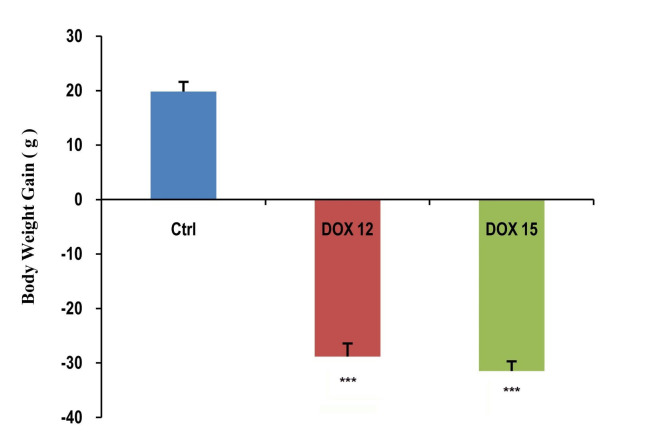
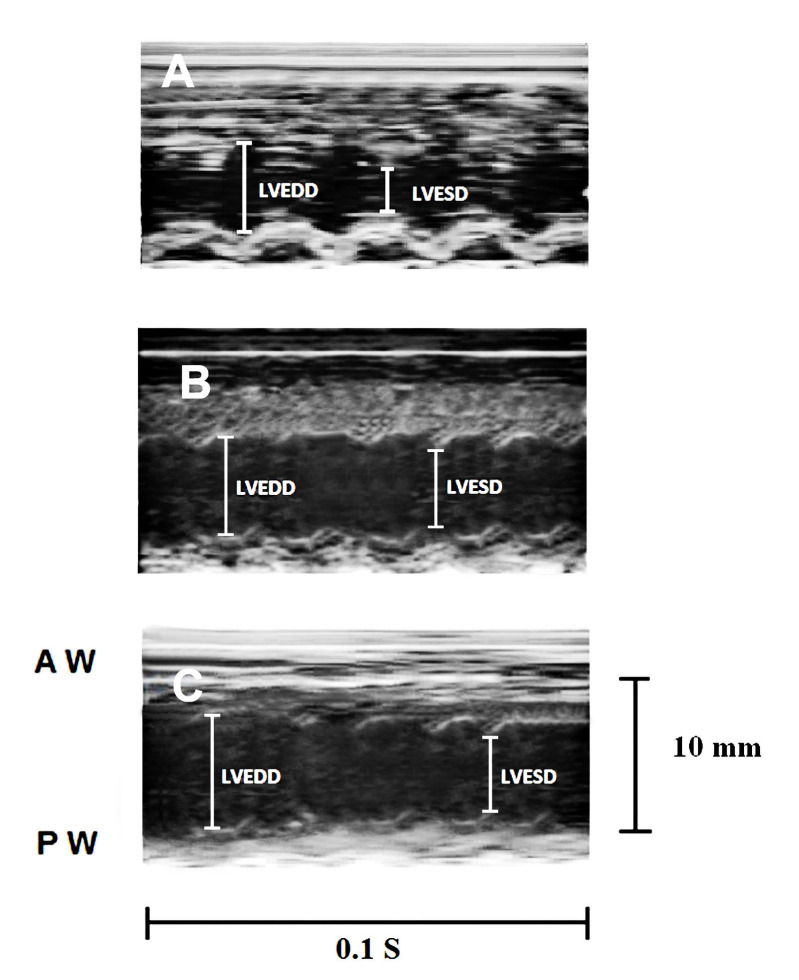
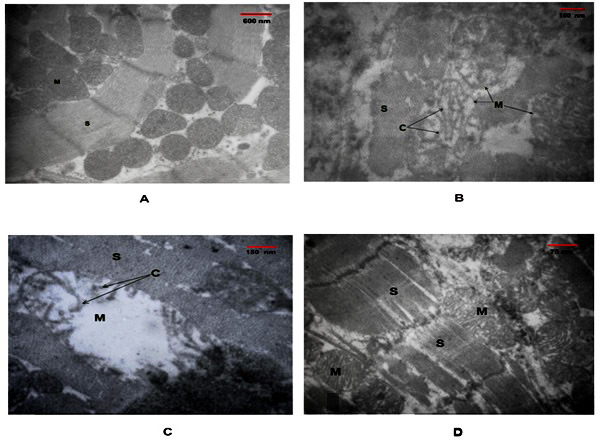
Doxorubicin (DOX) is one of the secondary metabolites of Streptomyces peucetius var. caesius. It is a common and effective chemotherapeutic agent used for the treatment of different diseases, including lymphoma, leukemia, breast cancer, and solid tumors. However, this medicine causes cardiotoxic side effects, which limit its clinical application. The present study examined the cardiomyopathy induced by DOX via echocardiography and transmission electron microscopy (TEM). The main objective was to evaluate the capacity of echocardiography and TEM as diagnostic tools for DOX-induced cardiotoxicity. Moreover, the correlation between intracellular and functional changes due to cardiotoxicity was assessed in a rat model. Cardiomyopathy was induced in rats by two cumulative doses of DOX. Group I received DOX 12 [i.e., 12 mg/kg, intraperitoneal (IP)] and group II received DOX 15 (i.e., 15 mg/kg, IP) in six equal doses over two weeks. Group III as the control (Ctrl) group received normal saline as a vehicle. Mortality during the study was only observed in the DOX 15 group. The echocardiographic assessments revealed significant changes in ejection fraction, fractional shortening, and heart rate in the groups which received DOX. In addition, severe cardiac arrhythmia was evident in DOX-treated groups. Remarkable adverse effects, such as moderately degenerated cells and inflated mitochondria were observed in the TEM analysis of rat hearts in the DOX groups. The present study indicated that rat models are suitable for investigating DOX-induced cardiomyopathy, especially at the dose of 12 mg/kg. Furthermore, echocardiography and TEM examinations were found to be valuable methods for the determination of cardiotoxicity in rats due to DOX.
Keywords: Cardiomyopathy; Doxorubicin; Echocardiography; Electron microscopy; Rat heart.
Copyright © 2020, Archives of Razi Institute. Published by Kowsar.
Conflict of interest statement
Authors of the present study declare no conflicts of interest for this investigation.
Figures
References
-
- Blum RH, Carter SK. Adriamycin. A new anticancer drug with significant clinical activity. Ann Intern Med. 1974; 80: 249–259. - PubMed
-
- Cardinale D, Bacchiani G, Beggiato M, Colombo A, Cipolla CM. Strategies to prevent and treat cardiovascular risk in cancer patients. Semin Oncol. 2013; 40: 186–198. - PubMed
-
- Childs AC, Phaneuf SL, Dirks AJ, Phillips T, Leeuwenburgh C. Doxorubicin treatment in vivo causes cytochrome C release and cardiomyocyte apoptosis, as well as increased mitochondrial efficiency, superoxide dismutase activity, and Bcl-2:Bax ratio. Cancer Res. 2002;62(16):4592–8. - PubMed
Publication types
MeSH terms
Substances
LinkOut - more resources
Full Text Sources