


Biological and epidemiological trends in the prevalence and mortality due to outbreaks of novel coronavirus COVID-19
- PMID: 32292261
- PMCID: PMC7144605
- DOI: 10.1016/j.jksus.2020.04.004
Biological and epidemiological trends in the prevalence and mortality due to outbreaks of novel coronavirus COVID-19
Abstract
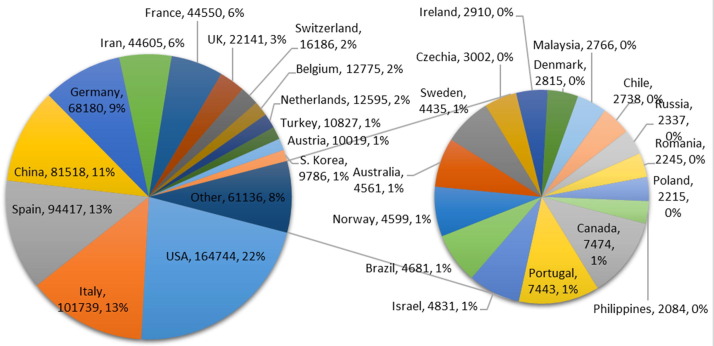
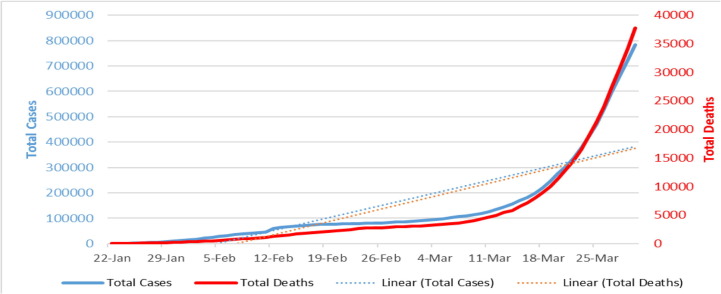
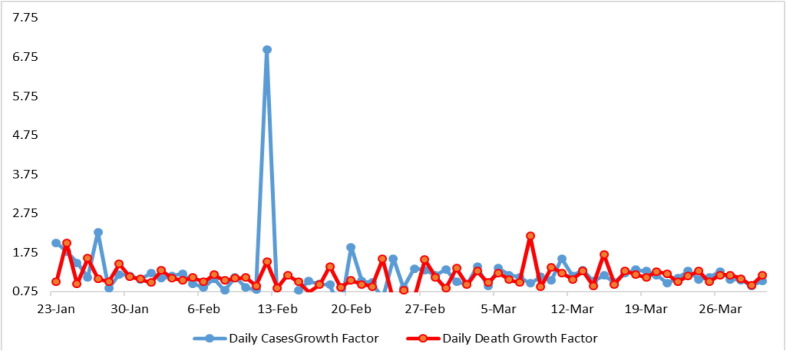
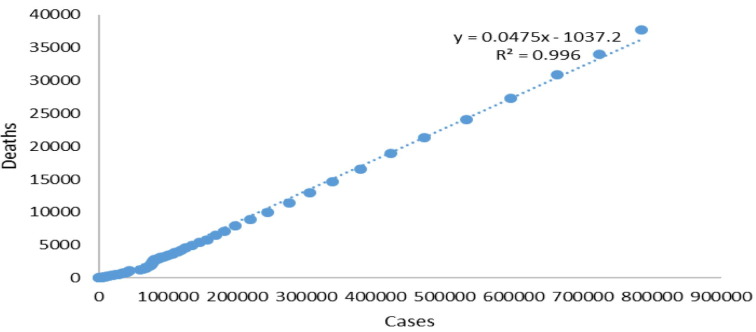
The novel coronavirus (Covid-19) infection outbreak has posed a major threat to the international health system and economy. This study is aimed at investigating the biological and epidemiological trends in the prevalence and mortality due to outbreaks of novel coronavirus (COVID-19) infections. The data on the global outbreak of COVID-19, were obtained from World Health Organization (WHO), Worldometer, Centers for Disease Control and Prevention (CDC), and research institutes. The information was also recorded from research documents published in global scientific journals indexed in Pub Med and Institute of Scientific Information (ISI) Web of Science on the trends in the prevalence and mortality due to COVID-19 infection outbreaks. The results show rising trends in the transmission, prevalence and mortality rate due to coronavirus COVID-19. During the period of December 29, 2019 through March 31, 2020, it has infected 750,890 people worldwide, resulting in 36,405 deaths with a mortality rate of 4.84%. The infections were more frequent among male gender over 60 years of age. The mean growth rate index for total number of cases from January 23 to March 31, 2020 was 1.20 and growth rate index for mortality rate was 1.12. There was a positive association between the prevalence and mortality rate (R2 = 0.996). The novel coronavirus COVID-19 is highly contagious and has affected a large number of people worldwide. It is still spreading with mutable prevalence and mortality outbreak trends. The global health officials have taken priority measures to prevent further outbreaks of this emerging pathogen across the globe. However, the rising number of cases and mortality risk estimates are demonstrating that enhanced public health mediations, good hygienic conditions, social distancing, and movement limitations may control the COVID-19 epidemics.
Keywords: 2019-nCoV; Biological trends; Coronavirus; Covid-2019; Outbreak; Prevalence.
© 2020 The Authors.
Conflict of interest statement
The authors declare that they have no known competing financial interests or personal relationships that could have appeared to influence the work reported in this paper.
Figures
References
-
- Callaway E., Cyranoski D. China coronavirus: six questions scientists are asking. Nature. 2020;577:605–607. - PubMed
-
- Centers for Disease Control and Prevention. Available at: https://www.cdc.gov/ (cited date March 16, 2020).
-
- COVID-19 Coronavirus. Available at: https://www.worldometers.info/coronavirus/ (Cited date Feb 29, 2020).
-
- ISI Web of Knowledge. Thomson Reuters, Available at: http://webofknowledge.com/JCR/JCR?PointOfEntry=Home&SID=4FeKpokbnHkLlmE1OGe (Cited date March 30, 2020).
LinkOut - more resources
Full Text Sources