


H2S signaling in plants and applications in agriculture
- PMID: 32292600
- PMCID: PMC7150428
- DOI: 10.1016/j.jare.2020.03.011
H2S signaling in plants and applications in agriculture
Abstract
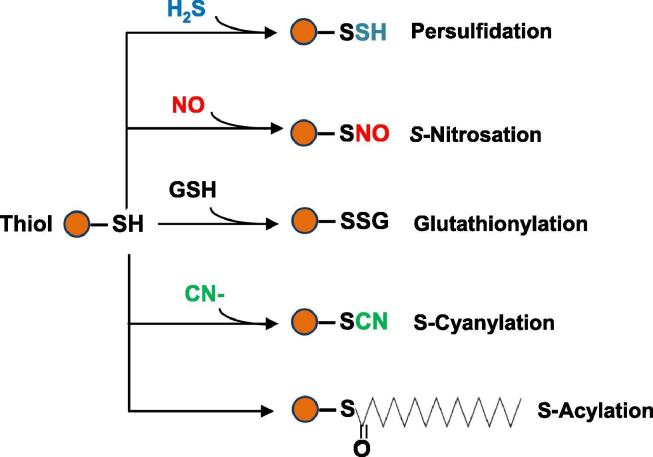
The signaling properties of the gasotransmitter molecule hydrogen sulfide (H2S), which is endogenously generated in plant cells, are mainly observed during persulfidation, a protein post-translational modification (PTM) that affects redox-sensitive cysteine residues. There is growing experimental evidence that H2S in higher plants may function as a mechanism of response to environmental stress conditions. In addition, exogenous applications of H2S to plants appear to provide additional protection against stresses, such as salinity, drought, extreme temperatures and heavy metals, mainly through the induction of antioxidant systems, in order to palliate oxidative cellular damage. H2S also appears to be involved in regulating physiological functions, such as seed germination, stomatal movement and fruit ripening, as well as molecules that maintain post-harvest quality and rhizobium-legume symbiosis. These properties of H2S open up new challenges in plant research to better understand its functions as well as new opportunities for biotechnological treatments in agriculture in a changing environment.
Keywords: Abiotic stress; Fruit ripening; Hydrogen sulfide; Nitro-oxidative stress.
© 2020 THE AUTHORS. Published by Elsevier BV on behalf of Cairo University.
Conflict of interest statement
The authors declare that they have no known competing financial interests or personal relationships that could have appeared to influence the work reported in this paper.
Figures


References
-
- Lisjak M., Teklic T., Wilson I.D., Whiteman M., Hancock J.T. Hydrogen sulfide: environmental factor or signalling molecule? Plant Cell Environ. 2013;36(9):1607–1616. - PubMed
-
- Corpas F.J., González-Gordo S., Cañas A., Palma J.M. Nitric oxide and hydrogen sulfide in plants: which comes first? J Exp Bot. 2019;70:4391–4404. - PubMed
-
- Kimura H. Signaling by hydrogen sulfide (H2S) and polysulfides (H2Sn) in the central nervous system. Neurochem Int. 2019;126:118–125. - PubMed
Publication types
LinkOut - more resources
Full Text Sources
