


Coronavirus infections: Epidemiological, clinical and immunological features and hypotheses
- PMID: 32292881
- PMCID: PMC7064018
- DOI: 10.15698/cst2020.04.216
Coronavirus infections: Epidemiological, clinical and immunological features and hypotheses
Abstract
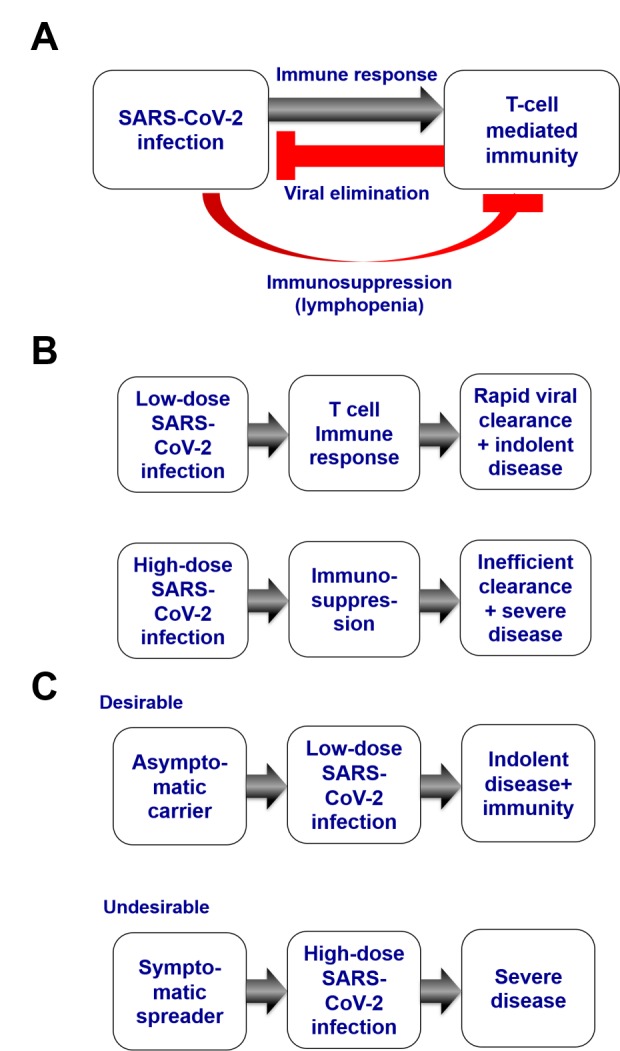
Coronaviruses (CoVs) are a large family of enveloped, positive-strand RNA viruses. Four human CoVs (HCoVs), the non-severe acute respiratory syndrome (SARS)-like HCoVs (namely HCoV 229E, NL63, OC43, and HKU1), are globally endemic and account for a substantial fraction of upper respiratory tract infections. Non-SARS-like CoV can occasionally produce severe diseases in frail subjects but do not cause any major (fatal) epidemics. In contrast, SARS like CoVs (namely SARS-CoV and Middle-East respiratory syndrome coronavirus, MERS-CoV) can cause intense short-lived fatal outbreaks. The current epidemic caused by the highly contagious SARS-CoV-2 and its rapid spread globally is of major concern. There is scanty knowledge on the actual pandemic potential of this new SARS-like virus. It might be speculated that SARS-CoV-2 epidemic is grossly underdiagnosed and that the infection is silently spreading across the globe with two consequences: (i) clusters of severe infections among frail subjects could haphazardly occur linked to unrecognized index cases; (ii) the current epidemic could naturally fall into a low-level endemic phase when a significant number of subjects will have developed immunity. Understanding the role of paucisymptomatic subjects and stratifying patients according to the risk of developing severe clinical presentations is pivotal for implementing reasonable measures to contain the infection and to reduce its mortality. Whilst the future evolution of this epidemic remains unpredictable, classic public health strategies must follow rational patterns. The emergence of yet another global epidemic underscores the permanent challenges that infectious diseases pose and underscores the need for global cooperation and preparedness, even during inter-epidemic periods.
Keywords: COVID-19; Coronavirus; MERS-CoV; SARS-CoV; epidemiology; immunology; sARS-CoV-2.
Copyright: © 2020 Raoult et al.
Conflict of interest statement
Conflict of interest: The authors declare that they have no relevant conflict of interest.
Figures
References
-
- Macciocchi D, Lanini S, Vairo F, Zumla A, Figueiredo LT, Lauria FN, Strada G, Brouqui P, Puro V, Krishna S, Kremsner P, Scognamiglio P, Kohler C, et al. Short-term economic impact of the Zika virus outbreak. New Microbiol. 2016;39(4):287–289. - PubMed
-
- Liuzzi G, Puro V, Lanini S, Vairo F, Nicastri E, Capobianchi MR, Di Caro A, Piacentini M, Zumla A and Ippolito G. Zika virus and microcephaly: is the correlation causal or coincidental? New Microbiol. 2016;39(2):83–85. - PubMed
-
- WHO. Ebola 2014-2016. Available at: https://www.who.int/csr/disease/ebola/en/. [Accessed: 29.02.2020]
Publication types
LinkOut - more resources
Full Text Sources
Miscellaneous