


Fetal Alcohol Spectrum Disorders in a Midwestern City: Child Characteristics, Maternal Risk Traits, and Prevalence
- PMID: 32293735
- PMCID: PMC7166178
- DOI: 10.1111/acer.14314
Fetal Alcohol Spectrum Disorders in a Midwestern City: Child Characteristics, Maternal Risk Traits, and Prevalence
Abstract
Objective: To determine the characteristics of children with fetal alcohol spectrum disorders (FASD) and their mothers in a Midwestern city.
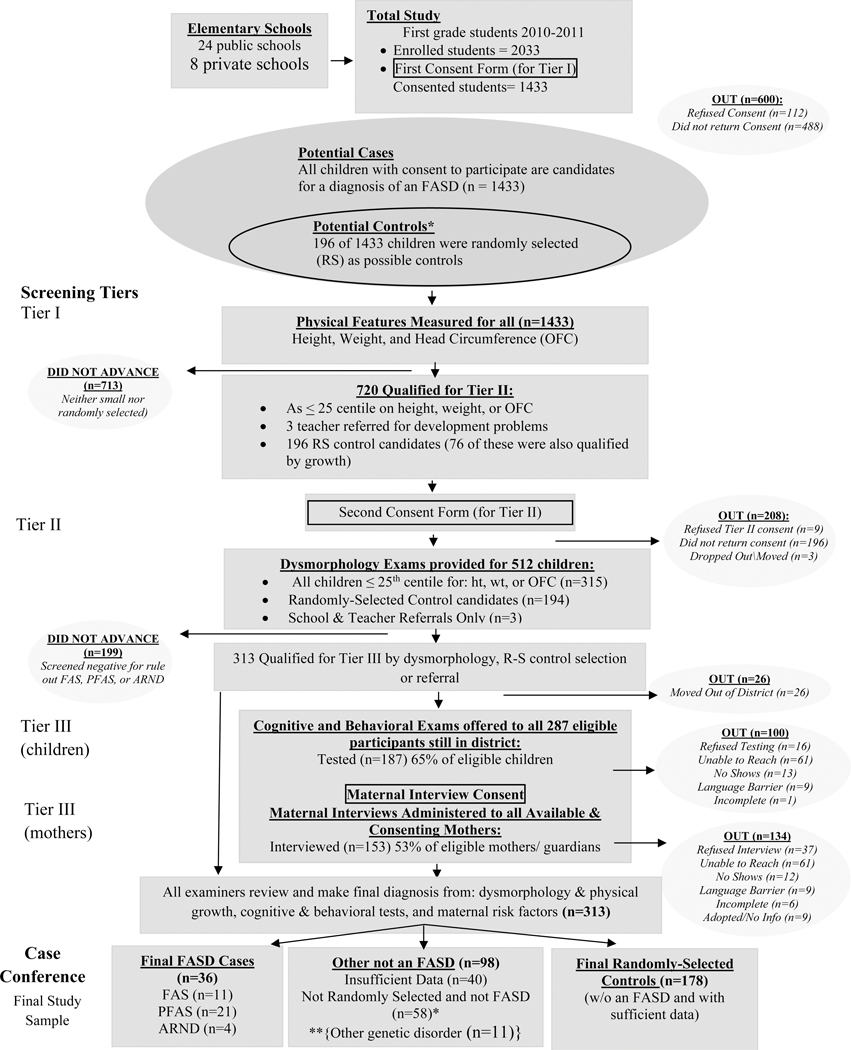
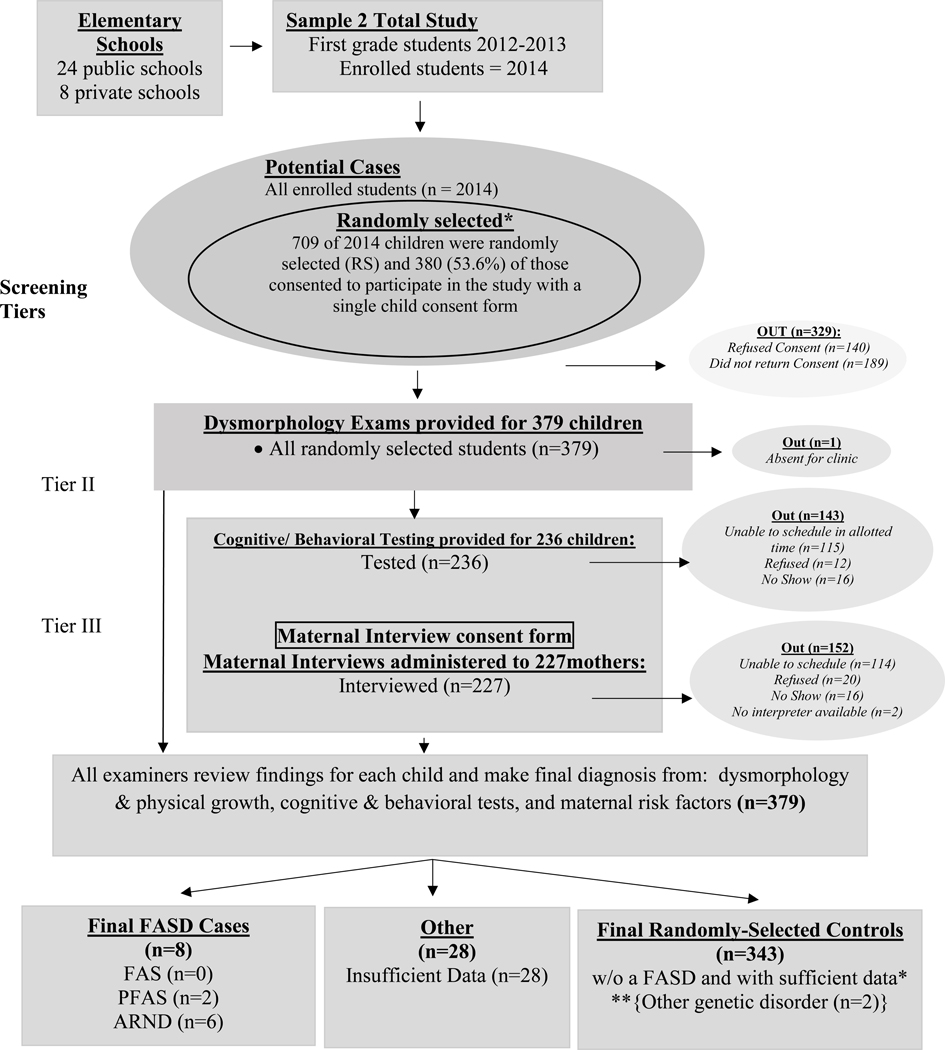
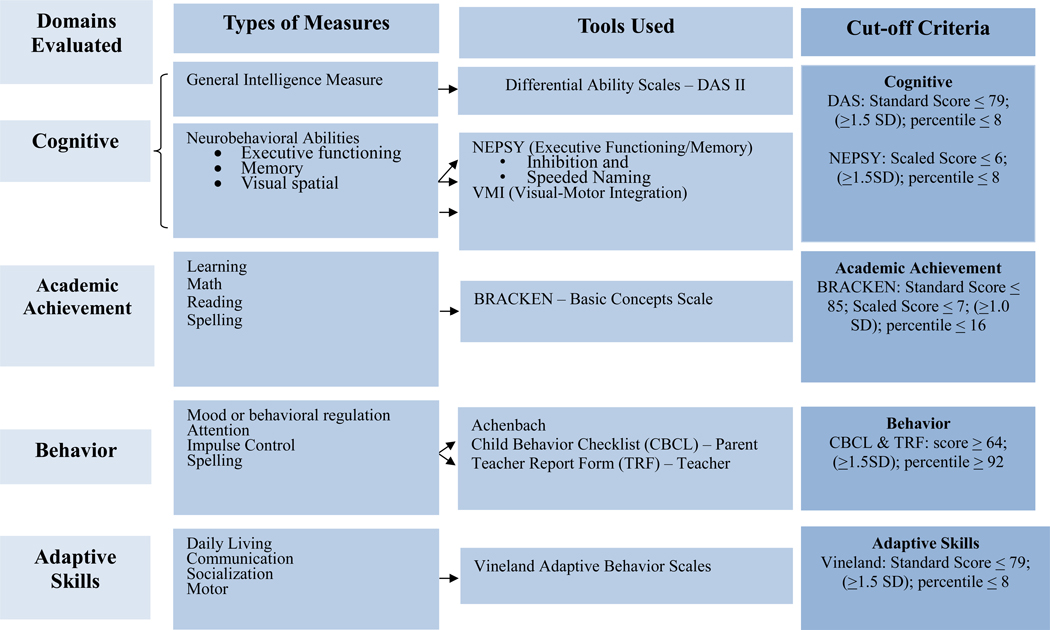
Methods: Case-control samples were drawn from 2 separate first-grade cohorts (combined N = 4,047) in every city school using different methods. In Cohort Sample 1, all consented small children (≤25th centile on height, weight, and/or head circumference) entered the study along with a random sample from all enrolled students. Cohort Sample 2 was drawn totally at random. Child growth, dysmorphology, and neurobehavior were assessed using the Collaboration on FASD Prevalence (CoFASP) criteria, and mothers were interviewed.
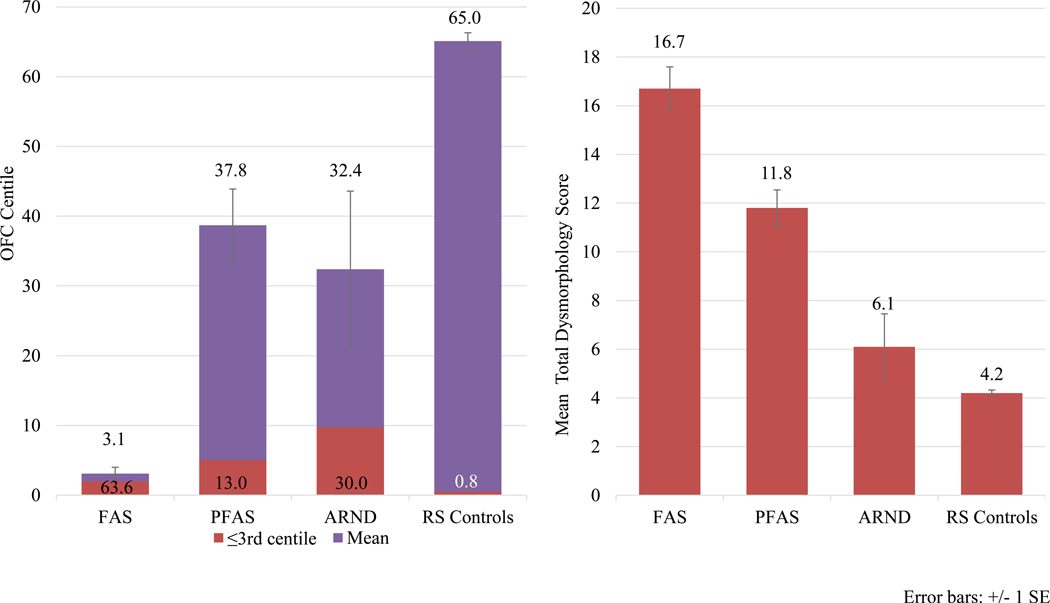
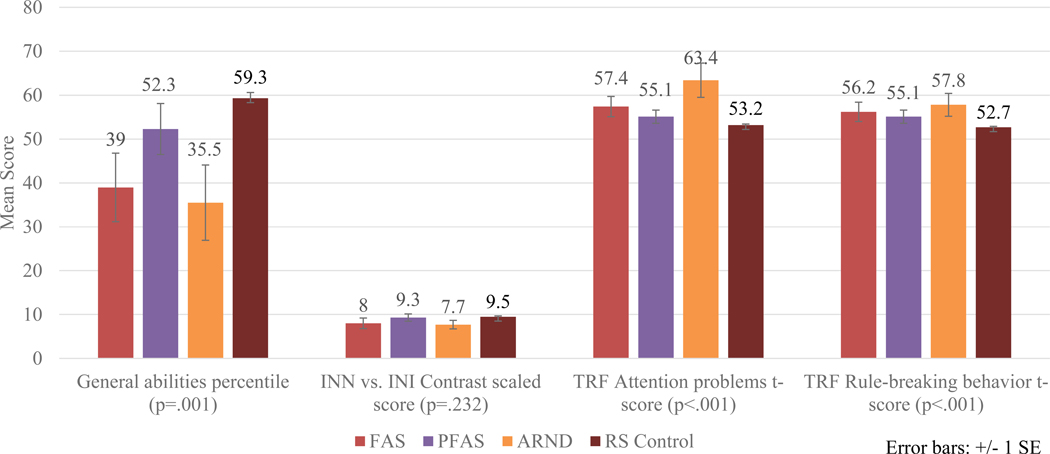
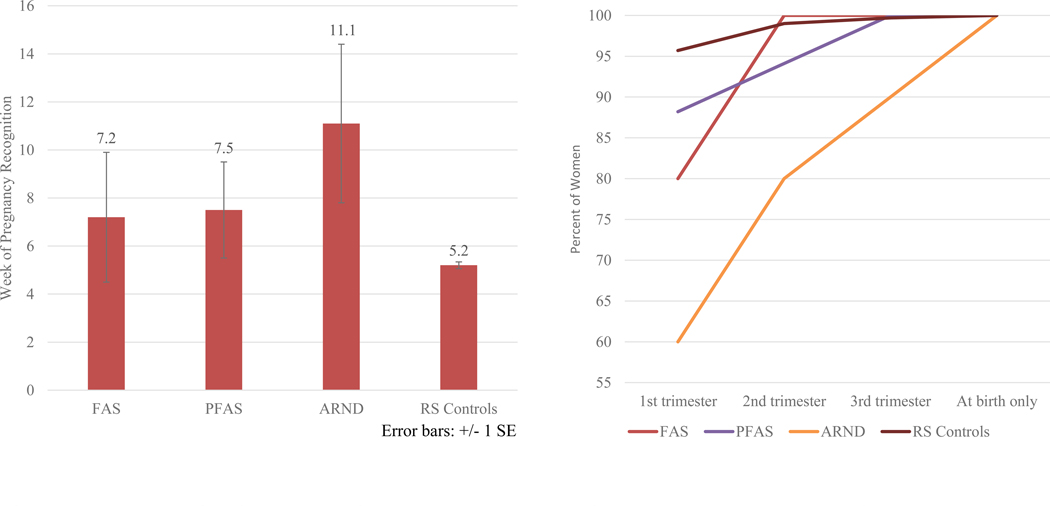
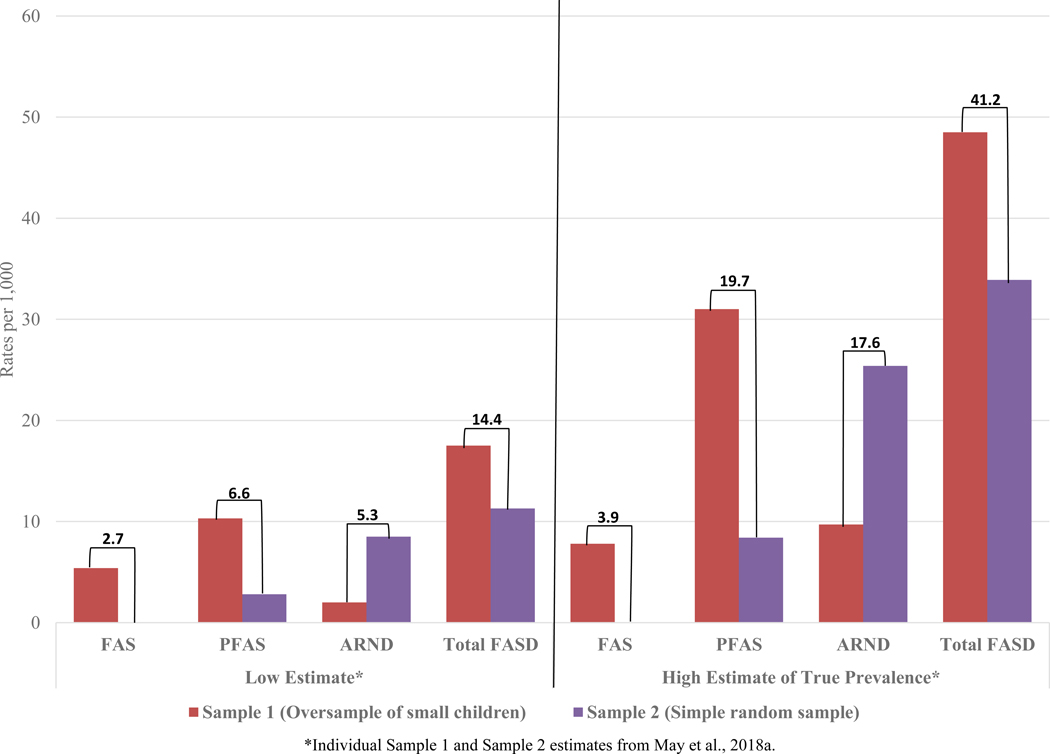
Results: For the samples combined, 891 children received dysmorphology examinations, and 692 were case-conferenced for final diagnosis. Forty-four children met criteria for FASD. Total dysmorphology scores differentiated diagnostic groups: fetal alcohol syndrome (FAS), 16.7; partial FAS, 11.8; alcohol-related neurodevelopmental disorder (ARND), 6.1; and typically developing controls, 4.2. Neurobehavioral tests distinguished children with FASD from controls, more for behavioral problems than cognitive delay. Children with ARND demonstrated the poorest neurobehavioral indicators. An adjusted regression model of usual prepregnancy drinking indicated that maternal reports of 3 drinks per drinking day (DDD) were significantly associated with a FASD diagnosis (p = 0.020, OR = 10.1, 95% CI = 1.44 to 70.54), as were 5 or more DDD (p < 0.001, OR = 26.47, 95% CI = 4.65 to 150.62). Other significant maternal risk factors included the following: self-reported drinking in any trimester; smoking and cocaine use during pregnancy; later pregnancy recognition and later and less prenatal care; lower maternal weight, body mass index (BMI), and head circumference; and unmarried status. There was no significant difference in FASD prevalence by race, Hispanic ethnicity, or socioeconomic status at this site, where the prevalence of FASD was 14.4 to 41.2 per 1,000 (1.4 to 4.1%).
Conclusion: This city displayed the lowest prevalence of FASD of the 4 CoFASP sites. Nevertheless, FASD were common, and affected children demonstrated a common, recognizable, and measurable array of traits.
Keywords: Alcohol Use and Abuse; Children with FASD; Fetal Alcohol Spectrum Disorders; Prenatal Alcohol Use; Prevalence; Women.
© 2020 by the Research Society on Alcoholism.
Conflict of interest statement
Figures
References
-
- Achenbach T, Rescorla L (2001) Manual For The ASEBA School-Age Forms And Profiles. Burlington, VT, University of Vermont, Research Center for Children, Youth, and Families.
-
- Adnams CM, Kodituwakku PW, Hay A, Molteno CD, Viljoen D, May PA (2001) Patterns of cognitive-motor development in children with fetal alcohol syndrome from a community in South Africa. Alcohol Clin Exp Res 25:557–562. - PubMed
-
- Alvik A, Haldorsen T, Lindemann R (2006) Alcohol consumption, smoking and breastfeeding in the first six months after delivery. Acta Paediatr 95:686–693. - PubMed
-
- America’s Changing Religious Landscape | Pew Research Center (n.d.) Available at: https://www.pewforum.org/2015/05/12/americas-changing-religious-landscape/ Accessed November 15, 2019.
-
- America’s Health Rankings Annual Report (2015). Minnetonka, Minnesota.
Publication types
MeSH terms
Grants and funding
LinkOut - more resources
Full Text Sources
Medical
Research Materials
Miscellaneous
