


Clinical Characteristics and Associated Risk Factors of Prediabetes in the Southwestern Region of Korea from 2010-2019
- PMID: 32295016
- PMCID: PMC7230531
- DOI: 10.3390/jcm9041114
Clinical Characteristics and Associated Risk Factors of Prediabetes in the Southwestern Region of Korea from 2010-2019
Abstract
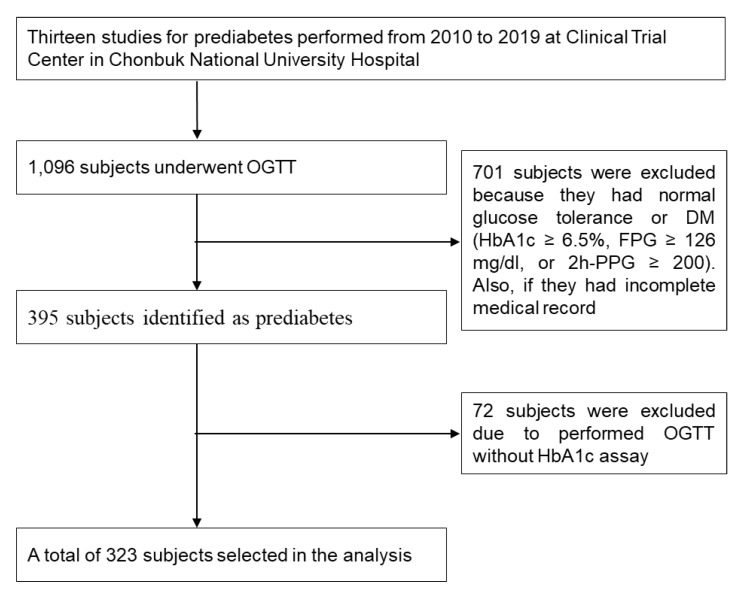
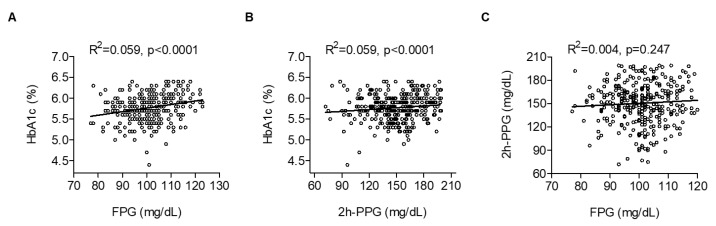
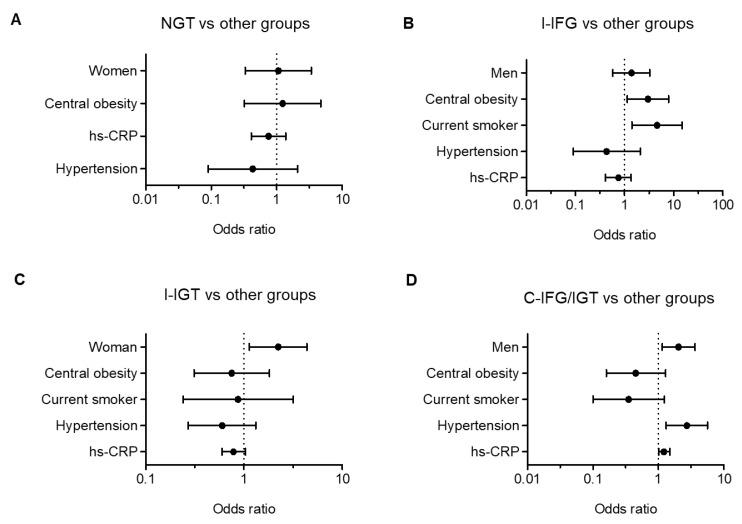
This study investigated the clinical characteristics and associated risk factors of prediabetes in the southwestern region of Korea. A total of 323 subjects from 13 prediabetes studies were included in the data analysis. Subjects with prediabetes were divided into the following subtypes: (1) normal glucose tolerance (NGT) with HbA1c 5.7%-6.4%; (2) isolated impaired fasting glucose (I-IFG); (3) isolated impaired glucose tolerance (I-IGT); and (4) combined I-IFG and I-IGT (C-IFG/IGT). Clinical and biochemical variables were compared among subtypes, and multivariate logistic regression analysis was used to identify risk factors for prediabetes subtypes. The overall proportion of subjects with NGT, I-IFG, I-IGT and C-IFG/IGT was 8.4%, 20.7%, 33.1% and 37.8%, respectively. In men, C-IFG/IGT was the most common subtype, while in women, I-IGT was the most common. The parameters related to dysglycemia, atherosclerosis and liver dysfunction were higher in subjects in the C-IFG/IGT subtype than in other subtypes. Multiple linear regression analysis revealed independent risk factors for increased FPG, 2h-PPG and HbA1c levels. This study identified the clinical features and independent risk factors for prediabetes subtypes.
Keywords: combined I-IFG and I-IGT; isolated impaired fasting glucose (I-IFG); isolated impaired glucose tolerance (I-IGT); prediabetes; risk factor.
Conflict of interest statement
The authors declare no conflict of interest.
Figures
References
-
- Korean Centers for Disease Control and Prevention Evidence-Based Guideline for Type 2 Diabetes in Primary Care. [(accessed on 7 April 2020)]; Available online: www.digitalcpg.kr.
Grants and funding
LinkOut - more resources
Full Text Sources
