


PC12 Cell Line: Cell Types, Coating of Culture Vessels, Differentiation and Other Culture Conditions
- PMID: 32295099
- PMCID: PMC7227003
- DOI: 10.3390/cells9040958
PC12 Cell Line: Cell Types, Coating of Culture Vessels, Differentiation and Other Culture Conditions
Abstract
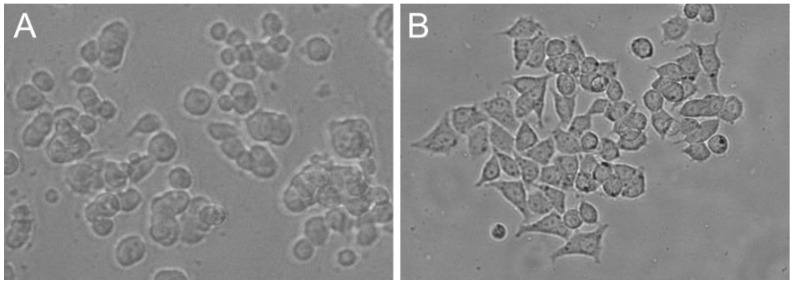
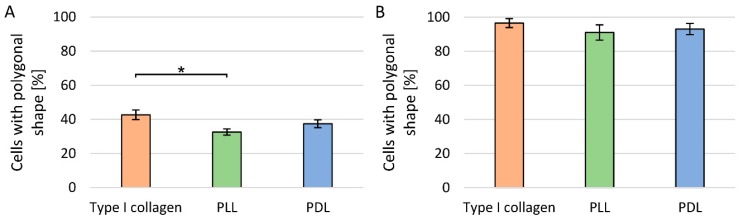
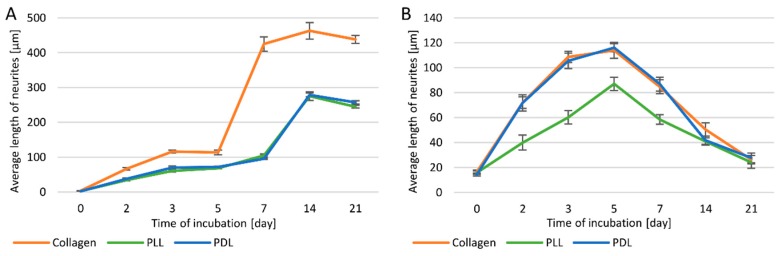
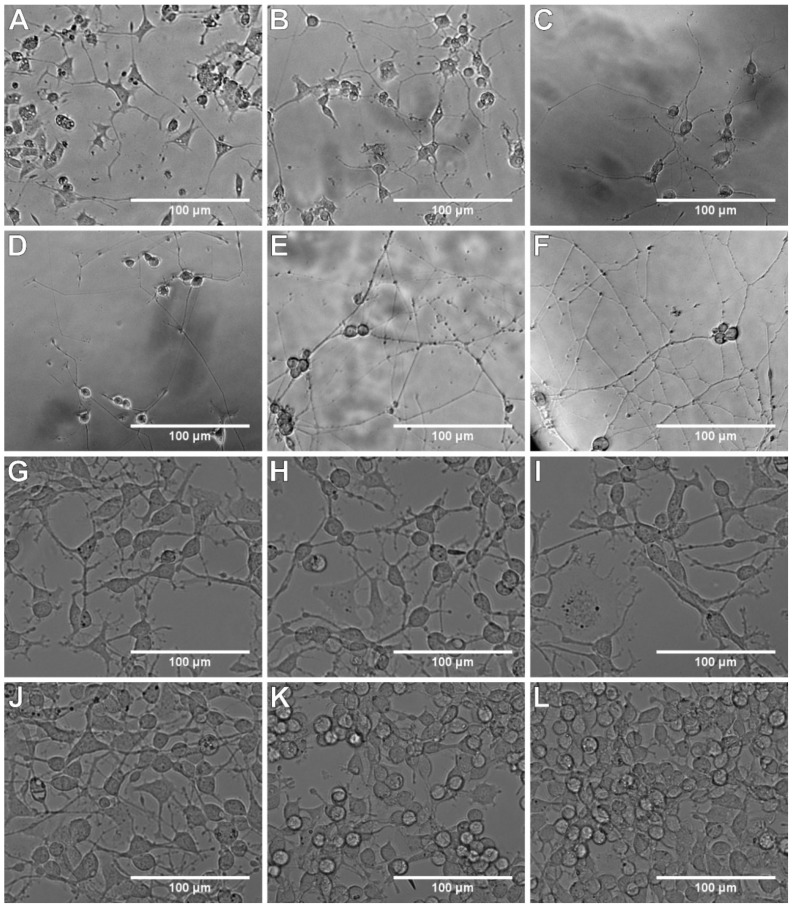
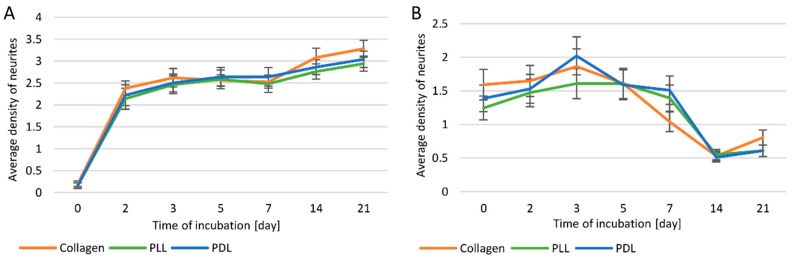
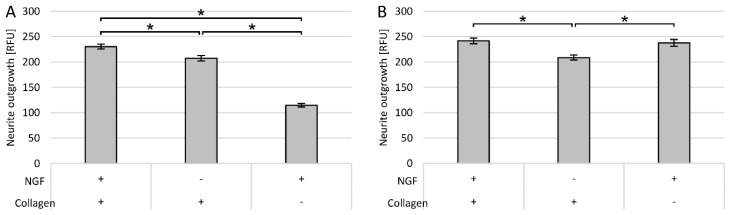
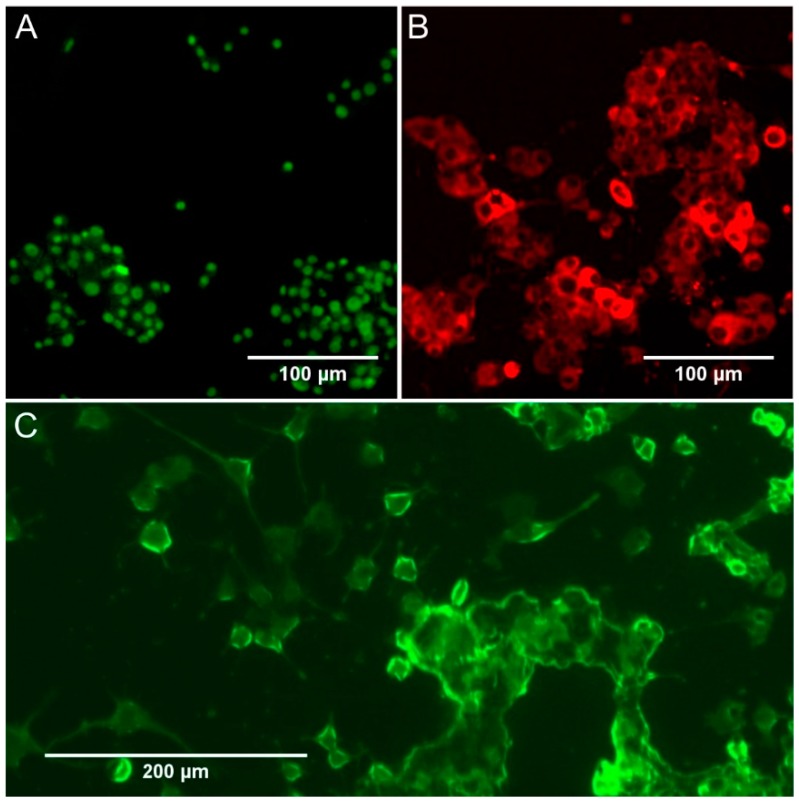
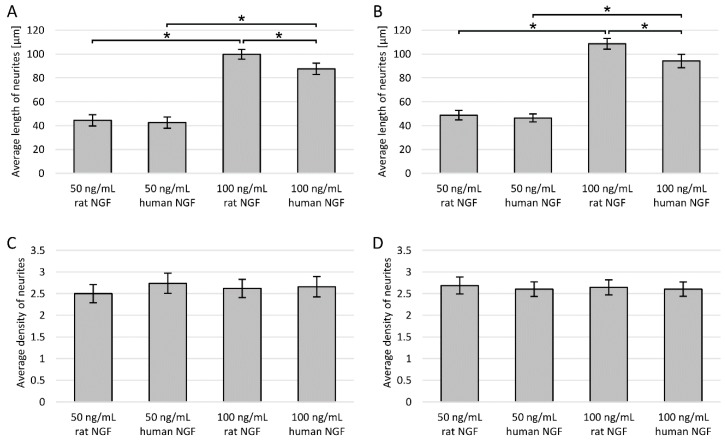
The PC12 cell line is one of the most commonly used in neuroscience research, including studies on neurotoxicity, neuroprotection, neurosecretion, neuroinflammation, and synaptogenesis. Two types of this line are available in the ATCC collection: traditional PC12 cells grown in suspension and well-attached adherent phenotype. PC12 cells grown in suspension tend to aggregate and adhere poorly to non-coated surfaces. Therefore, it is necessary to modify the surface of culture vessels. This paper aims to characterise the use of two distinct variants of PC12 cells as well as describe their differentiation and neuronal outgrowth with diverse NGF concentrations (rat or human origin) on various surfaces. In our study, we evaluated cell morphology, neurite length, density and outgrowth (measured spectrofluorimetrically), and expression of neuronal biomarkers (doublecortin and NeuN). We found that the collagen coating was the most versatile method of surface modification for both cell lines. For adherent cells, the coating was definitely less important, and the poly-d-lysine surface was as good as collagen. We also demonstrated that the concentration of NGF is of great importance for the degree of differentiation of cells. For suspension cells, we achieved the best neuronal characteristics (length and density of neurites) after 14 days of incubation with 100 ng/mL NGF (change every 48 h), while for adherent cells after 3-5 days, after which they began to proliferate. In the PC12 cell line, doublecortin (DCX) expression in the cytoplasm and NeuN in the cell nucleus were found. In turn, in the PC12 Adh line, DCX was not expressed, and NeuN expression was located in the entire cell (both in the nucleus and cytoplasm). Only the traditional PC12 line grown in suspension after differentiation with NGF should be used for neurobiological studies, especially until the role of the NeuN protein, whose expression has also been noted in the cytoplasm of adherent cells, is well understood.
Keywords: NGF; PC12; coating; collagen; differentiation; neurons; polylysine.
Conflict of interest statement
The authors declare no conflict of interest.
Figures
References
-
- Duan X.-H.N., Wang W.-L., Dai R., Yan H.-W., Han C.-N., Liu L.-S. Current Situation of PC12 Cell Use in Neuronal Injury Study. Int. J. Biotechnol. Wellness Ind. 2015;4:61–66. doi: 10.6000/1927-3037.2015.04.02.3. - DOI
MeSH terms
Substances
LinkOut - more resources
Full Text Sources
Other Literature Sources
