


Clinical, Molecular and Serological Diagnosis of Canine Leishmaniosis: An Integrated Approach
- PMID: 32295198
- PMCID: PMC7378766
- DOI: 10.3390/vetsci7020043
Clinical, Molecular and Serological Diagnosis of Canine Leishmaniosis: An Integrated Approach
Abstract
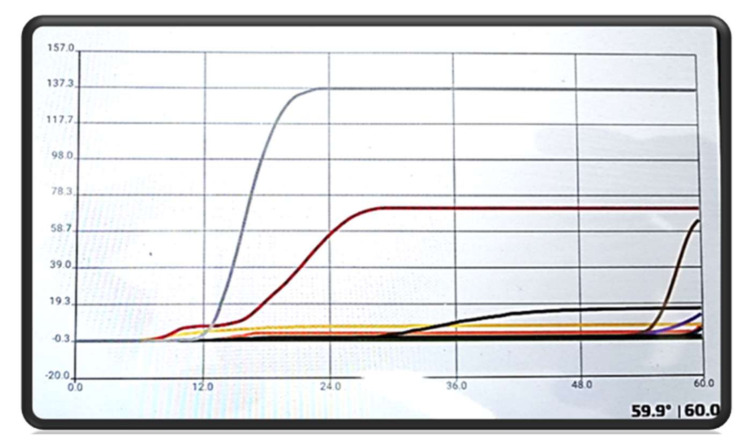
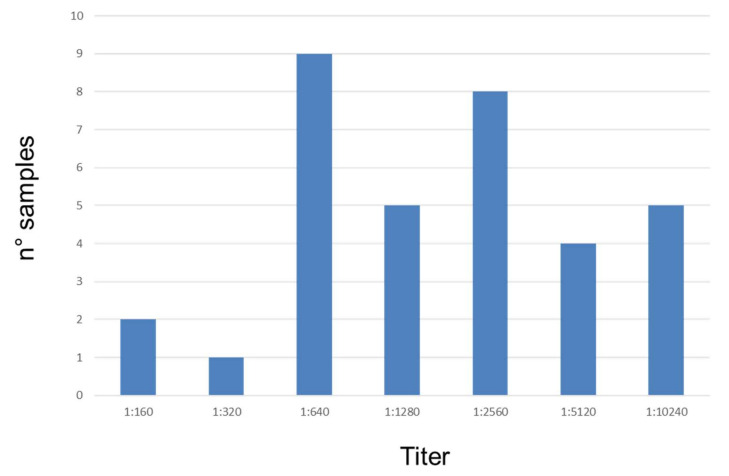
Canine leishmaniosis (CanL) is caused by protozoans of the genus Leishmania and characterized by a broad spectrum of clinical signs in dogs. Early diagnosis is of great importance in order to perform an appropriate therapy and to prevent progression towards severe disease. The aim of this study was to compare a point-of-care molecular technique, i.e., the loop-mediated isothermal amplification (LAMP), with a real-time polymerase chain reaction (Rt-PCR), and three serological techniques, i.e., immunofluorescence antibody test (IFAT), enzyme-linked immunosorbent assay (ELISA), and a rapid SNAP Leishmania test, to develop an integrated approach for the diagnosis of CanL. Sixty dogs were chosen after physical examination and collection of blood and sera samples, fine-needle aspiration of lymph nodes, and conjunctival swabs were performed. Lymphadenopathy (82.3%), as well as clinicopathological alterations of total proteins (70.6%), were the most frequent signs. Forty-one (68.3%) samples resulted positive at least to one technique. IFAT resulted in the best serological diagnostic method (specificity = 100%, sensitivity = 97.2%), detecting a higher number of positive samples than those revealed by other techniques. Among the samples used for molecular analysis, fine-needle aspiration of lymph nodes was revealed as the best sample source. LAMP showed a substantial agreement (κ = 0.80; p <0.0001) with Rt-PCR; therefore, it could be promising for the rapid diagnosis of CanL. Nevertheless, further studies should be performed to confirm these findings.
Keywords: SNAP Leishmania test; dog; enzyme-linked immunosorbent assay (ELISA); immunofluorescence antibody test (IFAT); leishmaniosis; loop-mediated isothermal amplification (LAMP); real-time polymerase chain reaction (Rt-PCR).
Conflict of interest statement
The authors declare no conflict of interest.
Figures
References
-
- Miró G., Petersen C., Cardoso L., Bourdeau P., Baneth G., Solano-Gallego L., Pennisi M.G., Ferrer L., Oliva G. Novel Areas for Prevention and Control of Canine Leishmaniosis. Trends Parasitol. 2017;33:718–730. - PubMed
Grants and funding
LinkOut - more resources
Full Text Sources
