


The impact of the COVID-19 epidemic on the utilization of emergency dental services
- PMID: 32296495
- PMCID: PMC7156222
- DOI: 10.1016/j.jds.2020.02.002
The impact of the COVID-19 epidemic on the utilization of emergency dental services
Abstract
Background/purpose: To assess how the current COVID-19 epidemic influenced peoples' utilization of emergency dental services in Beijing, China.
Methods: The first-visit patients seeking emergency dental services before or at the beginning of the COVID-19 epidemic were retrieved. Their demographic characteristics and the reasons for visiting were recorded and analyzed.
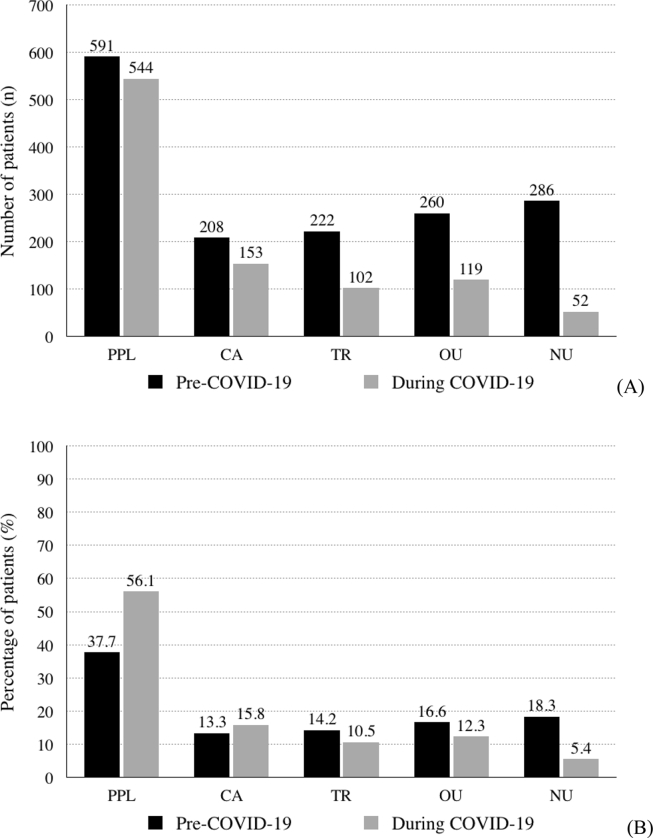
Results: There were 2,537 patients involved in this study. Thirty-eight percent fewer patients visited the dental urgency at the beginning of the COVID-19 epidemic than before. The distribution of dental problems has changed significantly. The proportion of dental and oral infection raised from 51.0% of pre-COVID-19 to 71.9% during COVID-19, and dental trauma decreased from 14.2% to 10.5%. Meanwhile, the non-urgency cases reduced to three-tenths of pre-COVID-19.
Conclusion: Within the limitation of this study, the COVID-19 epidemic had a strong influence on the utilization of emergency dental services.
Keywords: COVID-19; Dental care; Emergencies; Epidemics.
© 2020 Association for Dental Sciences of the Republic of China. Publishing services by Elsevier B.V.
Conflict of interest statement
The authors have no conflicts of interest relevant to this article.
Figures
Comment in
-
Influence of the containment on the epidemiology of maxillo-facial emergencies during the COVID-19 pandemic. Why no more cellulites of odontogenic origin?J Stomatol Oral Maxillofac Surg. 2020 Sep;121(4):467-468. doi: 10.1016/j.jormas.2020.05.005. Epub 2020 May 13. J Stomatol Oral Maxillofac Surg. 2020. PMID: 32405606 Free PMC article. No abstract available.
References
-
- Gorbalenya A.E. Severe acute respiratory syndrome-related coronavirus – the species and its viruses, a statement of the coronavirus study group. bioRxiv. 2020 [in press]
-
- WHO . 2020. Statement on the second meeting of the International Health Regulations (2005) Emergency Committee regarding the outbreak of novel coronavirus (2019-nCoV)https://www.who.int/news-room/detail/30-01-2020-statement-on-the-second-... [Internet]
LinkOut - more resources
Full Text Sources
