. 2020 Mar 31:10:363.
doi: 10.3389/fonc.2020.00363. eCollection 2020.

The Interaction Between lncRNA SNHG6 and hnRNPA1 Contributes to the Growth of Colorectal Cancer by Enhancing Aerobic Glycolysis Through the Regulation of Alternative Splicing of PKM

Affiliations

The Interaction Between lncRNA SNHG6 and hnRNPA1 Contributes to the Growth of Colorectal Cancer by Enhancing Aerobic Glycolysis Through the Regulation of Alternative Splicing of PKM

Zhixian Lan et al. Front Oncol. .

Abstract

Background: Small nucleolar RNA host gene 6 (SNHG6) acts as a carcinogenic gene in colorectal cancer (CRC). However, previous studies on the mechanism by which long non-coding RNA (lncRNA) SNHG6 exerts its carcinogenic effect in CRC have not involved the direct interaction between SNHG6 and proteins, which is a very important carcinogenic mechanism of lncRNAs. Hence, our study conducted a comprehensive RNA-binding proteins-mass spectrometry (ChIRP-MS) analysis on SNHG6 to further explore its carcinogenic mechanism in CRC. Methods: Proteins that interact with SNHG6 were found using ChIRP-MS analysis and were used to construct the protein-protein interactive (PPI) network using STRING, while the core module of the PPI network was identified using the MCODE plugin in Cytoscape. Pathway enrichment analyses, using WebGestalt, were performed on proteins and RNAs that were found to be associated with the expression of SNHG6 or which directly interacted with SNHG6. Finally, CatRAPID, miRbase, and TargetScanHuman were used to identify the sites of interaction between SNHG6, heterogeneous nuclear ribonucleoprotein A1 (hnRNPA1), and pyruvate kinase M (PKM) mRNA. Results: The expression of SNHG6 in CRC was found to be higher than that of normal tissues and was positively correlated with a poor prognosis (p < 0.05). A total of 467 proteins that are able to interact with SNHG6 in CRC cells were identified using ChIRP-MS analysis and were used to create a PPI network, within which a core module composed of 44 proteins that performed the function of splicing mRNA, including hnRNPA1, was found to be positively correlated with SNHG6 (p < 0.05). The results of the pathway enrichment analyses suggested that SNHG6 played an important role in the metabolism of CRC by affecting the expression of PKM and SNHG6. The increase in the ratio of PKM2/PKM1 was proven using quantitative real-time polymerase chain reaction analysis. Further exploration suggested that SNHG6 could bind to hnRNPA1 and PKM. Conclusion: SNHG6 was found to be able to target the mRNA of PKM as well as induce hnRNPA1 to specifically splice PKM mRNA, which increased the proportion of PKM2/PKM1, which may be an important carcinogenic mechanism in CRC that proceeds through the enhancement of aerobic glycolysis in CRC cells.

Keywords: bioinformatics analysis; colorectal cancer; comprehensive RNA-binding proteins–mass spectrometry; heterogeneous nuclear ribonucleoprotein A1; metabolism; pyruvate kinase M; small nucleolar RNA host gene 6.


Figures

Figure 1
Figure 1
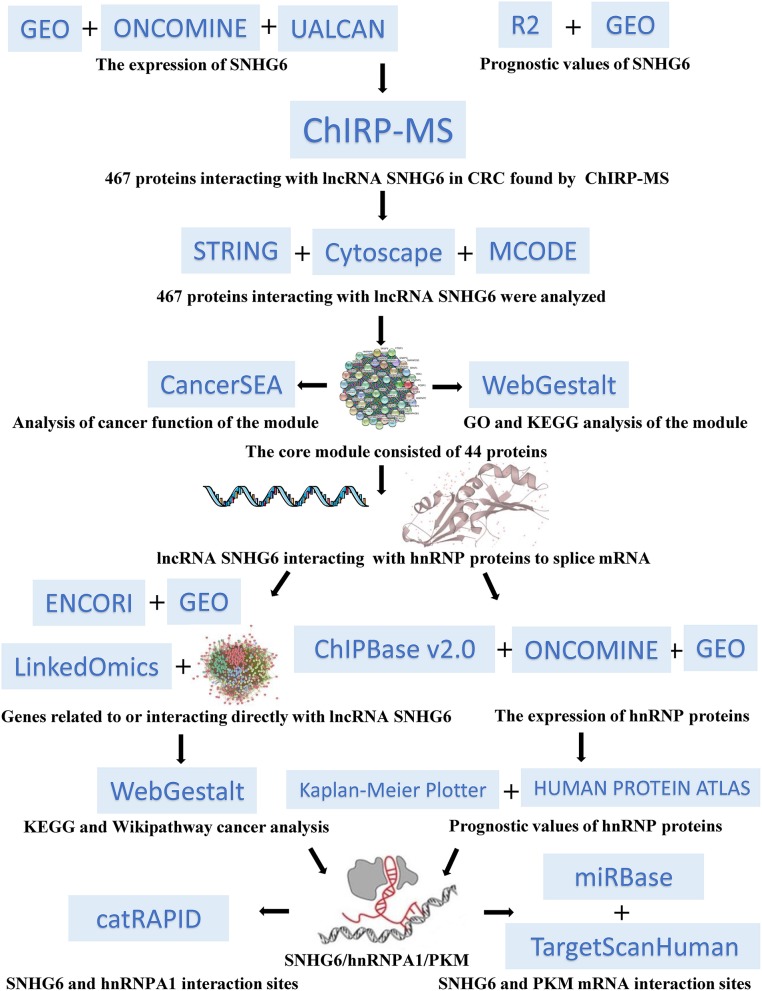
Overall workflow chart for this research study.
Figure 2
Figure 2
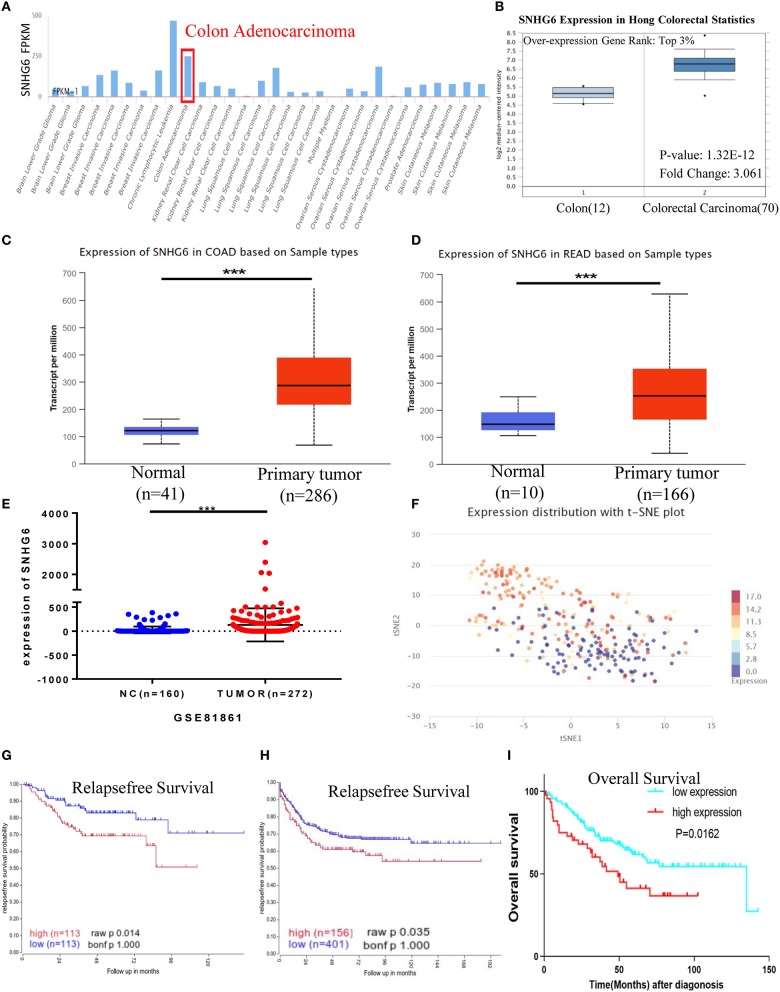
Expression and prognostic value of SNHG6 in colorectal cancer (CRC). (A) The expression of SNHG6 in human tumors. (B–E) High expression of SNHG6 in CRC tissues, compared with normal tissues. (F) The expression of SNHG6 in CRC cells was found to be heterogeneous. (G–I) The high expression of SNHG6 was found to be associated with poor prognosis in patients with CRC. Ns, P > 0.05; *P < 0.05; **P < 0.01; ***P < 0.001; ****P < 0.0001.
Figure 3
Figure 3
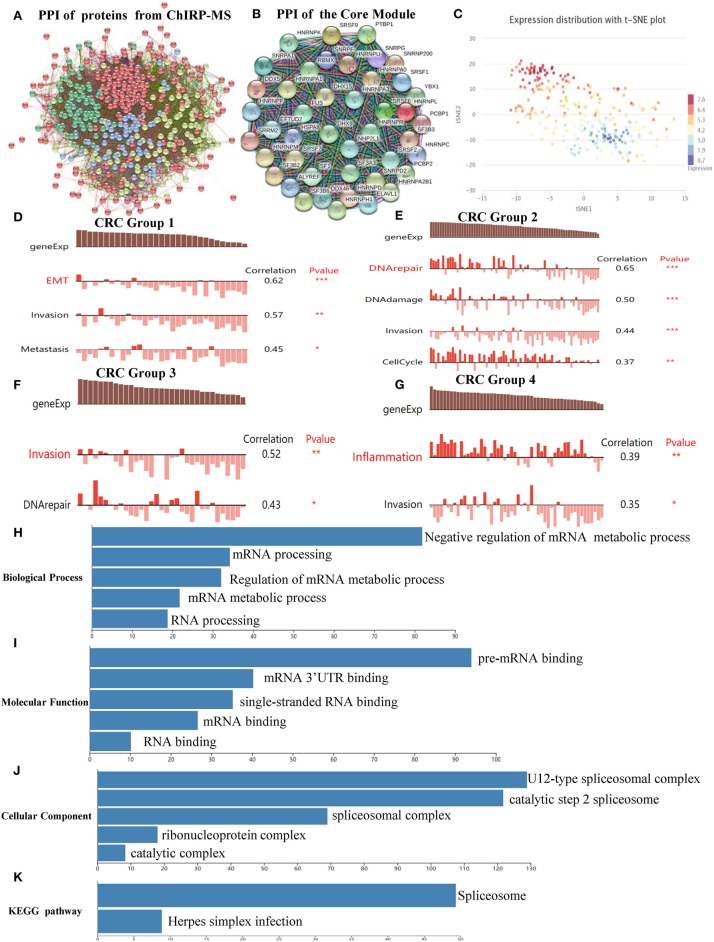
Protein–protein interactive (PPI) network and core module analysis. (A) The PPI consisted of 461 nodes with 5,226 edges. (B) The core module consisted of 44 nodes with 44 scores. (C) The overall expression of the module in colorectal cancer was found to be heterogeneous. (D–G) Carcinogenic process in different cell subsets from the core module. (H–K) The analysis of biological processes, molecular functions, cellular components, and Kyoto Encyclopedia of Genes and Genomes of the core module showed that it could participate in the splicing and the processing of precursor mRNA. Ns, P > 0.05; *P < 0.05; **P < 0.01; ***P < 0.001; ****P < 0.0001.
Figure 4
Figure 4
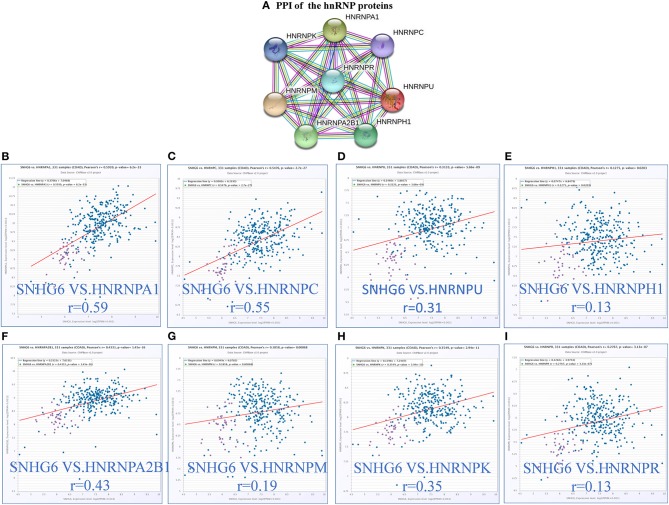
The expression of hnRNP proteins was positively correlated with SNHG6 in colorectal cancer (CRC). (A) The first eight hnRNP proteins with the strongest interaction with SNHG6 in the module. (B–I) The expression of hnRNP proteins was found to be positively correlated with SNHG6 in CRC.
Figure 5
Figure 5
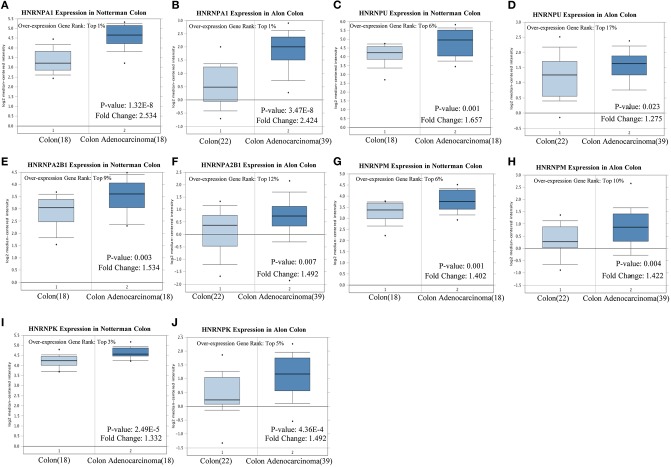
High expression of hnRNP proteins in colorectal cancer (CRC). (A–J) hnRNPA1, hnRNPU, hnRNPA2B1, hnRNPM, and hnRNPK were found to be highly expressed in CRC, with a statistical difference, based on both the Notterman and the Alon experimental data.
Figure 6
Figure 6
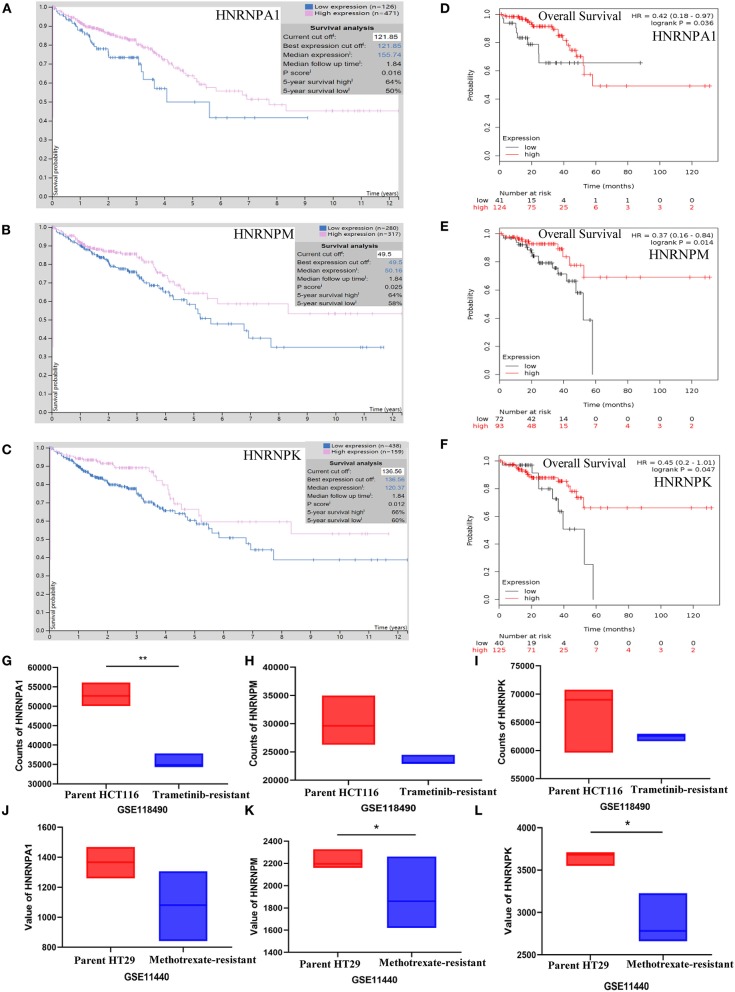
Correlation between the expression of hnRNP proteins and prognosis of colorectal cancer (CRC) patients. (A–F) Low expression of hnRNPA1, hnRNPM, and hnRNPK was found to be associated with poor prognosis in CRC. (G–L) The expression of hnRNPA1, hnRNPM, and hnRNPK was relatively low in drug-resistant CRC cells. Ns, P > 0.05; *P < 0.05; **P < 0.01; ***P < 0.001; ****P < 0.0001.
Figure 7
Figure 7
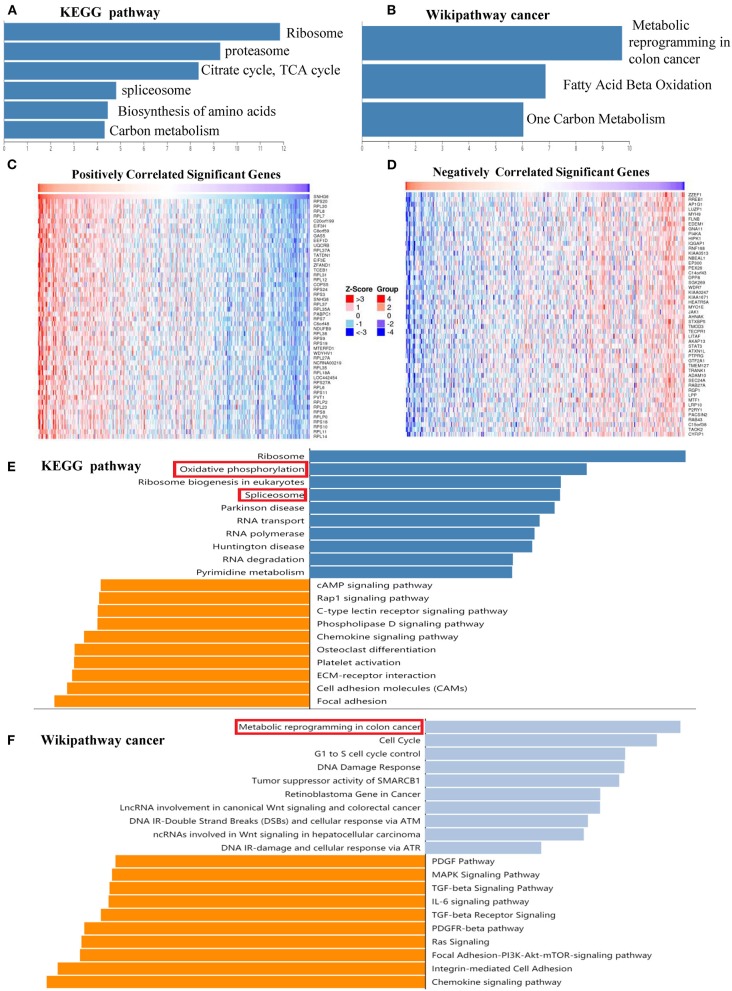
SNHG6 plays an important role in the metabolism of colorectal cancer (CRC). (A,B) Kyoto Encyclopedia of Genes and Genomes (KEGG) and Wikipathway cancer enrichment analysis of genes conducted on SNHG6 using comprehensive RNA-binding proteins–mass spectrometry. (C,D) Genes that were positively or negatively related to SNHG6 in CRC, as given by LinkedOmics. (E,F) KEGG and Wikipathway cancer enrichment analysis of genes that were positively or negatively related to SNHG6.
Figure 8
Figure 8
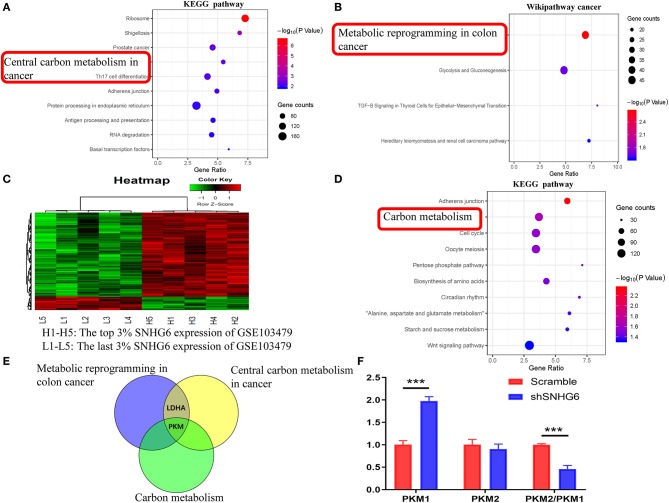
Identification of the involvement of the SNHG6/HNRNPA1/PKM axis in the metabolic mechanism of colorectal cancer (CRC). (A,B) Kyoto Encyclopedia of Genes and Genomes (KEGG) and Wikipathway cancer pathway enrichment analysis of mRNA interacting directly with SNHG6, as given by ENCORI. (C) A total of 181 differentially expressed genes related to SNHG6 were identified in GSE103479. (D) KEGG pathway enrichment analysis of the differentially expressed genes related to SNHG6 as found in GSE103479. (E) Through the intersection of genes from metabolic pathways enrichment analyses in the (A,B,D), it was found that pyruvate kinase M (PKM) was the only overlapping gene. (F) The ratio of PKM2/PKM1 was downregulated in shSNHG6 RKO cells. Ns, P > 0.05; *P < 0.05; **P < 0.01; ***P < 0.001; ****P < 0.0001.
Figure 9
Figure 9
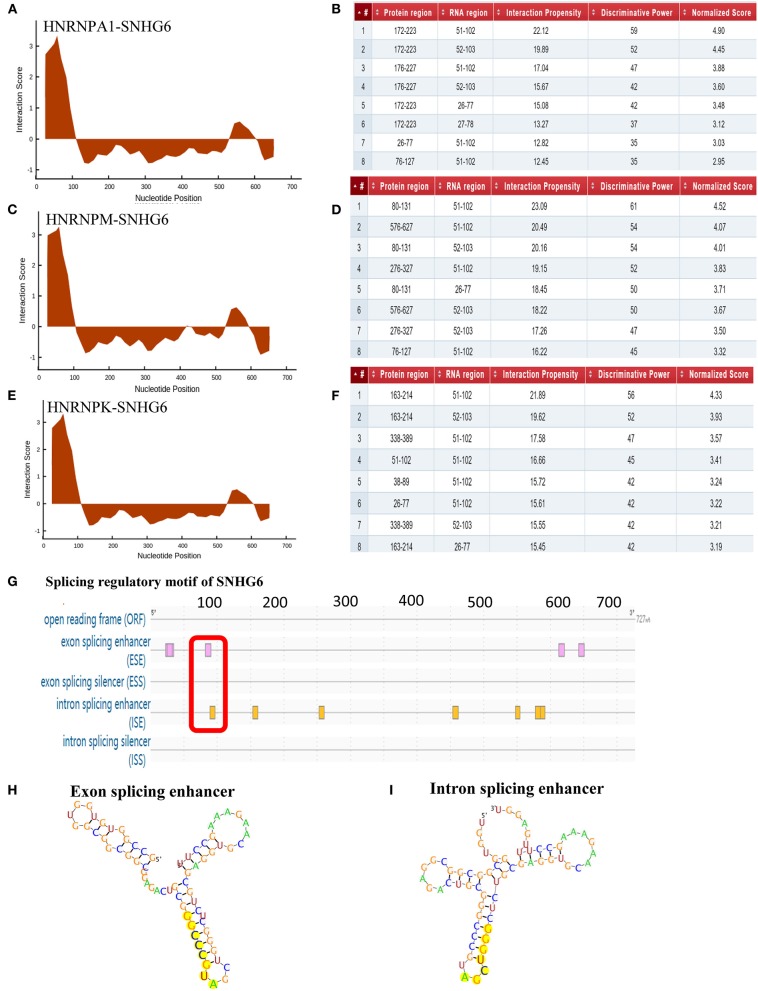
Analysis of binding sites between SNHG6 and hnRNPA1. (A–F) The nucleotides at position 51–102 of SNHG6 were in the main region that interacted with hnRNPA1, hnRNPM, and hnRNPK. The amino acids at positions 172–223, 26–77, and 76–127 of hnRNPA1 were in the main regions binding to the nucleotides at position 51–102 of SNHG6. (G) An exon enhancer was identified at position 83–90 and an intron enhancer was identified at position 9096 of SNHG6. (H) RNA secondary structure of the exon enhancer of SNHG6 at position 83–90. (I) RNA secondary structure of the intron enhancer of SNHG6 at position 90–96.
Figure 10
Figure 10
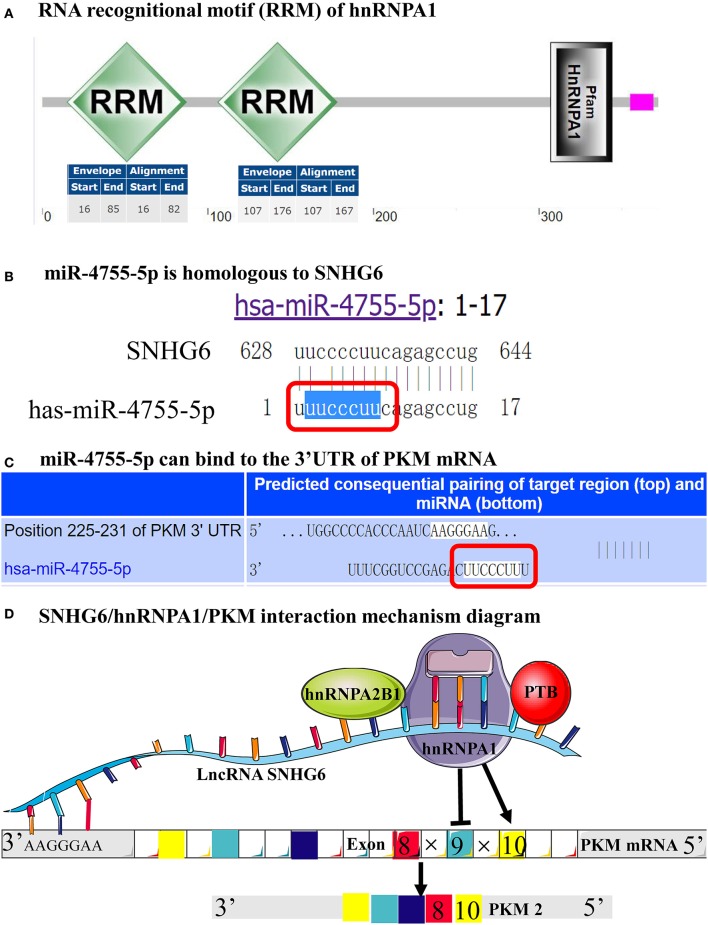
Functional domains of hnRNPA1 and SNHG6 could target the 3′UTR of the pyruvate kinase M (PKM) mRNA. (A) The first RNA recognitional motif (RRM) of hnRNPA1 began from the amino acid at position 16 and ended at the amino acid at position 85, while the second RRM of hnRNPA1 began from the amino acid at position 107 and ended at the amino acid at position 176. (B) miR-4755-5p was found to be homologous to SNHG6. (C) PKM was found to be the target gene of miR-4755-5p. (D) Schematic model of SNHG6-mediated aerobic glycolysis which proceeded through the splicing of PKM1/2 as a result of its interaction with the hnRNPA1 complex.

References

    1. Brenner H, Kloor M, Pox CP. Colorectal cancer. Lancet. (2014) 383:1490–502. 10.1016/S0140-6736(13)61649-9 - DOI - PubMed
    1. Siegel RL, Miller KD, Jemal A. Cancer statistics, 2017. CA Cancer J Clin. (2017) 67:7–30. 10.3322/caac.21387 - DOI - PubMed
    1. Nishihara R, Wu K, Lochhead P, Morikawa T, Liao X, Qian ZR, et al. Long-term colorectal-cancer incidence and mortality after lower endoscopy. N Engl J Med. (2013) 369:1095–105. 10.1056/NEJMoa1301969 - DOI - PMC - PubMed
    1. Li J, Dittmar RL, Xia S, Zhang H, Du M, Huang CC, et al. Cell-free DNA copy number variations in plasma from colorectal cancer patients. Mol Oncol. (2017) 11:1099–111. 10.1002/1878-0261.12077 - DOI - PMC - PubMed
    1. Gogolevskaya IK, Makarova JA, Gause LN, Kulichkova VA, Konstantinova IM, Kramerov DA. U87 RNA, a novel C/D box small nucleolar RNA from mammalian cells. Gene. (2002) 292:199–204. 10.1016/S0378-1119(02)00678-9 - DOI - PubMed