


The Prevalence of Self-injurious Behaviour in Autism: A Meta-analytic Study
- PMID: 32297123
- PMCID: PMC7557528
- DOI: 10.1007/s10803-020-04443-1
The Prevalence of Self-injurious Behaviour in Autism: A Meta-analytic Study
Abstract
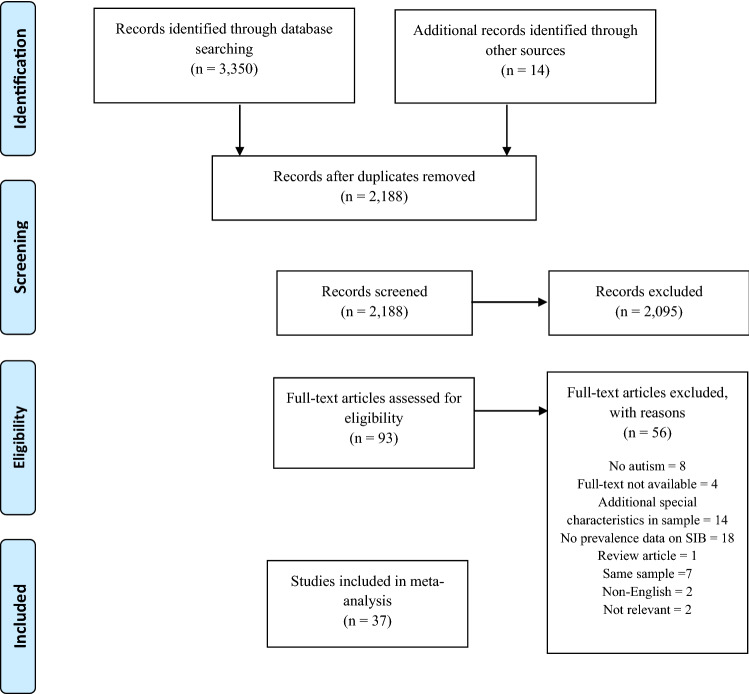
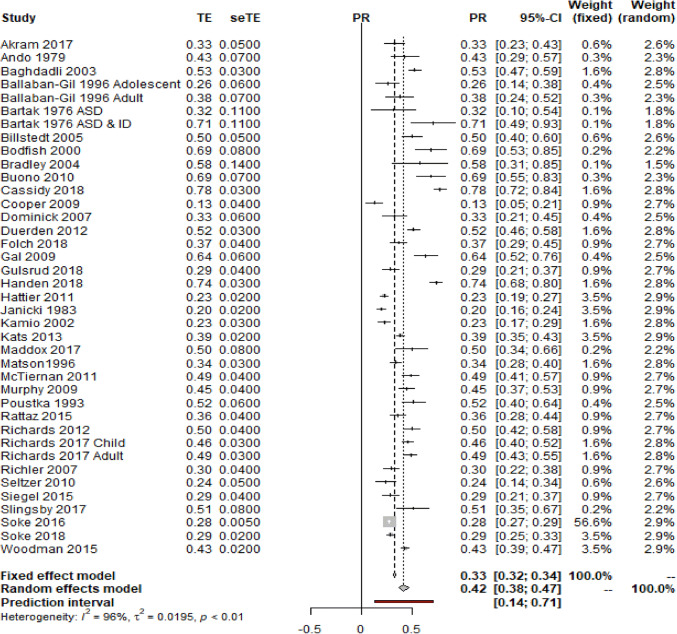
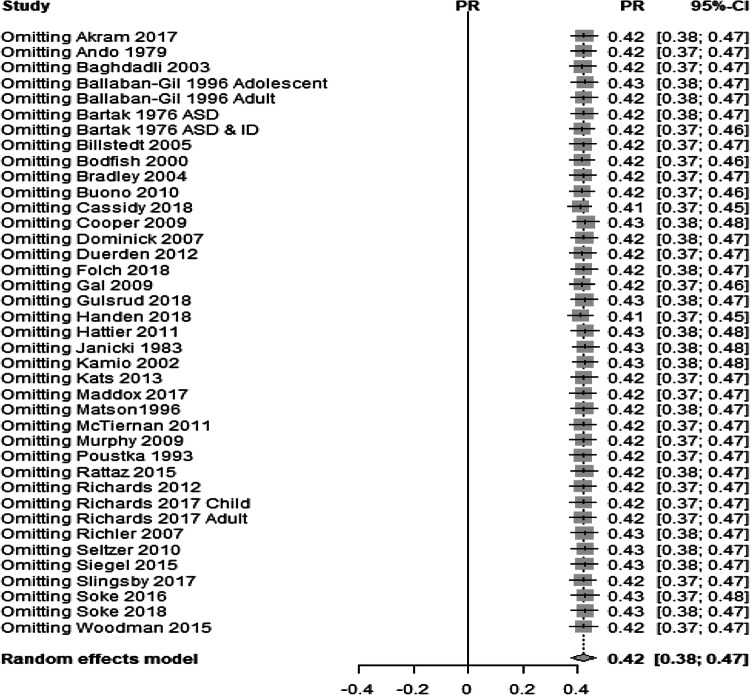
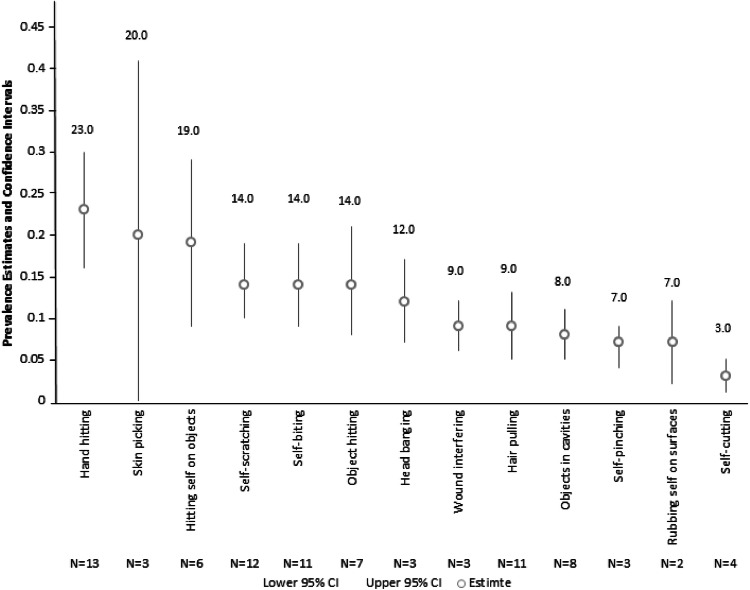
Self-injurious behaviour is purportedly common in autism, but prevalence rates have not yet been synthesised meta-analytically. In the present study, data from 14,379 participants in thirty-seven papers were analysed to generate a pooled prevalence estimate of self-injury in autism of 42% (confidence intervals 0.38-0.47). Hand-hitting topography was the most common form of self-injury (23%), self-cutting topography the least common (3%). Sub-group analyses revealed no association between study quality, participant intellectual disability or age and overall prevalence rate of self-injury. However, females obtained higher prevalence rates than males (p = .013) and hair pulling and self-scratching were associated with intellectual disability (p = .008 and p = .002, respectively). The results confirm very high rates of self-injury in autism and highlight within group risk-markers.
Keywords: Autism; Intellectual disability; Prevalence; Self-harm; Self-injurious behaviour.
Conflict of interest statement
The authors declare that they have no conflicts of interest.
Figures
References
-
- Allen D, Lowe K, Brophy S, Moore K. Predictors of restrictive reactive strategy use in people with challenging behaviour. Journal of Applied Research in Intellectual Disabilities. 2009;22:159–168.
-
- Altiere MJ, von Kluge S. Family functioning and coping behaviors in parents of children with autism. Journal of Child and Family Studies. 2009;18:83–92.
-
- Ando H, Yoshimura I. Speech skill levels and prevalence of maladaptive behaviors in autistic and mentally retarded children. Child Psychiatry and Human Development. 1979;10:85–90. - PubMed
-
- Ando H, Yoshimura I. Comprehension skill levels and prevalence of maladaptive behaviors in autistic and mentally retarded children. Child Psychiatry and Human Development. 1979;10:85–90. - PubMed
Publication types
MeSH terms
LinkOut - more resources
Full Text Sources
Medical
