


Reducing Cardiovascular Disease Risk in Women Beyond Statin Therapy: New Insights 2020
- PMID: 32297837
- PMCID: PMC7476379
- DOI: 10.1089/jwh.2019.8189
Reducing Cardiovascular Disease Risk in Women Beyond Statin Therapy: New Insights 2020
Abstract
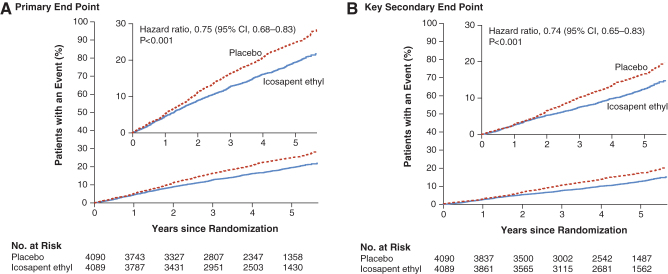
Management of residual and persistent cardiovascular disease (CVD) risk among statin-treated individuals has emerged as an important preventive strategy. The purpose of this article is to review the unique landscape of CVD in women and relevant prior prevention trials, and to discuss how the recent results of the Reduction of Cardiovascular Events with Icosapent Ethyl-Intervention Trial (REDUCE-IT) might apply to the contemporary management of CVD risk among statin-treated women. Women have unique risk factors that may impact CVD and its prevention. Historically, women have been underrepresented in CVD trials, posing a challenge to development of clinical recommendations for women. Low-density lipoprotein cholesterol-targeting treatments have demonstrated CVD risk reduction, with comparable effects in both sexes. In contrast, triglyceride-lowering treatments (niacin, fenofibrate, and omega-3 fatty acids) have reported mixed findings for CVD risk reduction. Recent clinical trials of combination omega-3 fatty acids (docosahexaenoic acid/eicosapentaenoic acid [EPA]) have not found significant CVD risk reduction. The recently published REDUCE-IT study found that icosapent ethyl, an EPA-only omega-3 fatty acid, in combination with statins, significantly reduced CVD events in high-risk patients. The icosapent ethyl group had a significantly lower occurrence of the primary composite CVD endpoint (17.2%) than the placebo group (22.0%; hazard ratio 0.75; 95% confidence interval 0.68-0.83; p < 0.001). CVD risk reduction with icosapent ethyl treatment was comparable between women and men (p for interaction, 0.33). Data from REDUCE-IT suggest women benefit similarly to men with respect to icosapent ethyl, a novel therapy for prevention of CVD.
Keywords: cardiovascular disease; eicosapentaenoic acid; icosapent ethyl; sex differences; women.
Conflict of interest statement
L.M.: Consultant, Speaker's Bureau, Equity Investment: Amarin Pharma, Inc. Consultant: Livongo.
A.M.N.: Grant/research support: Amarin Pharma, Inc., Amgen, Regeneron, Sanofi, and Janssen; Consultant: Amarin Pharma, Inc., Amgen, Regeneron, Sanofi, Janssen, NovoNordisk, and AstraZeneca. Other financial or material support: NHLBI K01HL133416.
N.K.W.: No disclosures to report.
Figures
References
-
- Benjamin EJ, Muntner P, Alonso A, et al. Heart disease and stroke statistics-2019 update: A report from the American Heart Association. Circulation 2019;139:e56–e528 - PubMed
-
- Institute of Medicine Committee on Understanding the Biology of Sex and Gender Differences. The National Academies Collection: Reports funded by National Institutes of Health. Wizemann TM, Pardue ML, eds. Exploring the biological contributions to human health: Does sex matter? Washington, DC: National Academies Press (US), 2001 - PubMed
-
- Mosca L, Appel LJ, Benjamin EJ, et al. Evidence-based guidelines for cardiovascular disease prevention in women. American Heart Association scientific statement. Arterioscler Thromb Vasc Biol 2004;24:e29–e50 - PubMed
-
- Institute of Medicine. Women's health research: Progress, pitfalls, and promise. Washington, DC: The National Academies Press, 2010 - PubMed
-
- d'Emden MC, Jenkins AJ, Li L, et al. Favourable effects of fenofibrate on lipids and cardiovascular disease in women with type 2 diabetes: Results from the Fenofibrate Intervention and Event Lowering in Diabetes (FIELD) study. Diabetologia 2014;57:2296–2303 - PubMed
Publication types
MeSH terms
Substances
Grants and funding
LinkOut - more resources
Full Text Sources
Medical
Research Materials
