


Prognostic value of TP53 concurrent mutations for EGFR- TKIs and ALK-TKIs based targeted therapy in advanced non-small cell lung cancer: a meta-analysis
- PMID: 32299384
- PMCID: PMC7164297
- DOI: 10.1186/s12885-020-06805-5
Prognostic value of TP53 concurrent mutations for EGFR- TKIs and ALK-TKIs based targeted therapy in advanced non-small cell lung cancer: a meta-analysis
Abstract
Background: The prognostic significance of TP53 concurrent mutations in patients with epidermal growth factor receptor (EGFR)- or anaplastic lymphoma kinase (ALK)- mutated advanced non-small-cell lung cancer (NSCLC) who received EGFR-tyrosine kinase inhibitors (TKIs) or ALK-TKIs based targeted therapy remains controversial. Therefore, the present meta-analysis was performed to investigate the association between TP53 concurrent mutations and prognosis of patients with advanced NSCLC undergoing EGFR-TKIs or ALK-TKIs treatments.
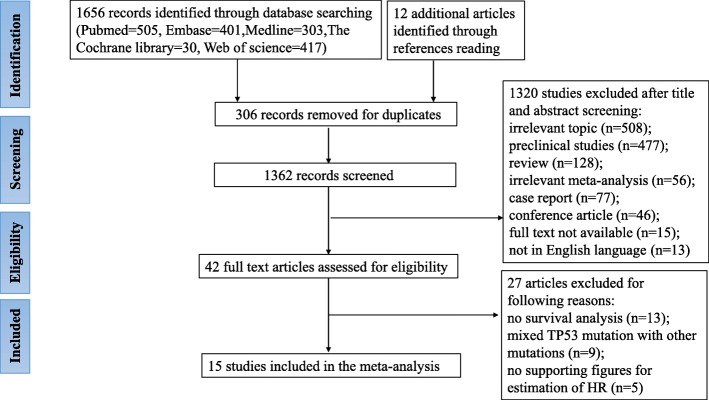
Methods: Eligible studies were identified by searching the online databases PubMed, Embase, Medline, The Cochrane library and Web of Science. Hazard ratios (HRs) with 95% confidence intervals (CIs) were calculated to clarify the correlation between TP53 mutation status and prognosis of patients. This meta-analysis was conducted according to the Preferred Reporting Items for Systematic Reviews and Meta-Analyses (PRISMA) statement.
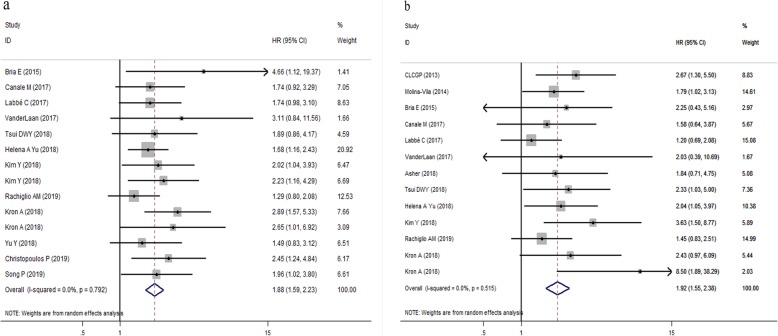
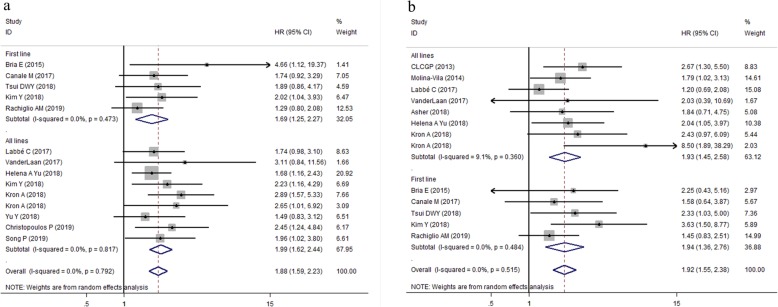
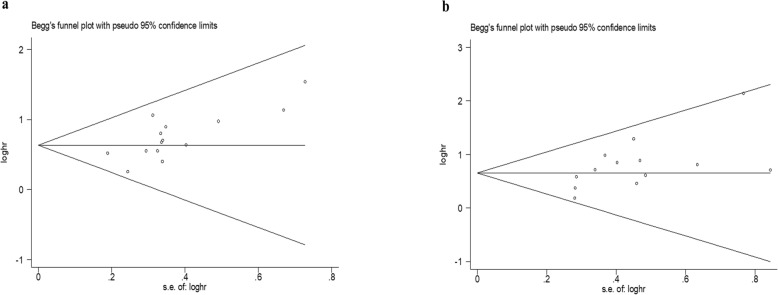
Results: In total, 15 studies with 1342 patients were included for final analysis. Overall, concurrent TP53 mutation was associated with unfavorable progression-free survival (PFS) (HR = 1.88, 95%CI: 1.59-2.23, p < 0.001, I2 = 0.0%, P = 0.792) and overall survival (OS) (HR = 1.92, 95%CI: 1.55-2.38, p < 0.001, I2 = 0.0%, P = 0.515). Subgroup analysis based on type of targeted therapy (EGFR-TKIs or ALK-TKIs, pathological type of cancer (adenocarcinoma only or all NSCLC subtypes) and line of treatment (first-line only or all lines) all showed that TP53 mutations was associated with shorter survivals of patients with EGFR-TKIs or ALK-TKIs treatments. Particularly, in patients with first-line EGFR-TKIs treatment, significantly poorer prognosis was observed in patients with TP53 concurrent mutations (pooled HR for PFS: 1.69, 95% CI 1.25-2.27, P < 0.001, I2 = 0.0%, P = 0.473; pooled HR for OS: 1.94, 95% CI 1.36-2.76, P < 0.001, I2 = 0.0%, P = 0.484). Begg's funnel plots and Egger's tests indicated no significant publication bias in this study.
Conclusions: This meta-analysis indicated that concurrent TP53 mutations was a negative prognostic factor and associated with poorer outcomes of patients with EGFR-TKIs or ALK-TKIs treatments in advanced NSCLC. In addition, our study provided evidence that TP53 mutations might be involved in primary resistance to EGFR-TKIs treatments in patients with sensitive EGFR mutations in advanced NSCLC.
Keywords: Anaplastic lymphoma kinase; Epidermal growth factor receptor; Non-small-cell lung cancer; Tumor protein 53; Tyrosine kinase inhibitors.
Conflict of interest statement
The authors declare that they have no competing interest.
Figures



References
-
- Rosell R, Carcereny E, Gervais R, et al. Erlotinib versus standard chemotherapy as first-line treatment for European patients with advanced EGFR mutation-positive non-small-cell lung cancer (EURTAC): a multicentre, open-label, randomised phase 3 trial. Lancet Oncol. 2012;13(3):239–246. doi: 10.1016/S1470-2045(11)70393-X. - DOI - PubMed
-
- Mitsudomi T, Morita S, Yatabe Y, et al. Geftinib versus cisplatin plus docetaxel in patients with non-small-cell lung cancer harboring mutations of the epidermal growth factor receptor (WJTOG3405): an open label, randomised phase 3 trial. Lancet Oncol. 2010;11(2):121–128. doi: 10.1016/S1470-2045(09)70364-X. - DOI - PubMed
Publication types
MeSH terms
Substances
LinkOut - more resources
Full Text Sources
Research Materials
Miscellaneous
