Review
. 2020 Jul:108:31-39.
doi: 10.1016/j.pediatrneurol.2020.03.014. Epub 2020 Mar 19.

Neurological Monitoring and Complications of Pediatric Extracorporeal Membrane Oxygenation Support

Affiliations
Review

Neurological Monitoring and Complications of Pediatric Extracorporeal Membrane Oxygenation Support

Ahmed S Said et al. Pediatr Neurol. 2020 Jul.

Abstract

Extracorporeal membrane oxygenation is extracorporeal life support for life-threatening cardiopulmonary failure. Since its introduction, the use of extracorporeal membrane oxygenation has expanded to patients with more complex comorbidities without change in patient mortality rates. Although many patients survive, significant neurological complications like seizures, ischemic strokes, and intracranial hemorrhage can occur during extracorporeal membrane oxygenation care. The risks of these complications often add to the complexity of decision-making surrounding extracorporeal membrane oxygenation support. In this review, we discuss the pathophysiology and incidence of neurological complications in children supported on extracorporeal membrane oxygenation, factors influencing the incidence of these complications, commonly used neurological monitoring modalities, and outcomes for this complex patient population. We discuss the current literature on the use of electroencephalography for both seizure detection and monitoring of background electroencephalographic changes, in addition to the use of less commonly used imaging modalities like transcranial Doppler. We summarize the knowledge gaps and the lack of clinical consensus guidelines for managing these potentially life-changing neurological complications. Finally, we discuss future work to further understand the pathophysiology of extracorporeal membrane oxygenation-related neurological complications.

Keywords: Electroencephalography; Extracorporeal membrane oxygenation; Intracranial hemorrhage; Seizures; Stroke.


Figures

Figure 1:
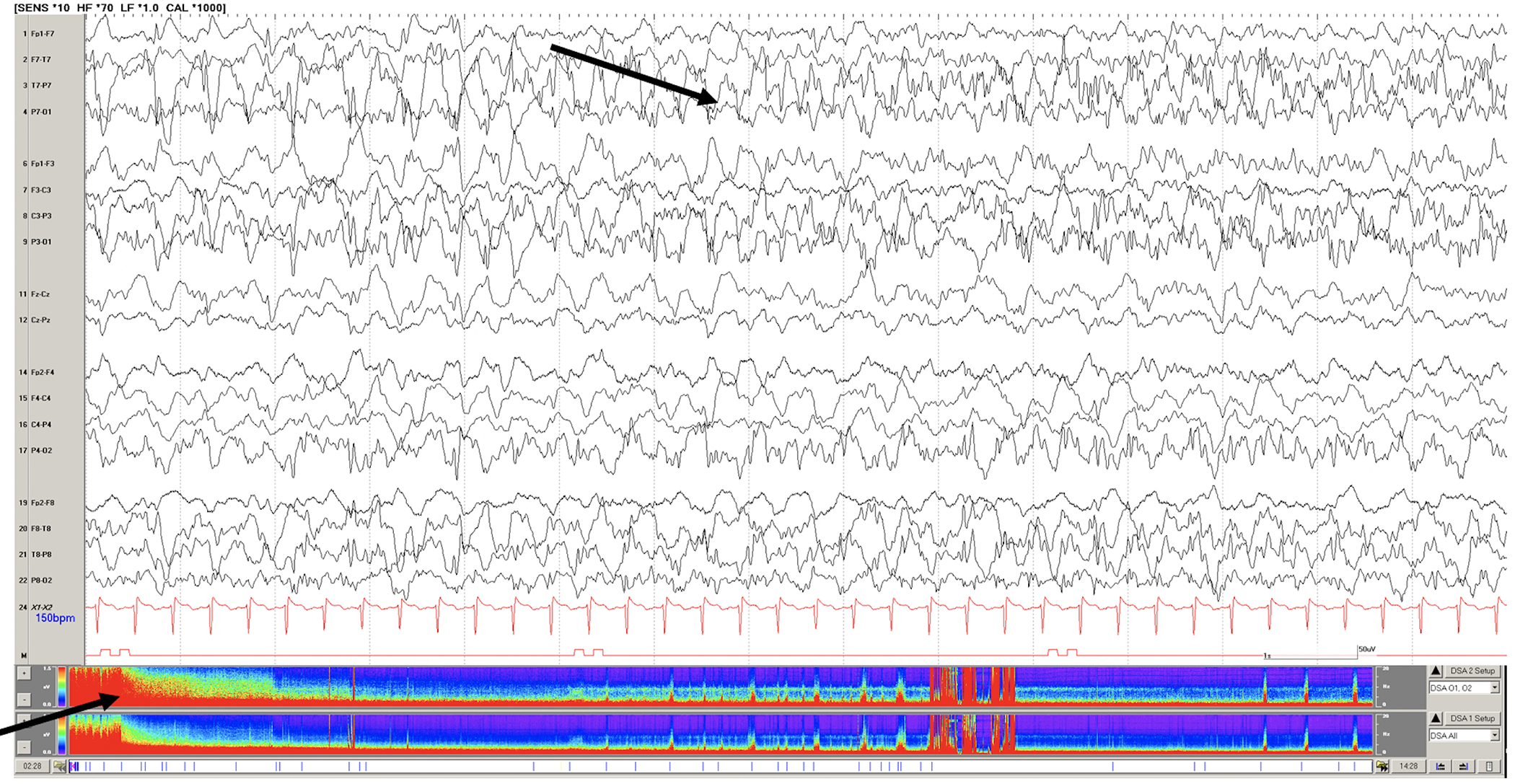
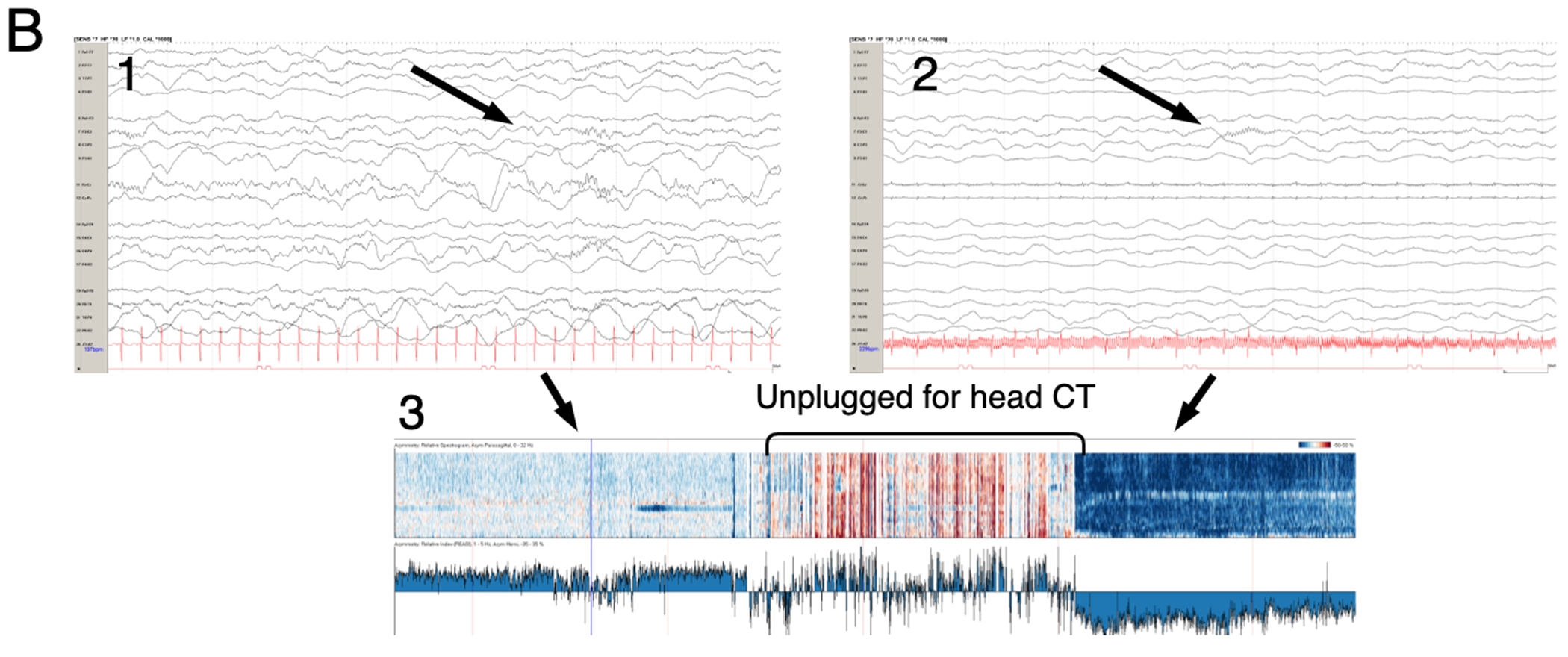
Figure 1:. Examples of EEG tracings for patients supported on ECMO
A. Raw EEG tracing of a 7 year old with respiratory failure requiring VA ECMO support. Continuous video EEG monitoring initiated soon after cannulation revealed status epilepticus (black arrows on raw EEG tracing and density spectral array) and subsequent seizures during recording. B. Raw EEG (1 and 2) and asymmetry index from quantitative EEG (3) of a 1 year-old child on VA ECMO support after near-drowning. While unplugged from EEG recording for head CT the patient suffered a right hemispheric stroke. (1) Raw EEG tracing with symmetric sleep spindles corresponding to normal asymmetry index. Upon return from CT suite, the patient demonstrated asymmetry of sleep spindles (2) and dramatically increased relative power or activity (dark blue in 3) on the left and not right hemisphere.
Figure 1:
Figure 1:. Examples of EEG tracings for patients supported on ECMO
A. Raw EEG tracing of a 7 year old with respiratory failure requiring VA ECMO support. Continuous video EEG monitoring initiated soon after cannulation revealed status epilepticus (black arrows on raw EEG tracing and density spectral array) and subsequent seizures during recording. B. Raw EEG (1 and 2) and asymmetry index from quantitative EEG (3) of a 1 year-old child on VA ECMO support after near-drowning. While unplugged from EEG recording for head CT the patient suffered a right hemispheric stroke. (1) Raw EEG tracing with symmetric sleep spindles corresponding to normal asymmetry index. Upon return from CT suite, the patient demonstrated asymmetry of sleep spindles (2) and dramatically increased relative power or activity (dark blue in 3) on the left and not right hemisphere.
Figure 2.
Figure 2.
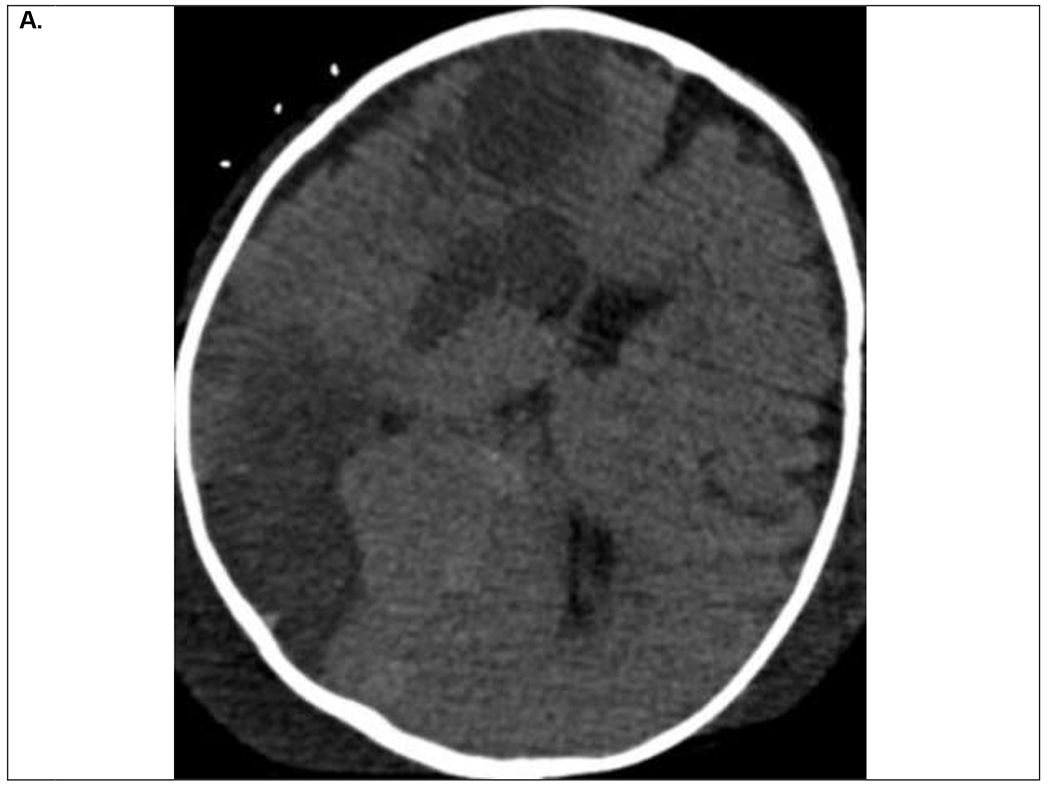
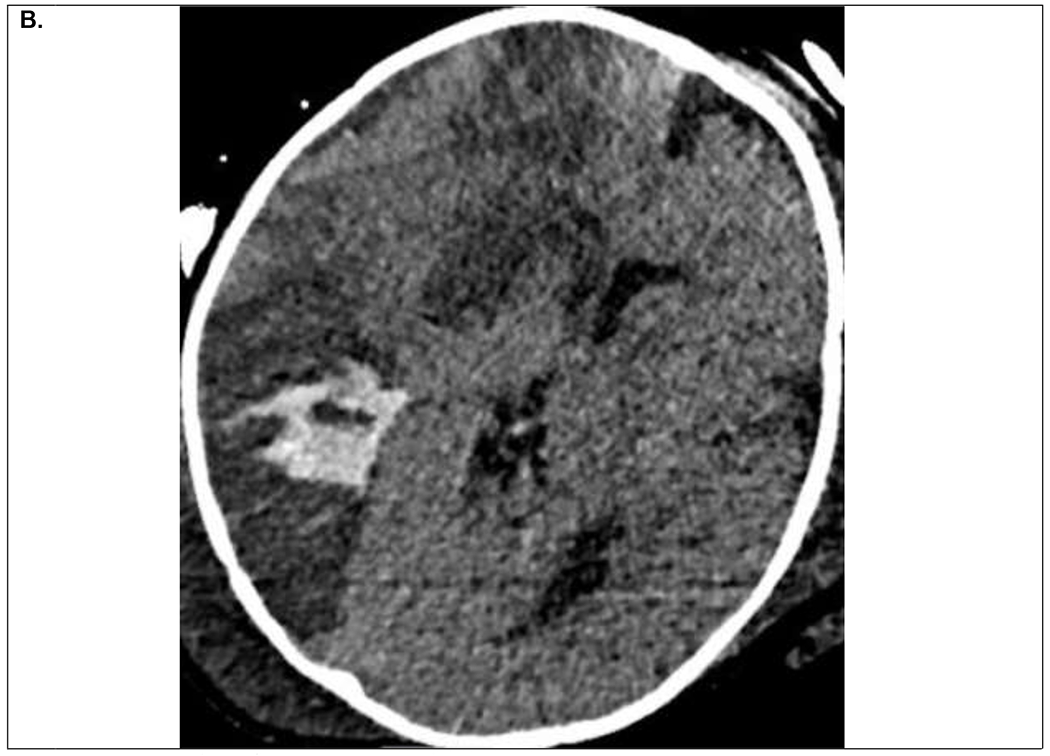
9 month old infant on VA ECMO support for refractory septic shock and multiorgan dysfunction. Within first 24 hours of ECMO course, the patient developed clinical signs of right sided facial venous congestion and asymmetric slowing on EEG, initially thought to be secondary to superior vena cava obstruction by the ECMO venous drainage cannula. A. Head CT on ECMO day 3 demonstrated multifocal ischemic infarcts within the right hemisphere for which his systemic anticoagulation was temporarily held. B. Follow up head CT on ECMO day 5 demonstrated evolution of the ischemic infarcts and hemorrhagic conversion within the posterior ischemic infarct. He was decannulated on ECMO day 9 and discharged home on hospital day 68 with residual left hemiparesis.
Figure 2.
Figure 2.
9 month old infant on VA ECMO support for refractory septic shock and multiorgan dysfunction. Within first 24 hours of ECMO course, the patient developed clinical signs of right sided facial venous congestion and asymmetric slowing on EEG, initially thought to be secondary to superior vena cava obstruction by the ECMO venous drainage cannula. A. Head CT on ECMO day 3 demonstrated multifocal ischemic infarcts within the right hemisphere for which his systemic anticoagulation was temporarily held. B. Follow up head CT on ECMO day 5 demonstrated evolution of the ischemic infarcts and hemorrhagic conversion within the posterior ischemic infarct. He was decannulated on ECMO day 9 and discharged home on hospital day 68 with residual left hemiparesis.

References

    1. Makdisi G, Wang IW. Extra Corporeal Membrane Oxygenation (ECMO) review of a lifesaving technology. J Thorac Dis. 2015;7(7):E166–176. - PMC - PubMed
    1. Thiagarajan RR, Barbaro RP, Rycus PT, et al. Extracorporeal Life Support Organization Registry International Report 2016. ASAIO J. 2017;63(1):60–67. - PubMed
    1. Barbaro RP, Paden ML, Guner YS, et al. Pediatric Extracorporeal Life Support Organization Registry International Report 2016. ASAIO J. 2017;63(4):456–463. - PMC - PubMed
    1. Bembea MM, Felling RJ, Caprarola SD, et al. Neurologic Outcomes in a Two-Center Cohort of Neonatal and Pediatric Patients Supported on Extracorporeal Membrane Oxygenation. ASAIO J. 2019. - PMC - PubMed
    1. Gibbon JH Jr. Application of a mechanical heart and lung apparatus to cardiac surgery. Minn Med. 1954;37(3):171–185; passim. - PubMed