


Efficacy of single and repeated administration of ketamine in unipolar and bipolar depression: a meta-analysis of randomized clinical trials
- PMID: 32301056
- PMCID: PMC7329804
- DOI: 10.1007/s43440-020-00097-z
Efficacy of single and repeated administration of ketamine in unipolar and bipolar depression: a meta-analysis of randomized clinical trials
Abstract
Background: Due to unmet clinical needs for efficient drugs with a rapid onset of antidepressant effects, we aimed to evaluate the efficacy of single-dose ketamine in different subgroups of patients with major depression and establish whether repeated ketamine administration could be a viable strategy to maintain treatment gains.
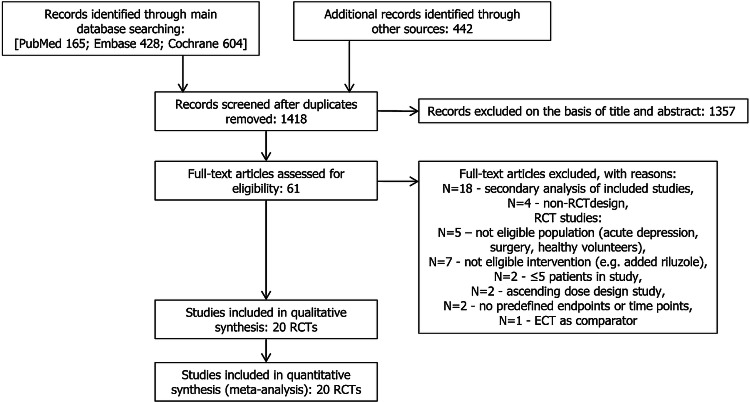
Methods: Electronic databases (Medline via PubMed, Embase, Cochrane Library, Trip Database) were systematically searched until February 22, 2019, for published peer-reviewed randomized controlled trials (RCTs) concerning a single and repeated administration of ketamine in patients with major depression. All relevant RCTs were selected and critically appraised, and a meta-analysis of eligible studies was performed.
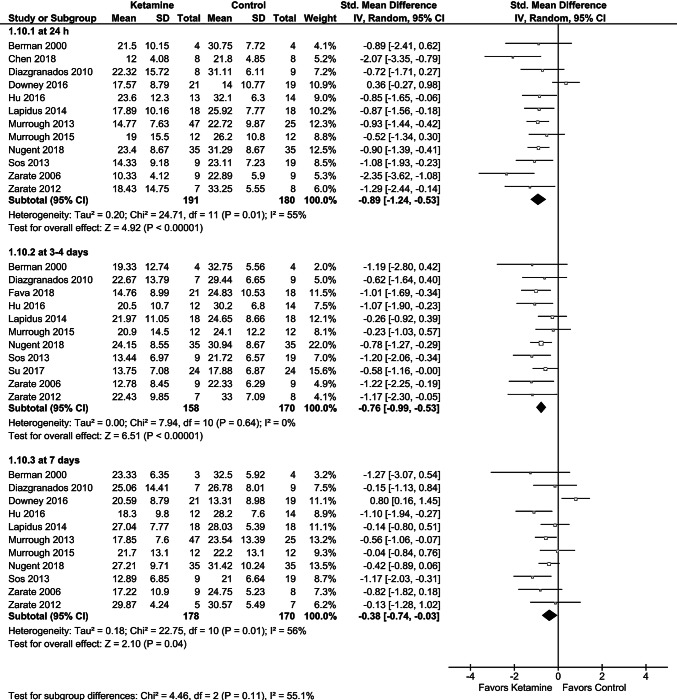
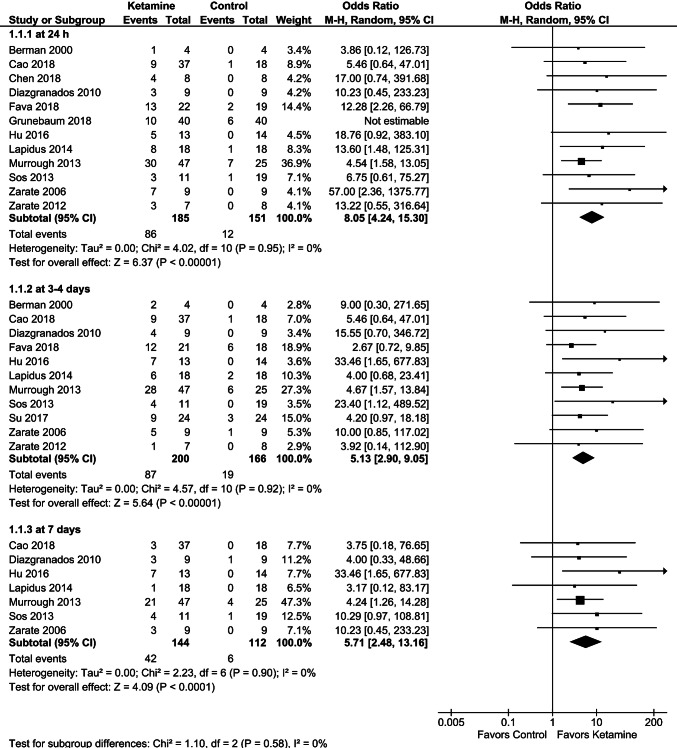
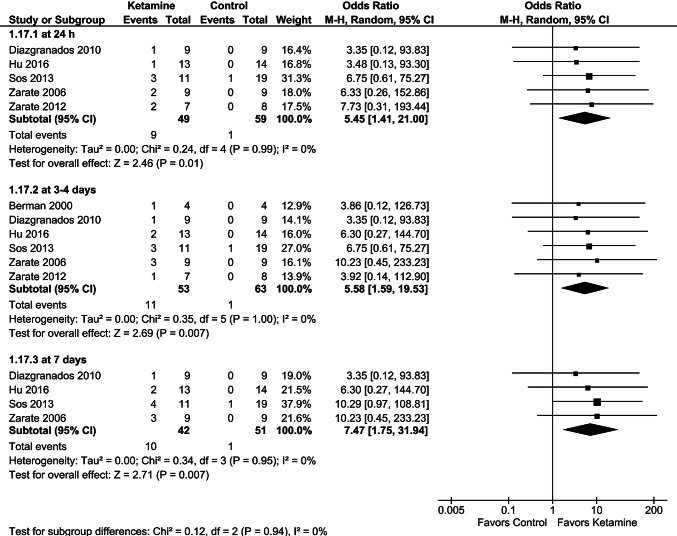
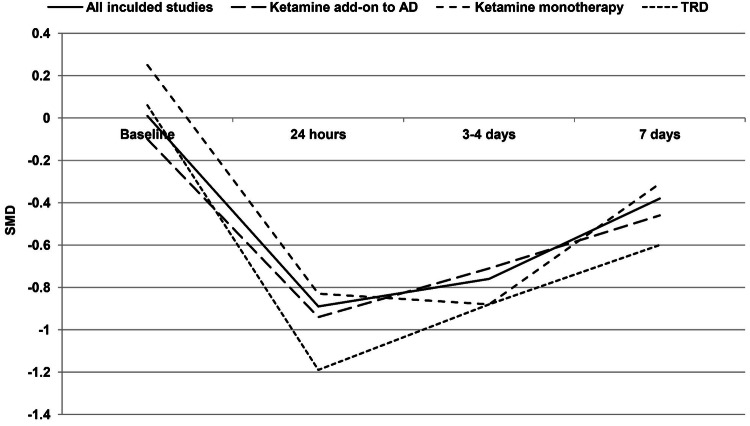
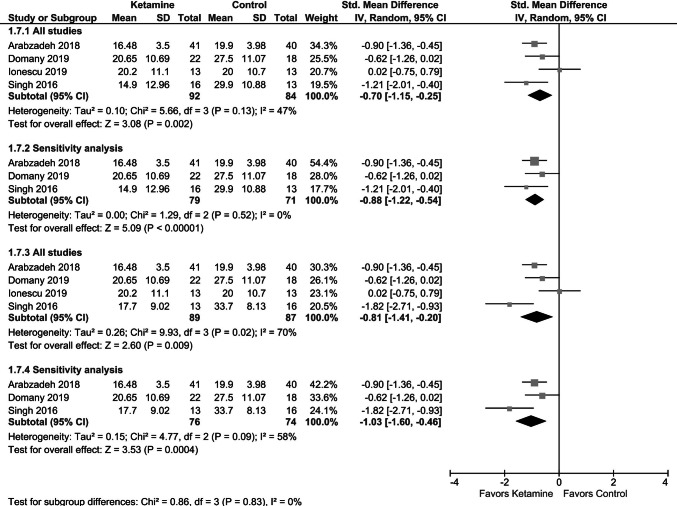
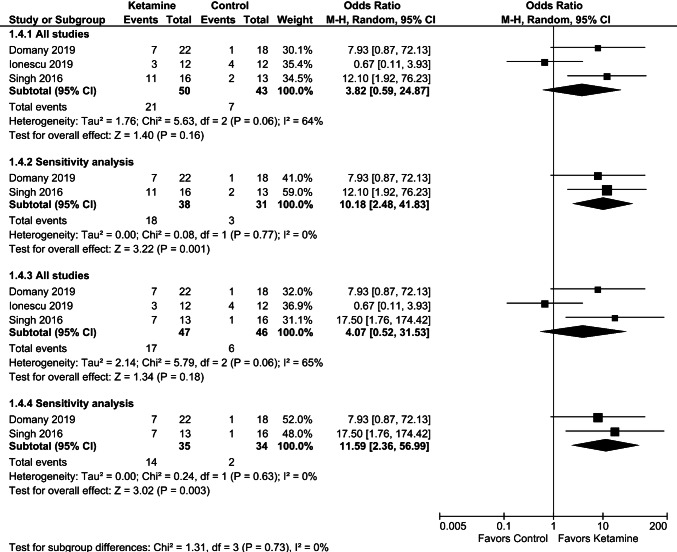
Results: A total of 20 studies were included in the meta-analysis. The largest effect of ketamine vs. controls in reducing depressive symptoms was observed at 24 h (SMD = - 0.89; 95% CI - 1.24; - 0.53; p < 0.00001); however, a significant difference was shown for up to 7 days after a single dose. Significant differences compared with controls were observed for up to 7 days in treatment-resistant patients and when ketamine was added to ongoing antidepressant treatment, while there were no significant differences at 7 days when ketamine was used as monotherapy. In patients with major depression, initial antidepressant effects of ketamine were maintained during repeated dosing. At 2-3 weeks of repeated ketamine treatment, significant reduction of depression severity scores was observed: SMD = - 0.70; 95% CI - 1.15; - 0.25 or SMD = - 0.81; 95% CI - 1.41; - 0.20 (depending on the dosing regimen used); p ≤ 0.009 vs placebo.
Conclusions: Our meta-analysis revealed rapid and robust antidepressant effects of single-dose ketamine in patients with treatment-resistant depression (TRD). By pooling data from RCTs, we showed for the first time that repeated ketamine administration is effective in sustaining initial antidepressant effects observed after single dosing.
Keywords: Antidepressants; Bipolar disorder; Ketamine; Major depressive disorder; Meta-analysis; RCT.
Conflict of interest statement
The authors declare that the research was conducted in the absence of any commercial or financial relationships that could be construed as a potential conflict of interest.
Figures
References
-
- World Health Organization (WHO). 2019. https://www.who.int/news-room/fact-sheets/detail/depression. Accessed 30 December 2019.
-
- GBD 2017 Disease and Injury Incidence and Prevalence Collaborators. Global, regional, and national incidence, prevalence, and years lived with disability for 354 diseases and injuries for 195 countries and territories, 1990–2017: a systematic analysis for the Global Burden of Disease Study 2017. The Lancet 2018;392(10159):1789–1858. - PMC - PubMed
-
- Rush AJ. Star-D: lessons learned and future implications. Depress Anxiety. 2011;28:521–524. - PubMed
-
- Kasper S, Spadone C, Verpillat P, Angst J. Onset of action of escitalopram compared with other antidepressants: results of a pooled analysis. Int Clin Psychopharmacol. 2006;21:105–110. - PubMed
-
- Jick H, Kaye JA, Jick SS. Antidepressants and the risk of suicidal behaviors. JAMA. 2004;292:338–343. - PubMed
Publication types
MeSH terms
Substances
LinkOut - more resources
Full Text Sources
Other Literature Sources
Medical