. 2020 Apr 17;16(4):e1008401.
doi: 10.1371/journal.ppat.1008401. eCollection 2020 Apr.

Role of MPK4 in pathogen-associated molecular pattern-triggered alternative splicing in Arabidopsis

Affiliations

Role of MPK4 in pathogen-associated molecular pattern-triggered alternative splicing in Arabidopsis

Jeremie Bazin et al. PLoS Pathog. .

Abstract

Alternative splicing (AS) of pre-mRNAs in plants is an important mechanism of gene regulation in environmental stress tolerance but plant signals involved are essentially unknown. Pathogen-associated molecular pattern (PAMP)-triggered immunity (PTI) is mediated by mitogen-activated protein kinases and the majority of PTI defense genes are regulated by MPK3, MPK4 and MPK6. These responses have been mainly analyzed at the transcriptional level, however many splicing factors are direct targets of MAPKs. Here, we studied alternative splicing induced by the PAMP flagellin in Arabidopsis. We identified 506 PAMP-induced differentially alternatively spliced (DAS) genes. Importantly, of the 506 PAMP-induced DAS genes, only 89 overlap with the set of 1950 PAMP-induced differentially expressed genes (DEG), indicating that transcriptome analysis does not identify most DAS events. Global DAS analysis of mpk3, mpk4, and mpk6 mutants in the absence of PAMP treatment showed no major splicing changes. However, in contrast to MPK3 and MPK6, MPK4 was found to be a key regulator of PAMP-induced DAS events as the AS of a number of splicing factors and immunity-related protein kinases is affected, such as the calcium-dependent protein kinase CPK28, the cysteine-rich receptor like kinases CRK13 and CRK29 or the FLS2 co-receptor SERK4/BKK1. Although MPK4 is guarded by SUMM2 and consequently, the mpk4 dwarf and DEG phenotypes are suppressed in mpk4 summ2 mutants, MPK4-dependent DAS is not suppressed by SUMM2, supporting the notion that PAMP-triggered MPK4 activation mediates regulation of alternative splicing.


Conflict of interest statement

The authors have declared that no competing interests exist.

Figures
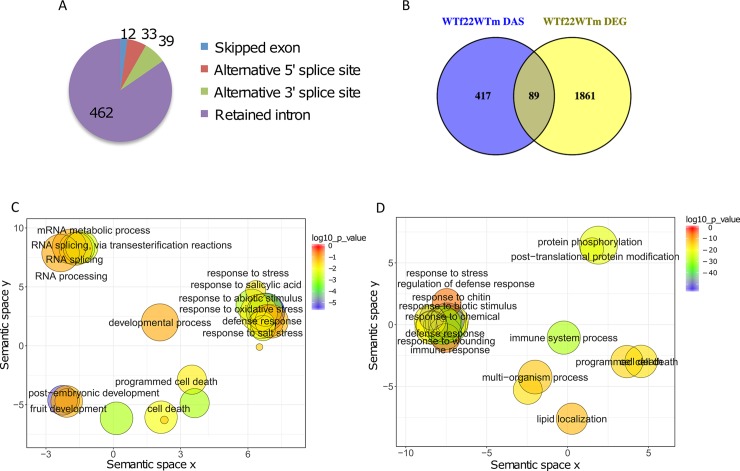
Fig 1
Fig 1. Flagellin induces alternative splicing in 506 genes.
A, Number of DAS events from each class identified upon flg22 treatment in wild-type plants B; Venn comparison plot between differentially spliced (flg22 DAS) with differentially expressed (flg22 DEG) genes in wild-type plants (FDR < 0.01, Fold Change > 2). C, REVIGO plots of gene ontology enrichment clusters of differentially spliced, or D, differentially expressed genes. Each circle represents a significant GO category but only groups of highest significance are labeled. Related GOs have similar (x, y) coordinates.
Fig 2
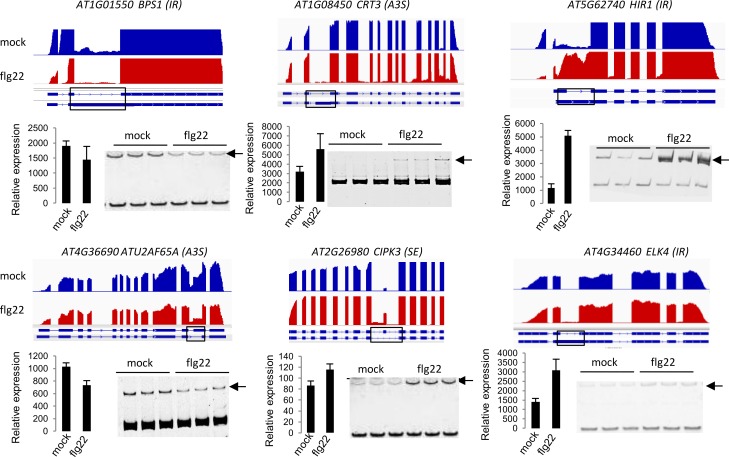
Fig 2. RT-PCR analysis of selected differential splicing events in response to flg22.
Normalized RNA-seq coverage data are shown in the upper part of each panel. Scale is the same in each track. Relative expression for each gene was calculated based on the normalized RNA-seq read count produced by DEseq2. A black arrow marks the position of the alternative isoform. RT-PCR was performed on 3 biological replicates.
Fig 3
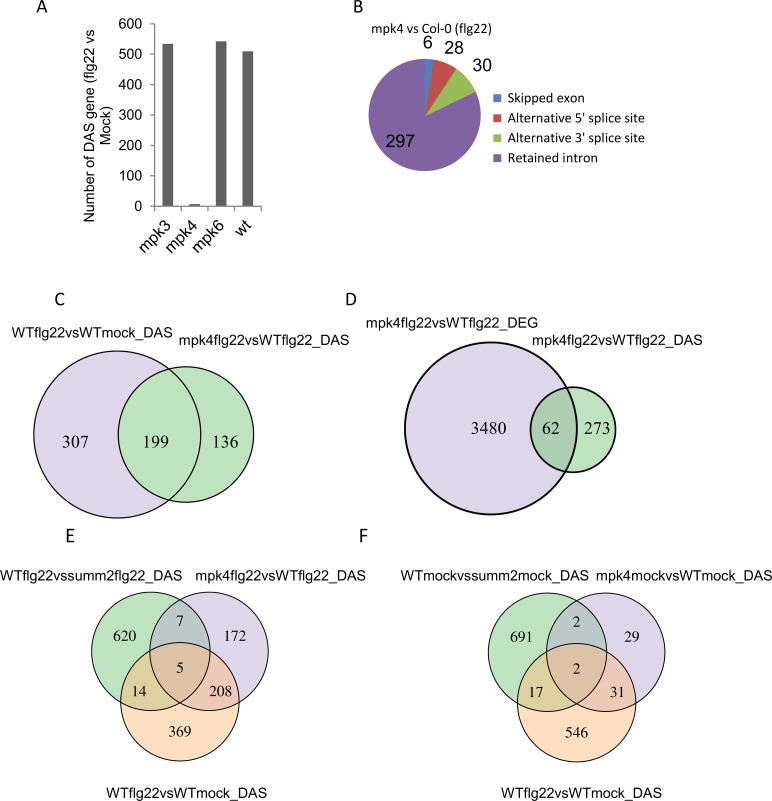
Fig 3. MPK4 regulates alternative splicing in PTI.
A, Number of DAS genes in response to flg22 in mpk3, mpk4, mpk6, and wild-type (wt, Col-0) plants. B, Number of AS events from each class identified in the mpk4 mutant compared to wild type upon flg22 treatment. C, Venn comparison plot between DAS genes in mpk4 to wild type upon in response to flg22 treatment with DAS genes in mock- and flg22-treated wild-type plants. D, Venn comparison plot between DAS genes and DEG genes in mpk4 as compared to WT. Comparison of flg22-induced DAS events of Col-0 WT with those in mpk4 and summ2 upon E, mock or F, flg22 treatment.
Fig 4
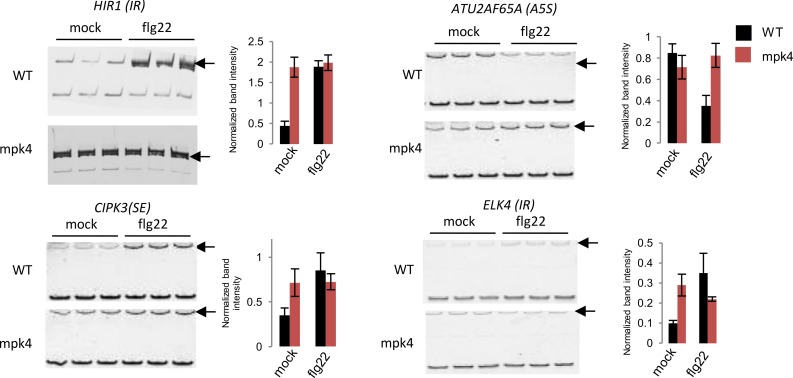
Fig 4. RT-PCR analysis of selected differential splicing events in mpk4 and WT in mock- or flg22-treated plants.
RT-PCR was performed on 3 biological replicates and products were separated on the same gel. A black arrow marks the position of the alternative isoforms. Band intensity was normalized against the non-differential isoforms. Significant differences were calculated by t-test (*: p-value < 0.05).
Fig 5
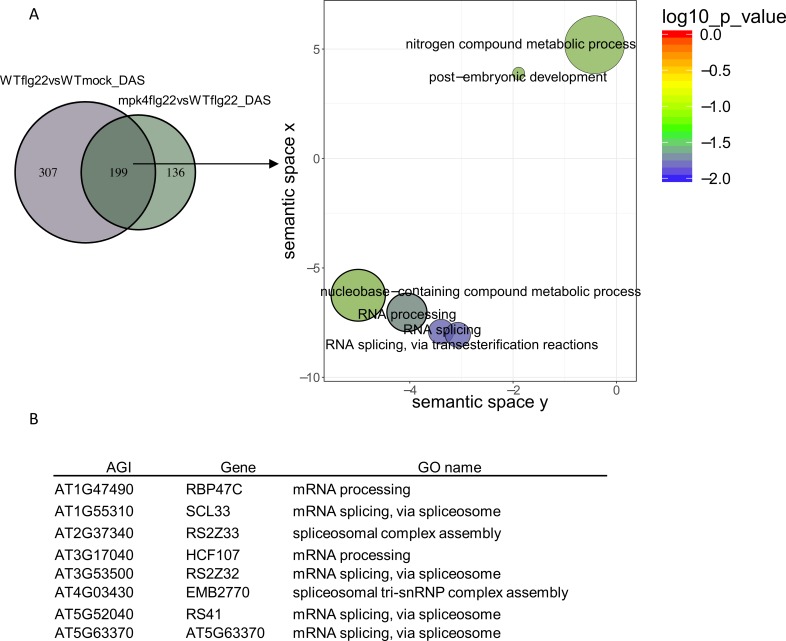
Fig 5. MPK4 regulates alternative processing of several splicing factors.
A, REVIGO plots of gene ontology enrichment clusters of DAS genes in both mpk4 compared to wild type and in response to flg22 in wild-type plants. Each circle represents a significant GO category but only groups of highest significance are labeled. Related GOs have similar (x, y) coordinates. B, List of DAS genes involved in mRNA processing and splicing.
Fig 6
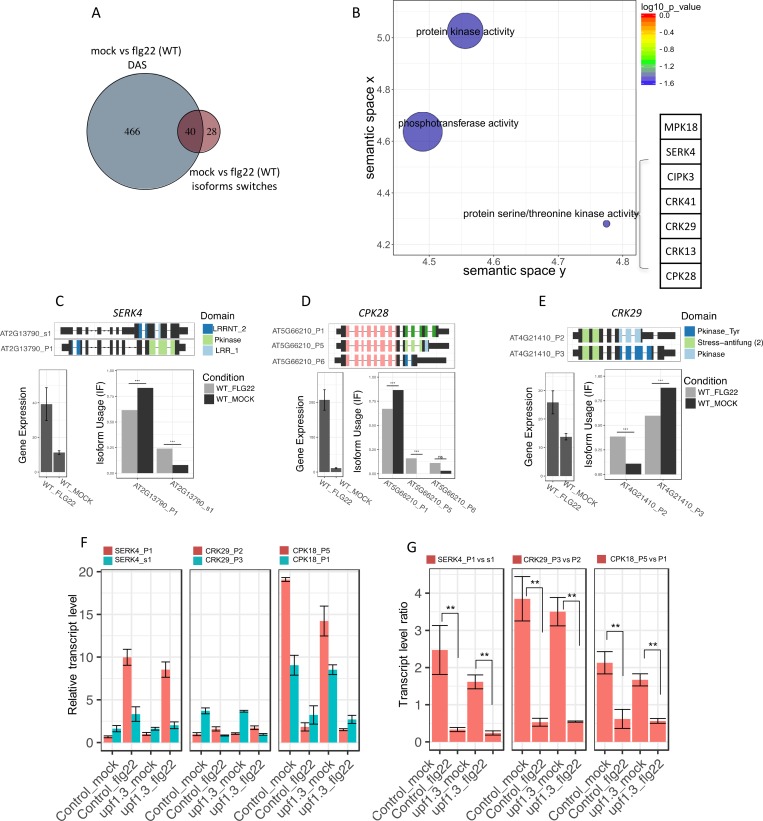
Fig 6. Flg22-induces protein kinase isoform switching.
A, Venn comparison plot between DAS genes compared to genes with isoform switching events in response to flg22 in WT. B, REVIGO plots of gene ontology enrichment clusters of DAS genes both in mpk4 compared to wild type and in response to flg22 in wild-type plants. Each circle represents a significant GO category but only groups of highest significance are labeled. Related GOs have similar (x, y) coordinates. C-D-E, Results of IsoformSwitchAnalysisR showing the gene diagram of differential isoforms with the predicted PFAM domain, change in gene expression and relative isoform abundance in response to flg22 and isoform-specific RT-qPCR analysis showing F, the relative transcript abundance (normalized against the housekeeping gene AT4G26410) and G ratio of isoform abundances in response to mock or flg22 treatment in WT and upf1upf3 for SERK4, CPK28 and CRK29. Significant differences were estimated by student t-test (** p-value < 0.01).

References

    1. Bigeard J., Colcombet J., Hirt H., Signaling Mechanisms in Pattern-Triggered Immunity (PTI). Mol. Plant 8, 521–539 (2015). 10.1016/j.molp.2014.12.022 - DOI - PubMed
    1. Jones J. D. G., Dangl J. L., The plant immune system. Nature 444, 323–329 (2006). 10.1038/nature05286 - DOI - PubMed
    1. Asai T., et al. , MAP kinase signalling cascade in Arabidopsis innate immunity. Nature 415, 977–983 (2002). 10.1038/415977a - DOI - PubMed
    1. Gao M., et al. , MEKK1, MKK1/MKK2 and MPK4 function together in a mitogen-activated protein kinase cascade to regulate innate immunity in plants. Cell Res. 18, 1190–1198 (2008). 10.1038/cr.2008.300 - DOI - PubMed
    1. Qiu J.-L., et al. , Arabidopsis mitogen-activated protein kinase kinases MKK1 and MKK2 have overlapping functions in defense signaling mediated by MEKK1, MPK4, and MKS1. Plant Physiol. 148, 212–22 (2008). 10.1104/pp.108.120006 - DOI - PMC - PubMed

Publication types

MeSH terms

Substances