


Transcriptome analysis of drought-tolerant sorghum genotype SC56 in response to water stress reveals an oxidative stress defense strategy
- PMID: 32303956
- PMCID: PMC7239807
- DOI: 10.1007/s11033-020-05396-5
Transcriptome analysis of drought-tolerant sorghum genotype SC56 in response to water stress reveals an oxidative stress defense strategy
Abstract
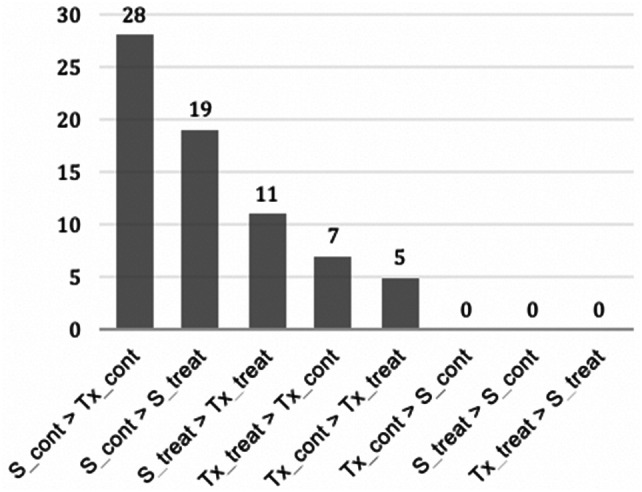
Drought tolerance is a crucial trait for crops to curtail the yield loss inflicted by water stress, yet genetic improvement efforts are challenged by the complexity of this character. The adaptation of sorghum to abiotic stress, its genotypic variability, and relatively small genome make this species well-suited to dissect the molecular basis of drought tolerance. The use of differential transcriptome analysis provides a snapshot of the bioprocesses underlying drought response as well as genes that might be determinants of the drought tolerance trait. RNA sequencing data were analyzed via gene ontology enrichment to compare the transcriptome profiles of two sorghum lines, the drought-tolerant SC56 and the drought-sensitive Tx7000. SC56 outperformed Tx7000 in wet conditions by upregulating processes driving growth and guaranteeing homeostasis. The drought tolerance of SC56 seems to be an intrinsic trait occurring through overexpressing stress tolerance genes in wet conditions, notably genes acting in defense against oxidative stress (SOD1, SOD2, VTC1, MDAR1, MSRB2, and ABC1K1). Similarly to wet conditions, under drought, SC56 enhanced its transmembrane transport and maintained growth-promoting mechanisms. Under drought, SC56 also upregulated stress tolerance genes that heighten the antioxidant capacity (SOD1, RCI3, VTE1, UCP1, FD1, and FD2), regulatory factors (CIPK1 and CRK7), and repressors of premature senescence (SAUL1). The differential expression analysis uncovered biological processes which upregulation enables SC56 to be a better accumulator of biomass and connects the drought tolerance trait to key stress tolerance genes, making this genotype a judicious choice for isolation of tolerance genes.
Keywords: Drought; RNA-seq; Sorghum; Stay-green; Stress; Tolerance.
Conflict of interest statement
All authors declare that they have no conflict of interest.
Figures
References
-
- Farooq M, Hussain M, Wahid A, Siddique KHM. Drought stress in plants: an overview. In: Aroca R, editor. Plant responses to drought stress. Heidelberg: Springer; 2012. pp. 1–33.
-
- Blum A. Osmotic adjustment is a prime drought stress adaptive engine in support of plant production. Plant Cell Environ. 2017;40:4–10. - PubMed
-
- Awasthi R, Bhandari K, Nayyar H. Temperature stress and redox homeostasis in agricultural crops. Front Environ Sci. 2015;3:1–24.
-
- Paterson AH, Bowers JE, Bruggmann R, Dubchak I, Grimwood J, Gundlach H, Haberer G, Hellsten U, Mitros T, Poliakov A, et al. The Sorghum bicolor genome and the diversification of grasses. Nature. 2009;457(7229):551–556. - PubMed
-
- Pasini L, Bergonti M, Fracasso A, Marocco A, Amaducci S. Microarray analysis of differentially expressed mRNAs and miRNAs in young leaves of sorghum under dry-down conditions. J Plant Physiol. 2014;171(7):537–548. - PubMed
MeSH terms
Grants and funding
LinkOut - more resources
Full Text Sources
Miscellaneous
