


Experimental investigation of far-field human cough airflows from healthy and influenza-infected subjects
- PMID: 32304605
- PMCID: PMC7264733
- DOI: 10.1111/ina.12680
Experimental investigation of far-field human cough airflows from healthy and influenza-infected subjects
Abstract
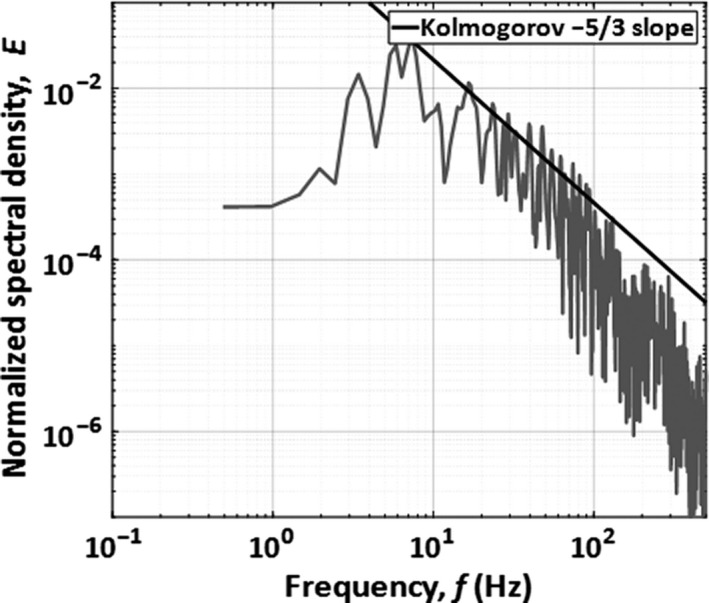
Seasonal influenza epidemics have been responsible for causing increased economic expenditures and many deaths worldwide. Evidence exists to support the claim that the virus can be spread through the air, but the relative significance of airborne transmission has not been well defined. Particle image velocimetry (PIV) and hot-wire anemometry (HWA) measurements were conducted at 1 m away from the mouth of human subjects to develop a model for cough flow behavior at greater distances from the mouth than were studied previously. Biological aerosol sampling was conducted to assess the risk of exposure to airborne viruses. Throughout the investigation, 77 experiments were conducted from 58 different subjects. From these subjects, 21 presented with influenza-like illness. Of these, 12 subjects had laboratory-confirmed respiratory infections. A model was developed for the cough centerline velocity magnitude time history. The experimental results were also used to validate computational fluid dynamics (CFD) models. The peak velocity observed at the cough jet center, averaged across all trials, was 1.2 m/s, and an average jet spread angle of θ = 24° was measured, similar to that of a steady free jet. No differences were observed in the velocity or turbulence characteristics between coughs from sick, convalescent, or healthy participants.
Keywords: aerosol sampling; biological sampling; cough airflow; particle image velocimetry; virus transmission.
© 2020 John Wiley & Sons A/S. Published by John Wiley & Sons Ltd.
Figures




References
-
- de Francisco SN, Donadel M, Jit M, Hutubessy R. A systematic review of the social and economic burden of influenza in low‐ and middle‐income countries. Vaccine. 2015;33(48):6537‐6544. - PubMed
-
- Gorbalenya AE, Baker SC, Baric RS, et al. Severe acute respiratory syndrome‐related coronavirus‐The species and its viruses, a statement of the Coronavirus Study Group. bioRxiv. 2020.
-
- World Health Organization . Coronavirus disease 2019 (COVID‐19). Situation report‐23. Reported February 12, 2020.
-
- Morawska L. Droplet fate in indoor environments, or can we prevent the spread of infection? Indoor Air. 2006;16:335‐347. - PubMed
Publication types
MeSH terms
Substances
LinkOut - more resources
Full Text Sources
Medical
Miscellaneous
