


Brief version of the coping health inventory for parents (CHIP) among family caregivers of children with chronic diseases
- PMID: 32307007
- PMCID: PMC7168940
- DOI: 10.1186/s12955-020-01357-5
Brief version of the coping health inventory for parents (CHIP) among family caregivers of children with chronic diseases
Abstract
Background: The Coping Health Inventory for Parents (CHIP) has demonstrated good psychometric properties in several language forms and has been used to assess the coping behaviors of families facing disease. However, the CHIP has not been validated in Mexico among families of children with chronic conditions, where it could be useful for research and intervention. The objectives of this instrumental study were to obtain a version of the CHIP for the Spanish language in Mexico, establish the factor structure of the Mexican version of the CHIP, probe its internal consistency reliability, and assess its concurrent construct validity.
Methods: A nonprobability sample of 405 family caregivers of children with chronic diseases responded to a battery of measurement instruments that included the CHIP, the Beck Anxiety Inventory, and the Beck Depression Inventory. The sample was randomly divided into two parts. In one subsample (190 participants), an exploratory factor analysis was performed using a principal component analysis and oblique rotation. In the second subsample (215 participants), a confirmatory factor analysis was performed using maximum likelihood estimation.
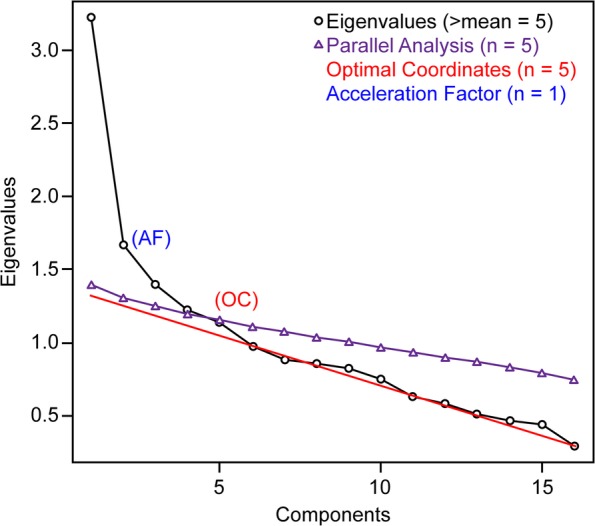
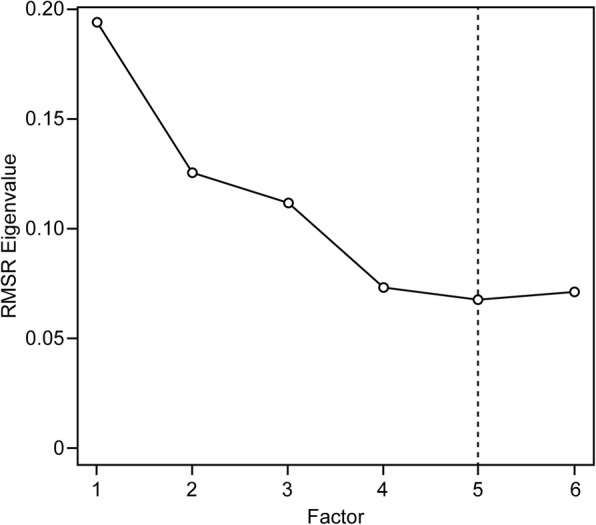
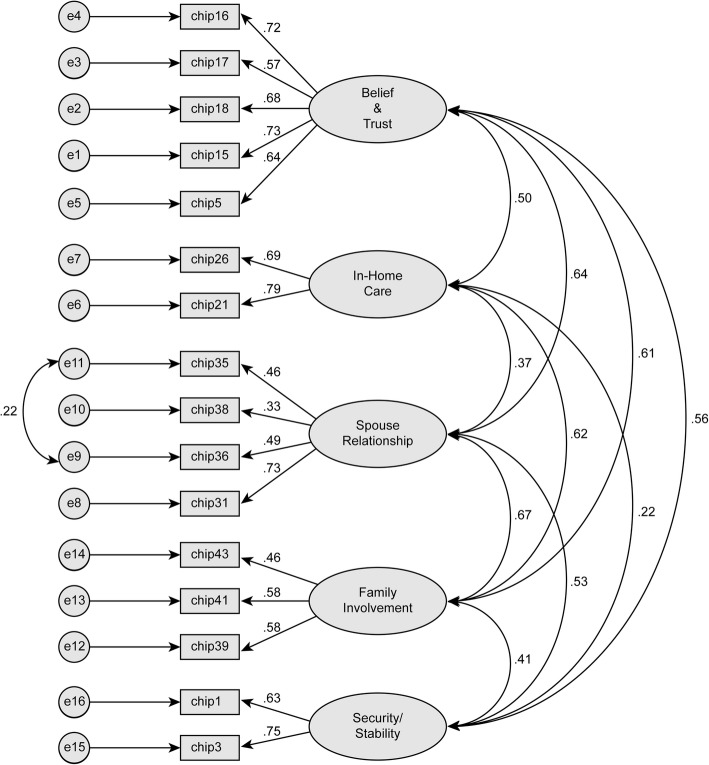
Results: The scale was reduced to 16 items (CHIP-16) with factorial loads greater than .50. The empirical criteria used to determine the number of factors converged on the following five factors: belief and trust (McDonald ω = .85), spouse/partner relationship (ω = .79), home care (ω = .77), family involvement (ω = .75), and security/stability (ω = .79). The overall internal consistency was good (ω = .88). The five-factor model showed acceptable fit indices and high parsimony. The mean CHIP-16 scores and the Spouse/partner relationship scores among the caregivers with anxiety were greater than those among the caregivers without anxiety. The mean home-care scores among the women were greater than those among men.
Conclusions: The 16-item version of the CHIP showed good internal consistency and construct validity; thus, the CHIP-16 is a useful instrument for measuring and assessing coping in family caregivers of children with chronic diseases.
Keywords: Anxiety; Coping; Depression; Family caregivers; Mexico; Psychometrics.
Conflict of interest statement
The authors declare that they have no competing interests.
Figures
References
-
- Aguilar-Vafaie ME. Coping-health inventory for parents: assessing coping among iranian parents in the care of children with cancer and introductory development of an adapted Iranian coping-health inventory for parents. Childs Health Care. 2008;37:237–260. doi: 10.1080/02739610802437202. - DOI
Publication types
MeSH terms
Grants and funding
LinkOut - more resources
Full Text Sources
Medical
