


Advance Care Planning for African American Caregivers of Relatives With Dementias: Cluster Randomized Controlled Trial
- PMID: 32308012
- PMCID: PMC8443116
- DOI: 10.1177/1049909120916127
Advance Care Planning for African American Caregivers of Relatives With Dementias: Cluster Randomized Controlled Trial
Abstract
Background and objectives: African-American family caregivers may have insufficient knowledge to make informed end-of-life (EOL) decisions for relatives with dementias. Advance Care Treatment Plan (ACT-Plan) is a community-based education intervention to enhance knowledge of dementia and associated EOL medical treatments, self-efficacy, intentions, and behavior (written EOL care plan). This study evaluated efficacy of the intervention compared to attention control.
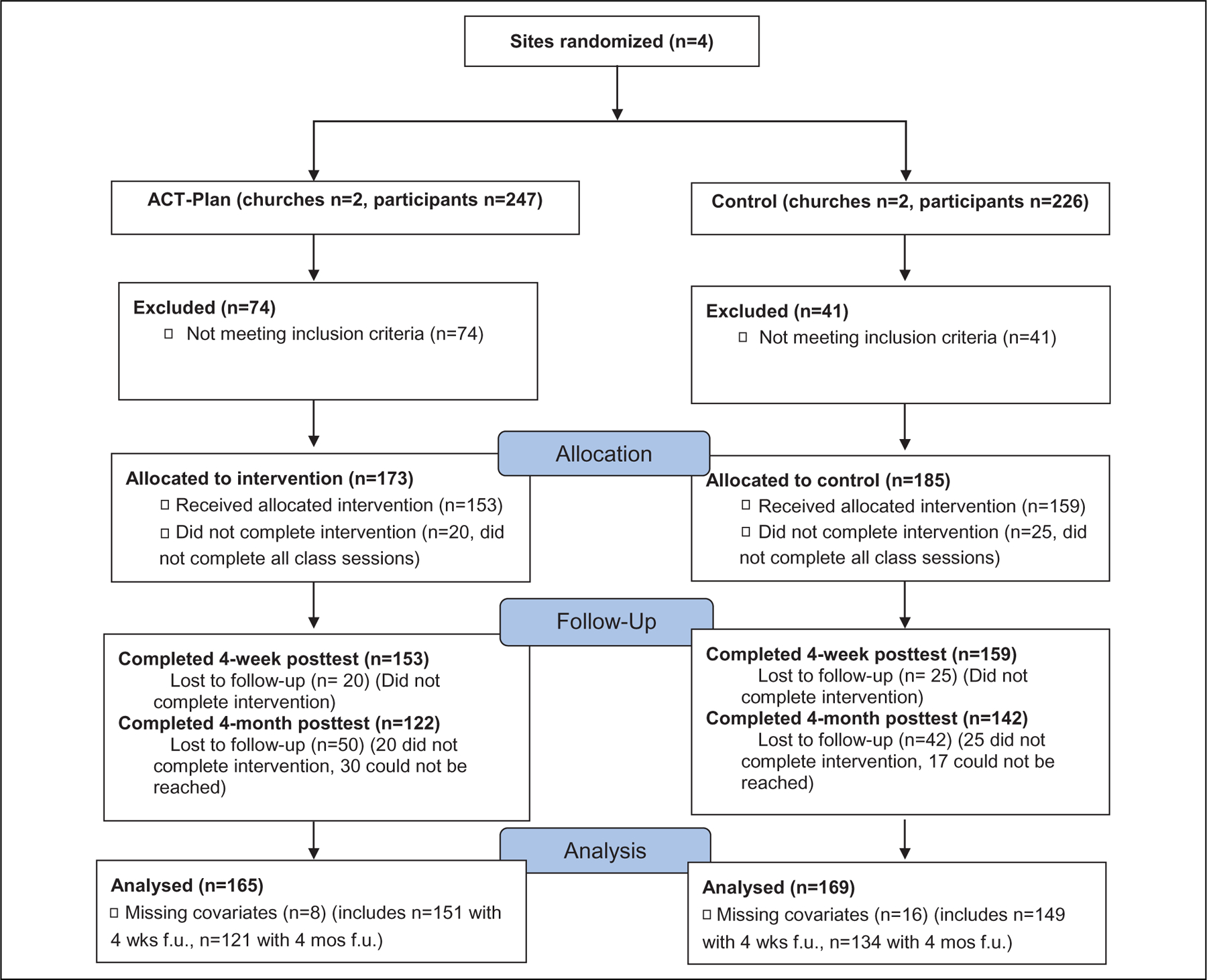
Research design and methods: In a theoretically based, 2-group, cluster randomized controlled trial, 4 similar Midwestern urban megachurches were randomized to experimental or control conditions. Each church recruited African-American caregivers, enrolling concurrent waves of 5 to 9 participants in 4 weekly 1-hour sessions (358 total: ACT-Plan n = 173, control n = 185). Dementia, cardiopulmonary resuscitation (CPR), mechanical ventilation (MV), and tube feeding (TF) treatments were discussed in ACT-Plan classes. Participants completed assessments before the initial class, after the final class (week 4), and at week 20. Repeated measures models were used to test the intervention effect on changes in outcomes across time, adjusting for covariates as needed.
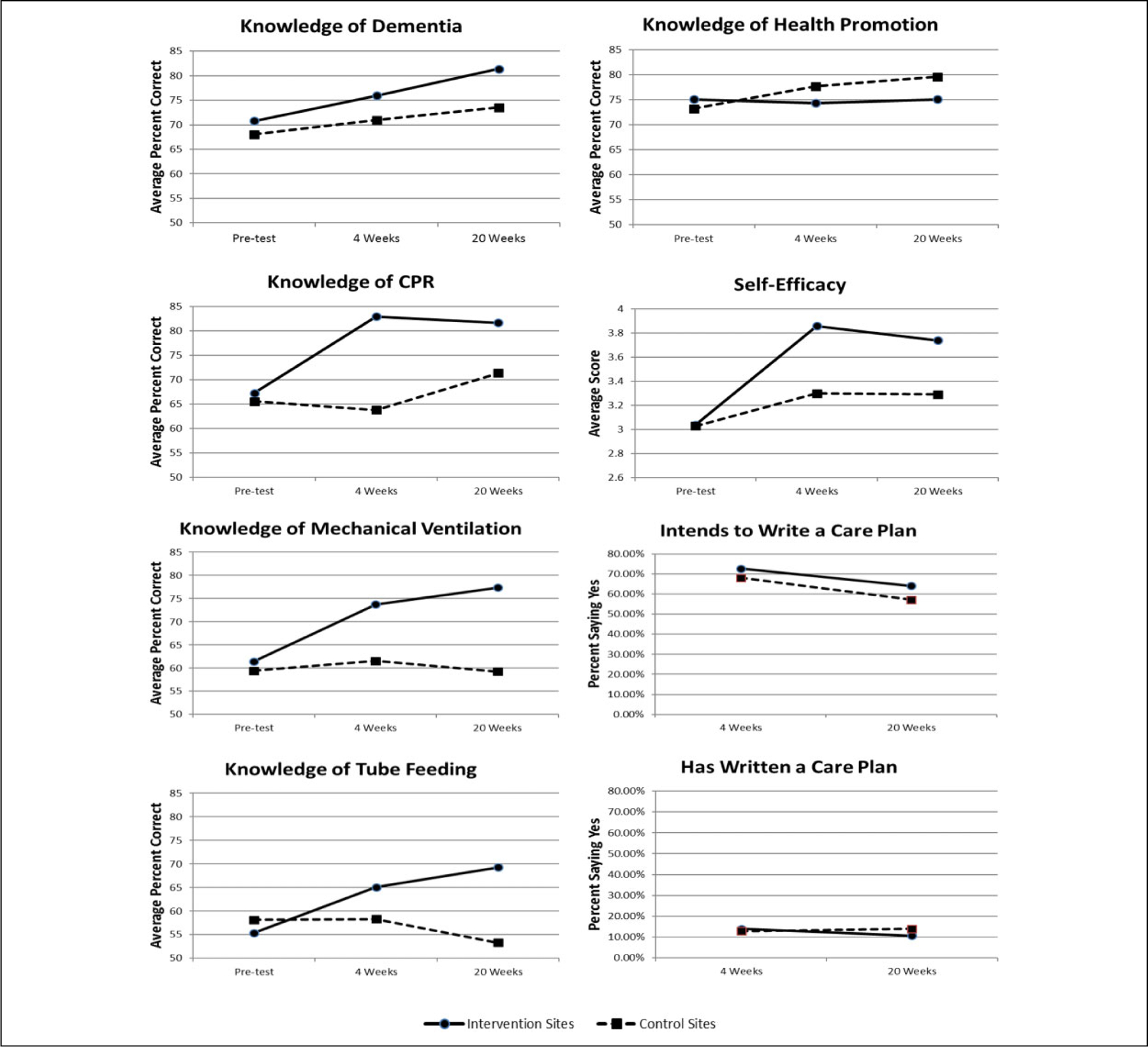
Results: Knowledge of CPR, MV, TF, and self-efficacy to make EOL treatment decisions increased significantly more in the ACT-Plan group at weeks 4 and 20. Knowledge of dementia also increased more in the ACT-Plan group at both points, reaching statistical significance only at week 20. Intentions to make EOL treatment decisions and actually an advance care plan were similar between treatment arms.
Discussion and implications: Findings demonstrate promise for ACT-Plan to increase informed EOL treatment decisions for African American caregivers of individuals with dementias.
Keywords: African Americans; Alzheimer disease; advance directives; dementia; end-of-life (EOL) treatments; palliative care.
Conflict of interest statement
Declaration of Conflicting Interests
The authors declared no potential conflicts of interest with respect to the research, authorship, and/or publication of this article.
Figures
References
-
- Clark PC, Kutner NG, Goldstein FC, et al. Impediments to timely diagnosis of Alzheimer’s disease in African Americans. J Am Geriatr Soc 2005;53(11):2012–2017. - PubMed
-
- Teno JM, Gruneir A, Schwartz Z, Nanda A, Wetle T. Association between advance directives and quality of end-of-life care: a national study. J Am Geriatr Soc 2007;55(2);189–194. - PubMed
-
- Wicher CP, Meeker MA. What influences African American end-of-life preferences? J Health Care Poor Underserved 2012;23(1):28–58. - PubMed
-
- Zaide GB, Pekmezaris R, Nouryan CN, et al. Ethnicity, race, and advance directives in an inpatient palliative care consultation service. Palliat Support Care 2013;11(1):5–11. - PubMed
Publication types
MeSH terms
Grants and funding
LinkOut - more resources
Full Text Sources
Medical
Miscellaneous
