


Molecular Characterization of Carbapenem-Resistant Serratia marcescens Clinical Isolates in a Tertiary Hospital in Hangzhou, China
- PMID: 32308441
- PMCID: PMC7152788
- DOI: 10.2147/IDR.S243197
Molecular Characterization of Carbapenem-Resistant Serratia marcescens Clinical Isolates in a Tertiary Hospital in Hangzhou, China
Abstract
Introduction: Although carbapenem-resistant Enterobacteriaceae (CRE) have been thoroughly investigated as the pathogens most commonly associated with clinical infections, data on Serratia marcescens are inadequate and superficial.
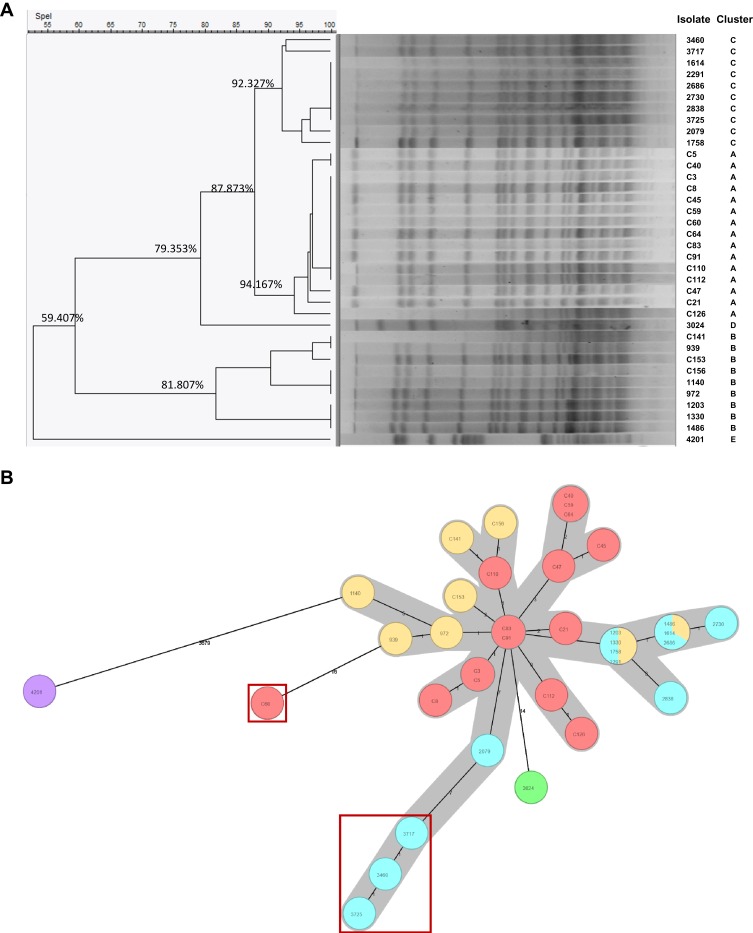
Methods: In this study, we characterized 36 carbapenem-resistant Serratia marcescens (CRSM) isolates in our hospital from April 2018 to March 2019 by analysing whole-genome sequencing (WGS) data. The molecular typing of the isolates was performed using both pulsed-field gel electrophoresis (PFGE) and core genome multilocus sequence typing (cgMLST).
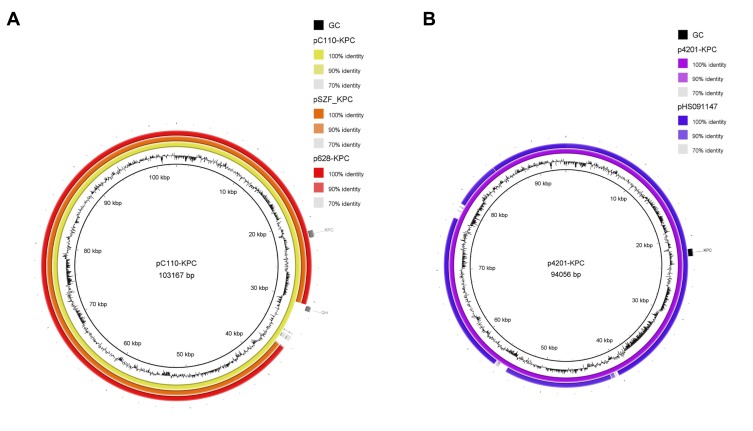
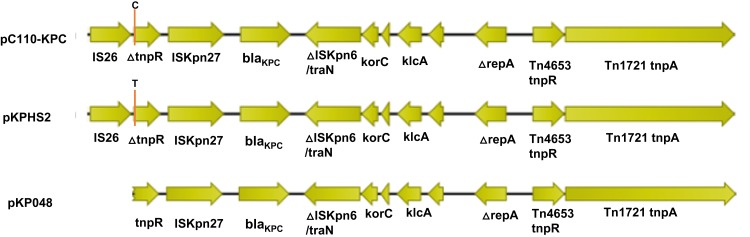
Results: Thirty-three of the 36 isolates showed carbapenem resistance conferred by a bla KPC-2-harbouring plasmid, while the remaining three isolates were characterized by overexpression of beta-lactamase combined with porin loss. The bla KPC-2 genes in all the isolates were located on a plasmid of ~103 kb, except one, which was on a plasmid of ~94 kb. The gene structure surrounding bla KPC-2 in the plasmids was confirmed by integration of a partial Tn4401 structure and an intact IS26 as previously reported. Most of the plasmids also contained a mobile genetic element (MGE) comprising qnr and ISKpn19, which provided evidence of horizontal transfer of antibiotic resistance genes.
Conclusion: The thirty-six CRSM isolates were mainly clonally disseminated with a bla KPC-2-harbouring plasmid in our hospital. The gene structure surrounding bla KPC-2 as an MGE, as well as the qnr segment, might be acquired by horizontal gene transfer, and it could aggravate the infection and increase the difficulty of clinical treatment.
Keywords: Serratia marcescens; blaKPC-2-harbouring plasmid; carbapenem resistance.
© 2020 Xu et al.
Conflict of interest statement
The authors report no conflicts of interest associated with this work.
Figures
References
-
- Weiner LM, Webb AK, Limbago B, et al. Antimicrobial-resistant pathogens associated with healthcare-associated infections: summary of data reported to the national healthcare safety network at the centers for disease control and prevention, 2011–2014. Infect Control Hosp Epidemiol. 2016;37(11):1288–1301. doi: 10.1017/ice.2016.174 - DOI - PMC - PubMed
-
- Clinical and Laboratory Standards Institute. Performance Standards for Antimicrobial Susceptibility Testing. 29th CLSI supplement M100 Wayne, PA: CLSI; 2019
LinkOut - more resources
Full Text Sources
Miscellaneous
