


Investigation of a thermostable multi-domain xylanase-glucuronoyl esterase enzyme from Caldicellulosiruptor kristjanssonii incorporating multiple carbohydrate-binding modules
- PMID: 32308737
- PMCID: PMC7151638
- DOI: 10.1186/s13068-020-01709-9
Investigation of a thermostable multi-domain xylanase-glucuronoyl esterase enzyme from Caldicellulosiruptor kristjanssonii incorporating multiple carbohydrate-binding modules
Abstract
Background: Efficient degradation of lignocellulosic biomass has become a major bottleneck in industrial processes which attempt to use biomass as a carbon source for the production of biofuels and materials. To make the most effective use of the source material, both the hemicellulosic as well as cellulosic parts of the biomass should be targeted, and as such both hemicellulases and cellulases are important enzymes in biorefinery processes. Using thermostable versions of these enzymes can also prove beneficial in biomass degradation, as they can be expected to act faster than mesophilic enzymes and the process can also be improved by lower viscosities at higher temperatures, as well as prevent the introduction of microbial contamination.
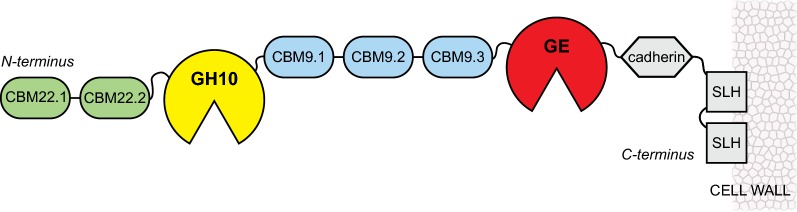
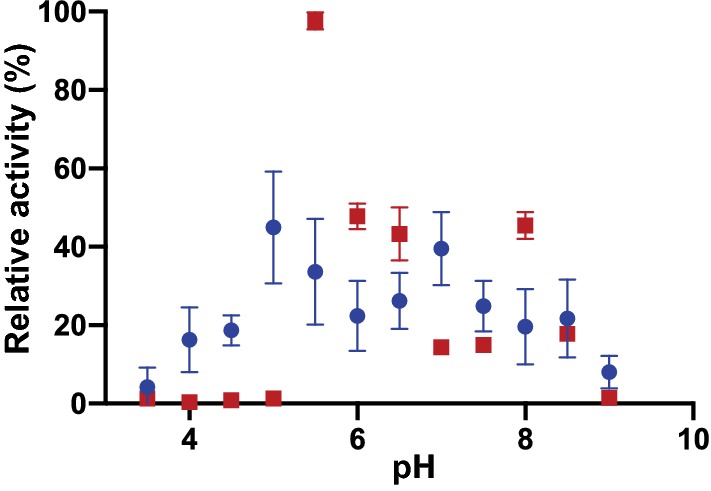
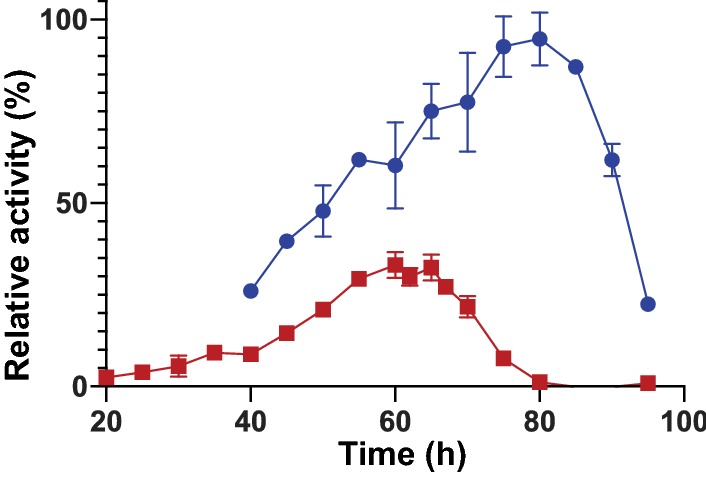
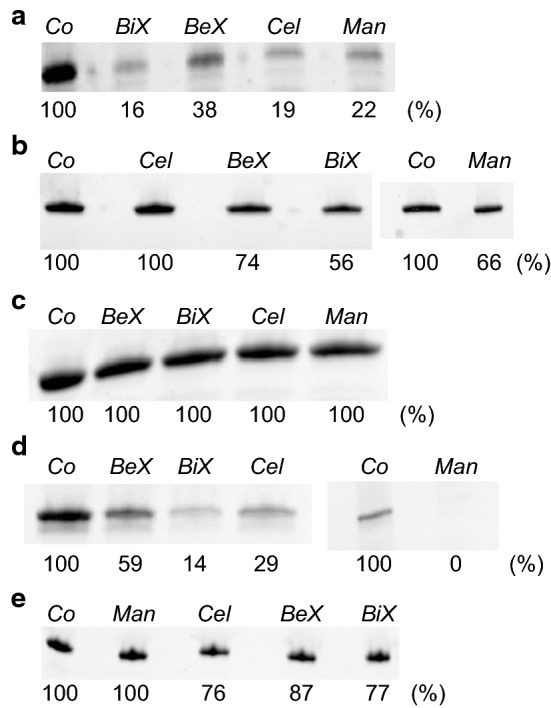
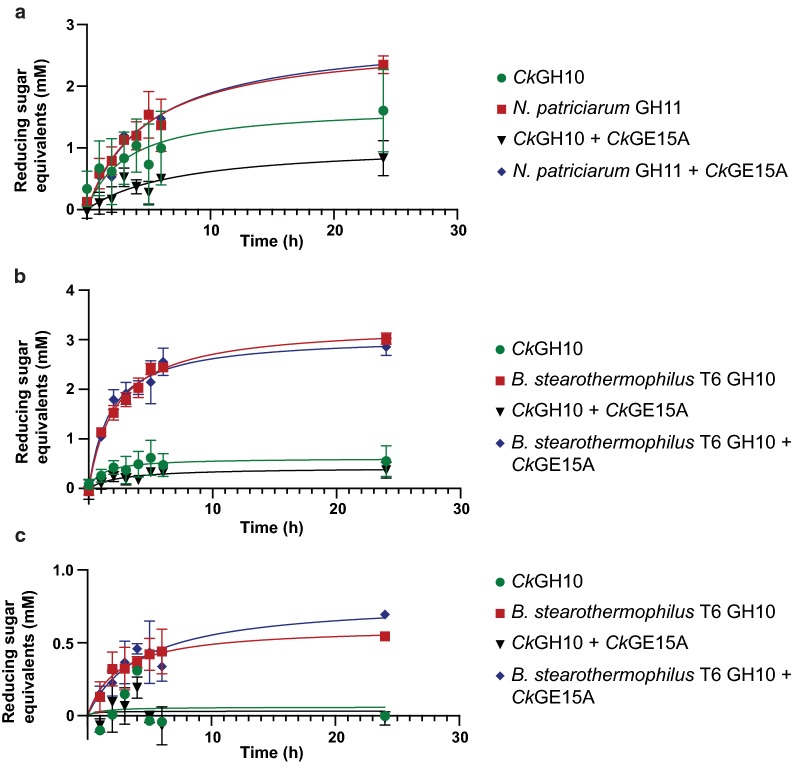
Results: This study presents the investigation of the thermostable, dual-function xylanase-glucuronoyl esterase enzyme CkXyn10C-GE15A from the hyperthermophilic bacterium Caldicellulosiruptor kristjanssonii. Biochemical characterization of the enzyme was performed, including assays for establishing the melting points for the different protein domains, activity assays for the two catalytic domains, as well as binding assays for the multiple carbohydrate-binding domains present in CkXyn10C-GE15A. Although the enzyme domains are naturally linked together, when added separately to biomass, the expected boosting of the xylanase action was not seen. This lack of intramolecular synergy might suggest, together with previous data, that increased xylose release is not the main beneficial trait given by glucuronoyl esterases.
Conclusions: Due to its thermostability, CkXyn10C-GE15A is a promising candidate for industrial processes, with both catalytic domains exhibiting melting temperatures over 70 °C. Of particular interest is the glucuronoyl esterase domain, as it represents the first studied thermostable enzyme displaying this activity.
Keywords: Biomass; Caldicellulosiruptor kristjansonii; Carbohydrate-active enzyme; Carbohydrate-binding module; Glucuronoyl esterase; Lignin–carbohydrate complexes; Thermostability; Xylan; Xylanase.
© The Author(s) 2020.
Conflict of interest statement
Competing interestsThe authors declare that they have no competing interests.
Figures
References
-
- Ayoub A, Venditti RA, Pawlak JJ, Sadeghifar H, Salam A. Development of an acetylation reaction of switchgrass hemicellulose in ionic liquid without catalyst. Ind Crops Prod. 2013;44:306–314. doi: 10.1016/j.indcrop.2012.10.036. - DOI
LinkOut - more resources
Full Text Sources
