


Progress Report on EMBED: A Pragmatic Trial of User-Centered Clinical Decision Support to Implement EMergency Department-Initiated BuprenorphinE for Opioid Use Disorder
- PMID: 32309637
- PMCID: PMC7164817
- DOI: 10.20900/jpbs.20200003
Progress Report on EMBED: A Pragmatic Trial of User-Centered Clinical Decision Support to Implement EMergency Department-Initiated BuprenorphinE for Opioid Use Disorder
Abstract
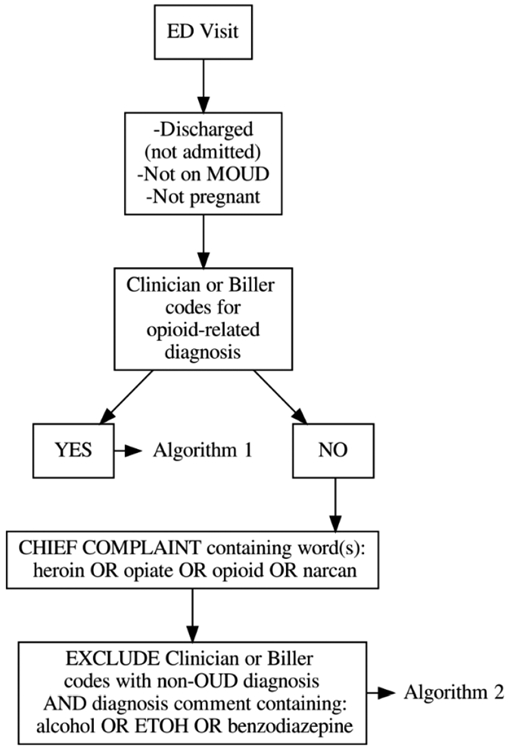
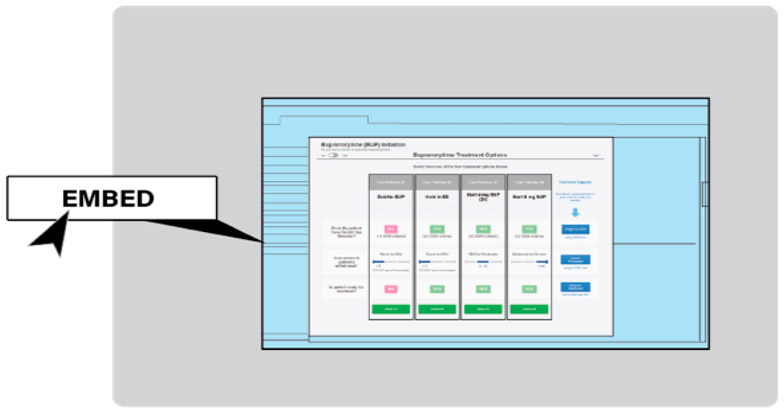
Buprenorphine (BUP) can safely and effectively reduce craving, overdose, and mortality rates in people with opioid use disorder (OUD). However, adoption of ED-initiation of BUP has been slow partly due to physician perception this practice is too complex and disruptive. We report progress of the ongoing EMBED (EMergency department-initiated BuprenorphinE for opioid use Disorder) project. This project is a five-year collaboration across five healthcare systems with the goal to develop, integrate, study, and disseminate user-centered Clinical Decision Support (CDS) to promote the adoption of Emergency Department (ED)-initiation of buprenorphine/naloxone (BUP) into routine emergency care. Soon to enter its third year, the project has already completed multiple milestones to achieve its goals including (1) user-centered design of the CDS prototype, (2) integration of the CDS into an automated electronic health record (EHR) workflow, (3) data coordination including derivation and validation of an EHR-based computable phenotype, (4) meeting all ethical and regulatory requirements to achieve a waiver of informed consent, (5) pilot testing of the intervention at a single site, and (6) launching a parallel group-randomized 18-month pragmatic trial in 20 EDs across 5 healthcare systems. Pilot testing of the intervention in a single ED was associated with increased rates of ED-initiated BUP and naloxone prescribing and a doubling of the number of unique physicians adopting the practice. The ongoing multi-center pragmatic trial will assess the intervention's effectiveness, scalability, and generalizability with a goal to shift the emergency care paradigm for OUD towards early identification and treatment.
Trial registration: Clinicaltrials.gov # NCT03658642.
Keywords: buprenorphine; clinical decision support systems; electronic health records; health informatics; health information technology; medication for opioid use disorder (MOUD); opioid use disorder; opioid-related disorders; quality improvement; user-centered design.
Conflict of interest statement
CONFLICTS OF INTEREST The authors have no financial conflicts or competing interests to disclose.
Figures
References
-
- Rudd RA, Aleshire N, Zibbell JE, Gladden RM. Increases in drug and opioid overdose deaths—United States, 2000–2014. Morb Mortal Wkly Rep. 2016;64:1378–82. - PubMed
-
- Buchanich JM, Balmert LC, Burke DS. Exponential Growth of The USA Overdose Epidemic. bioRxiv 39961 [Preprint]. 2017. 10.1101/134403 - DOI
-
- Centers for Disease Control and Prevention. 2018. Annual Surveillance Report of Drug-Related Risks and Outcomes—United States. Surveillance Special Report. Centers for Disease Control and Prevention, U.S. Department of Health and Human Services. Available from: https://www.cdc.gov/drugoverdose/pdf/pubs/2018-cdc-drug-surveillance-rep.... Accessed 2020 Feb 20.
-
- Substance Abuse and Mental Health Services Administration. Drug Abuse Warning Network. 2011: National Estimates of Drug-Related Emergency Department Visits. Available from: http://www.samhsa.gov/data/sites/default/files/DAWN2k11ED/DAWN2k11ED/DAW.... Accessed 2020 Feb 20.
Associated data
Grants and funding
LinkOut - more resources
Full Text Sources
Medical