


Pantoea agglomerans Bacteremia: Is It Dangerous?
- PMID: 32313708
- PMCID: PMC7160720
- DOI: 10.1155/2020/7890305
Pantoea agglomerans Bacteremia: Is It Dangerous?
Abstract
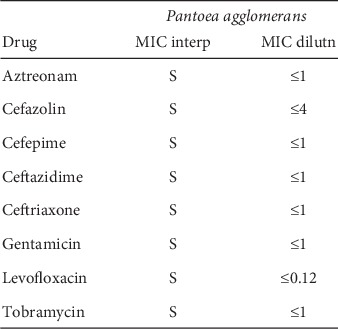
Introduction. Pantoea agglomerans, an anaerobic Gram-negative bacillus, is a rare cause of opportunistic infections affecting premature infants to seniors. We present a 34-year-old man who was presented for the management of diabetic ketoacidosis and developed Pantoea agglomerans bacteremia after one week of hospitalization. Case Presentation. A 34-year-old African-American male with uncontrolled diabetes mellitus type I and recurrent skin infections was admitted with diabetic ketoacidosis. He had left upper extremity abscess, preliminary wound cultures were positive for Gram-positive cocci, and an initial set of blood cultures were negative. He was started empirically on vancomycin. One week after admission, he started having chills followed by a recurrent increase in body temperature to 102 degrees Fahrenheit. The wound was healing, without active infection. Chest X-ray and CT scan of abdomen and pelvis to rule out infection were negative. Repeat blood cultures showed P. agglomerans in both the tubes. The patient was successfully treated with intravenous ceftriaxone, and he recovered fully without any complication. Discussion. Pantoea agglomerans is a bacteria associated with plants; however, it can infect humans and vertebrate animals. The outcome seems favourable with the institution of appropriate antibiotics even in immunocompromised patients.
Copyright © 2020 Ikwinder Preet Kaur et al.
Conflict of interest statement
The authors declare no conflicts of interest.
Figures
References
-
- Dutkiewicz J., Mackiewicz B., Kinga Lemieszek M., Golec M., Milanowski J. Pantoea agglomerans: a mysterious bacterium of evil and good. Part III. Deleterious effects: infections of humans, animals and plants. Annals of Agricultural and Environmental Medicine. 2016;23(2):197–205. doi: 10.5604/12321966.1203878. - DOI - PubMed
Publication types
LinkOut - more resources
Full Text Sources
