


Signaling lipids as diagnostic biomarkers for ocular surface cicatrizing conjunctivitis
- PMID: 32313985
- PMCID: PMC7220886
- DOI: 10.1007/s00109-020-01907-w
Signaling lipids as diagnostic biomarkers for ocular surface cicatrizing conjunctivitis
Erratum in
-
Correction to: Signaling lipids as diagnostic biomarkers for ocular surface cicatrizing conjunctivitis.J Mol Med (Berl). 2020 Jul;98(7):1049. doi: 10.1007/s00109-020-01938-3. J Mol Med (Berl). 2020. PMID: 32524172 Free PMC article.
Abstract
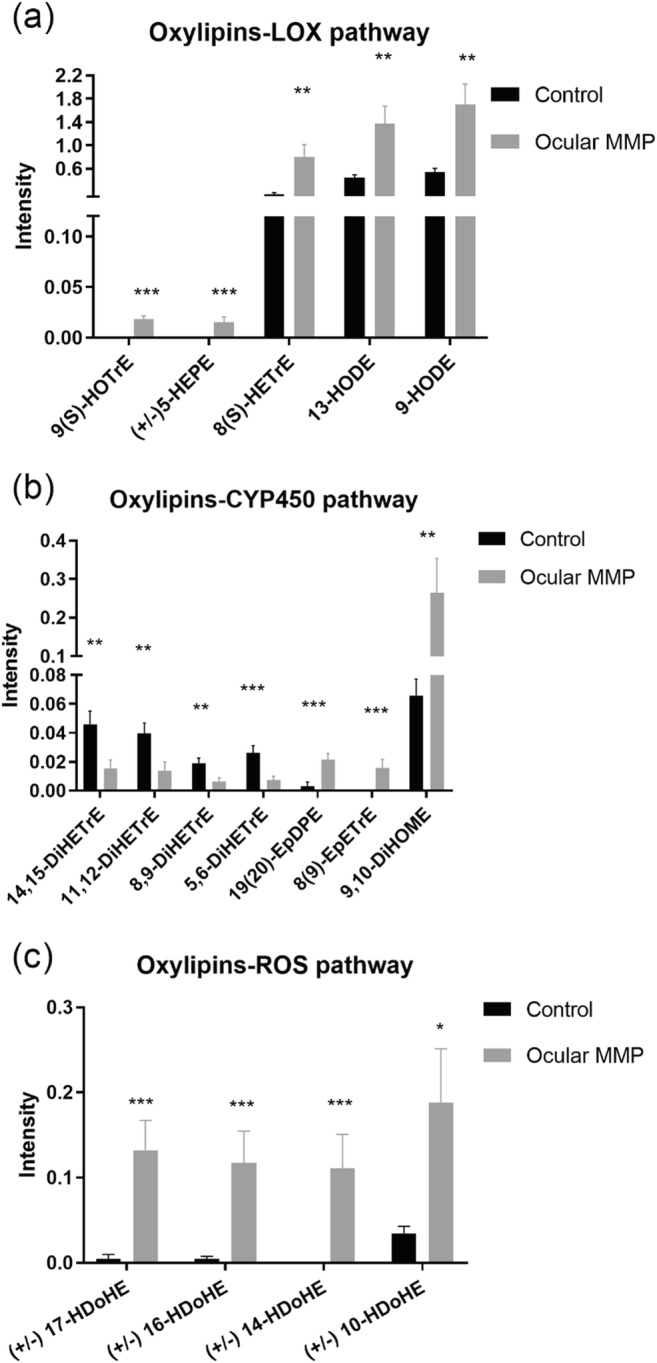
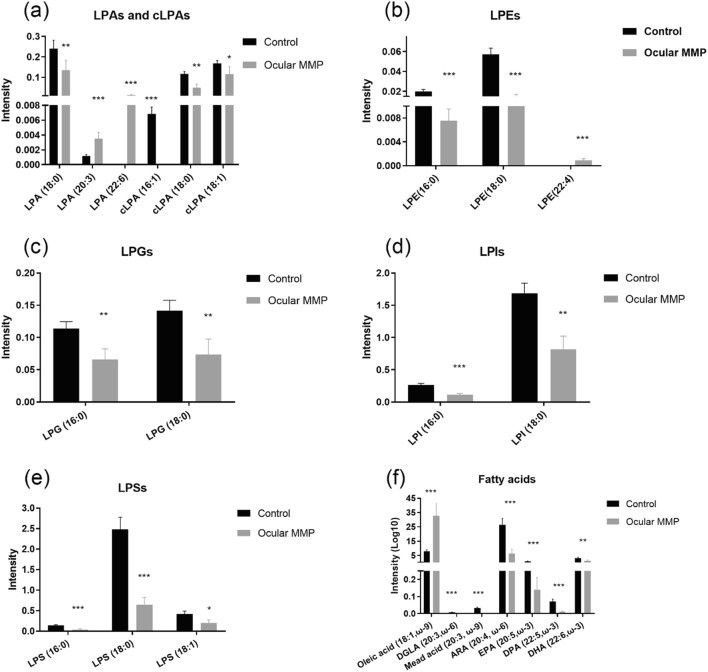
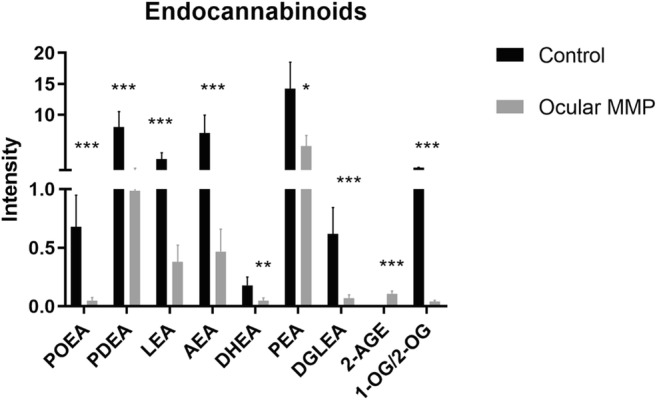
Metabolomics has been applied to diagnose diseases, predict disease progression, and design therapeutic strategies in various areas of medicine. However, it remains to be applied to the ocular surface diseases, where biological samples are often of limited quantities. We successfully performed proof-of-concept metabolomics assessment of volume-limited cytology samples from a clinical form of chronic inflammatory cicatrizing conjunctivitis, i.e., ocular MMP and discovered metabolic changes of signaling lipid mediators upon disease onset and progression. The metabolomics assessment revealed active oxylipins, lysophospholipids, fatty acids, and endocannabinoids alterations, from which potential biomarkers linked to inflammatory processes were identified. Possible underlying mechanisms such as dysregulated enzyme activities (e.g., lipoxygenases, cytochrome P450, and phospholipases) were suggested which may be considered as potential therapeutic targets in future studies. KEY MESSAGES: Metabolic profile of the ocular surface can be measured using impression cytology samples. Metabolomics analysis of ocular pemphigoid is presented for the first time. The metabolomics assessment of OCP patients revealed active oxylipins, lysophospholipids, fatty acids, and endocannabinoids alterations. Several oxylipins are identified as diagnostic biomarkers for OCP.
Keywords: Cicatrizing conjunctivitis; LC-MS/MS; Metabolomics; Mucous membrane pemphigoid; Signaling lipid mediators.
Conflict of interest statement
The authors declare that they have no conflict of interest.
Figures
References
-
- Krachmer J, Mannis M, Holland E. Cornea. Volume one: fundamentals, diagnosis and management. In: Foster CS, editor. Ciciatricial pemphgoid, 3rd ed. Mosby: Elsevier; 2011.
-
- Chan LS, Ahmed AR, Anhalt GJ, Bernauer W, Cooper KD, Elder MJ, Fine JD, Foster CS, Ghohestani R, Hashimoto T, Hoang-Xuan T, Kirtschig G, Korman NJ, Lightman S, Lozada-Nur F, Marinkovich MP, Mondino BJ, Prost-Squarcioni C, Rogers RS, III, Setterfield JF, West DP, Wojnarowska F, Woodley DT, Yancey KB, Zillikens D, Zone JJ. The first international consensus on mucous membrane pemphigoid: definition, diagnostic criteria, pathogenic factors, medical treatment, and prognostic indicators. Arch Dermatol. 2002;138(3):370–379. doi: 10.1001/archderm.138.3.370. - DOI - PubMed
-
- Ong HS, Setterfield JF, Minassian DC, Dart JK, Mucous Membrane Pemphigoid Study Group 2009–2014 Mucous membrane Pemphigoid with ocular involvement: the clinical phenotype and its relationship to direct immunofluorescence findings. Ophthalmology. 2018;125(4):496–504. doi: 10.1016/j.ophtha.2017.10.004. - DOI - PubMed
Publication types
MeSH terms
Substances
LinkOut - more resources
Full Text Sources
Medical
