


Melatonin: Roles in influenza, Covid-19, and other viral infections
- PMID: 32314850
- PMCID: PMC7235470
- DOI: 10.1002/rmv.2109
Melatonin: Roles in influenza, Covid-19, and other viral infections
Abstract
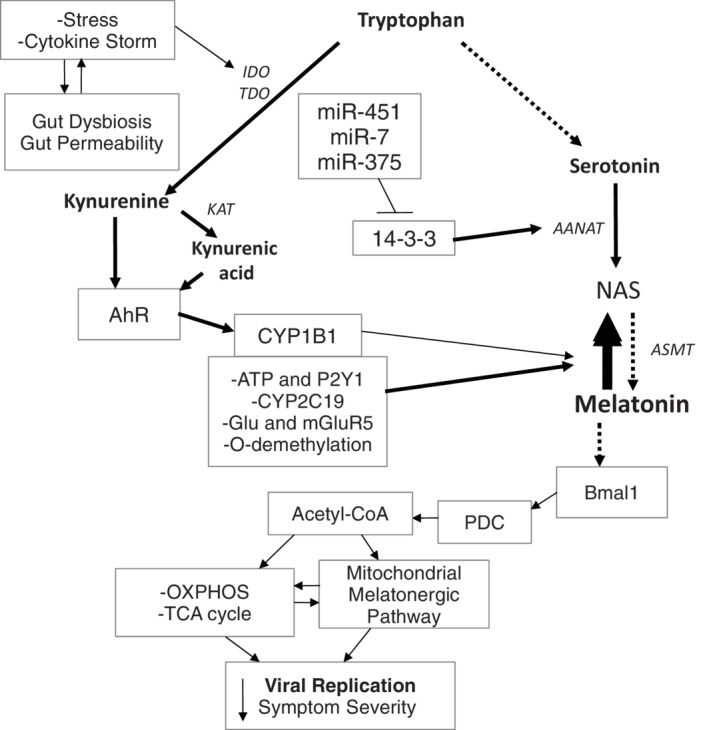
There is a growing appreciation that the regulation of the melatonergic pathways, both pineal and systemic, may be an important aspect in how viruses drive the cellular changes that underpin their control of cellular function. We review the melatonergic pathway role in viral infections, emphasizing influenza and covid-19 infections. Viral, or preexistent, suppression of pineal melatonin disinhibits neutrophil attraction, thereby contributing to an initial "cytokine storm", as well as the regulation of other immune cells. Melatonin induces the circadian gene, Bmal1, which disinhibits the pyruvate dehydrogenase complex (PDC), countering viral inhibition of Bmal1/PDC. PDC drives mitochondrial conversion of pyruvate to acetyl-coenzyme A (acetyl-CoA), thereby increasing the tricarboxylic acid cycle, oxidative phosphorylation, and ATP production. Pineal melatonin suppression attenuates this, preventing the circadian "resetting" of mitochondrial metabolism. This is especially relevant in immune cells, where shifting metabolism from glycolytic to oxidative phosphorylation, switches cells from reactive to quiescent phenotypes. Acetyl-CoA is a necessary cosubstrate for arylalkylamine N-acetyltransferase, providing an acetyl group to serotonin, and thereby initiating the melatonergic pathway. Consequently, pineal melatonin regulates mitochondrial melatonin and immune cell phenotype. Virus- and cytokine-storm-driven control of the pineal and mitochondrial melatonergic pathway therefore regulates immune responses. Virus-and cytokine storm-driven changes also increase gut permeability and dysbiosis, thereby suppressing levels of the short-chain fatty acid, butyrate, and increasing circulating lipopolysaccharide (LPS). The alterations in butyrate and LPS can promote viral replication and host symptom severity via impacts on the melatonergic pathway. Focussing on immune regulators has treatment implications for covid-19 and other viral infections.
Keywords: aryl hydrocarbon receptor; covid-19; immune; influenza; melatonin; metabolism; mitochondria; sirtuin; treatment; viral infection.
© 2020 John Wiley & Sons, Ltd.
Conflict of interest statement
The authors declare no potential conflict of interest.
Figures
References
-
- Tan DX, Hardeland R. Potential utility of melatonin in deadly infectious diseases related to the overreaction of innate immune response and destructive inflammation. Melatonin Res. 2020;3(1):120‐43.
-
- Zhou Y, Hou Y, Shen J et al Network‐based repurposing for human coronavirus. MedRxiv 2020.02.03.2020263 (2020). doi: 10.1101/2020.02.03.2020263 - DOI
-
- Reiter RJ, Ma Q, Sharma R. Treatment of Ebola and other infectious diseases: melatonin “goes viral”. Melatonin Res. 2020;3(1):43‐57. 10.32794/mr11250047. - DOI
Publication types
MeSH terms
Substances
LinkOut - more resources
Full Text Sources
Other Literature Sources
Medical
