


Hepatitis B: changes in epidemiological features of Afro-descendant communities in Central Brazil
- PMID: 32317697
- PMCID: PMC7174315
- DOI: 10.1038/s41598-020-63094-5
Hepatitis B: changes in epidemiological features of Afro-descendant communities in Central Brazil
Erratum in
-
Author Correction: Hepatitis B: changes in epidemiological features of Afro-descendant communities in Central Brazil.Sci Rep. 2020 Jul 7;10(1):11438. doi: 10.1038/s41598-020-68528-8. Sci Rep. 2020. PMID: 32632245 Free PMC article.
Abstract
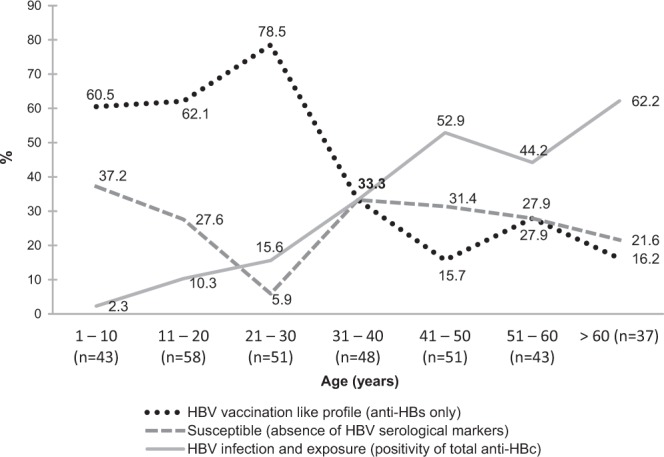
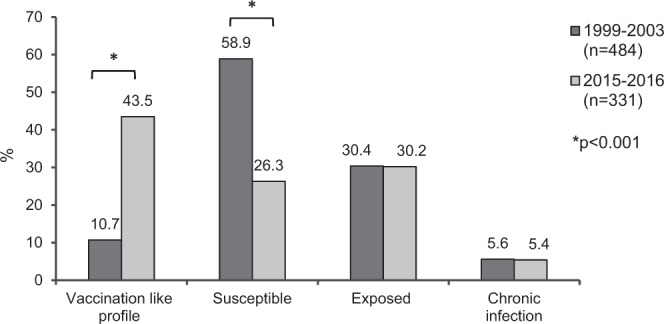
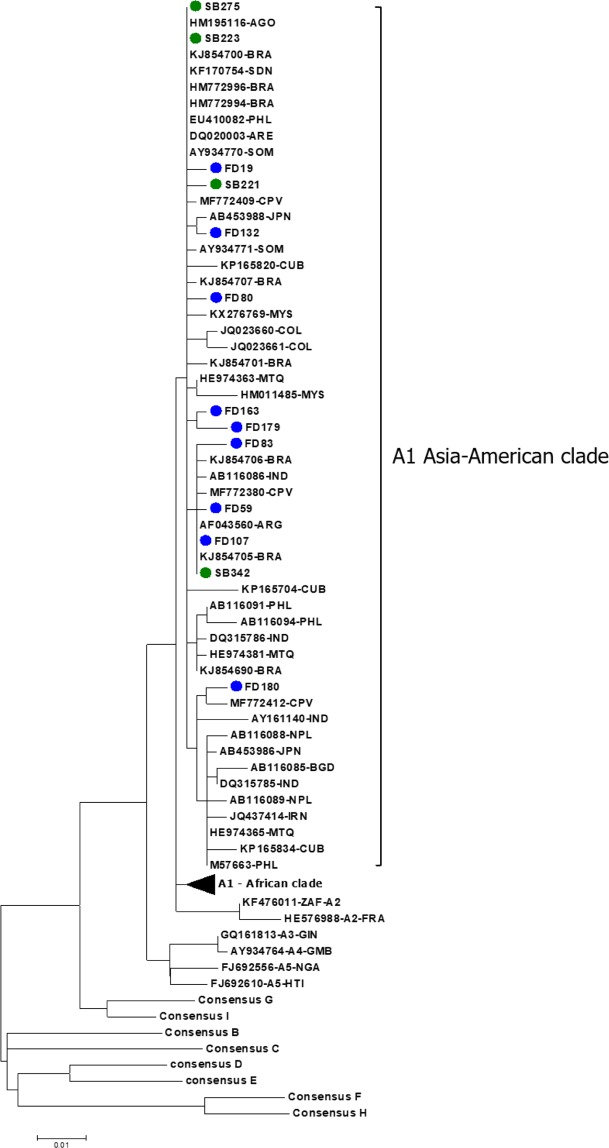
Hepatitis B virus (HBV) infection is still a concern in vulnerable populations. In a study performed by our team in 1999-2003 in two Afro-Brazilian communities, Furnas dos Dionísios (FD) and São Benedito (SB), high prevalence rates of HBV exposure (42.7% and 16.0%, respectively), high susceptibility to HBV (55.3% and 63.0%) and low HBV vaccination like profile rates (2.0% and 21.0%) were observed. In 2015-2016, we reassessed HBV epidemiological and molecular features in these two communities to verify the impact of health actions adopted in the last years. The prevalence rate of HBV exposure among the enrolled 331 subjects was 35.3% in FD and 21.8% in SB. HBV chronic infection (5.8% in FD, 4.9% in SB) remained high. The rate of HBV vaccination like profile increased from 10.7% to 43.5% (2.0% to 45.9% in FD, 21.0% to 39.5% in SB) while susceptible subjects declined from 58.9% to 26.3% (55.3% to 18.8% in FD, 63.0% to 38.7% in SB). Among 18 HBsAg positive samples, 13 were successfully sequenced (pre-S/S region). Phylogenetic analyses showed that all isolates belong to HBV subgenotype A1, clustering within the Asian-American clade. Despite the maintenance of high prevalence rate of HBV exposure over these 13 years of surveillance, significant improvements were observed, reinforcing the importance of facilitated HBV vaccination to difficult-to-access population to close gaps in prevention.
Conflict of interest statement
The authors declare no competing interests.
Figures
References
-
- WHO. Hepatitis B – Fact Sheet N°204. WORLD HEALTH ORGANIZATION, http://www.who.int/mediacentre/factsheets/fs204/en/ (2017).
Publication types
MeSH terms
Substances
LinkOut - more resources
Full Text Sources
Medical
