


I Can't Be Myself: Effects of Wearable Cameras on the Capture of Authentic Behavior in the Wild
- PMID: 32318649
- PMCID: PMC7173726
- DOI: 10.1145/3264900
I Can't Be Myself: Effects of Wearable Cameras on the Capture of Authentic Behavior in the Wild
Abstract
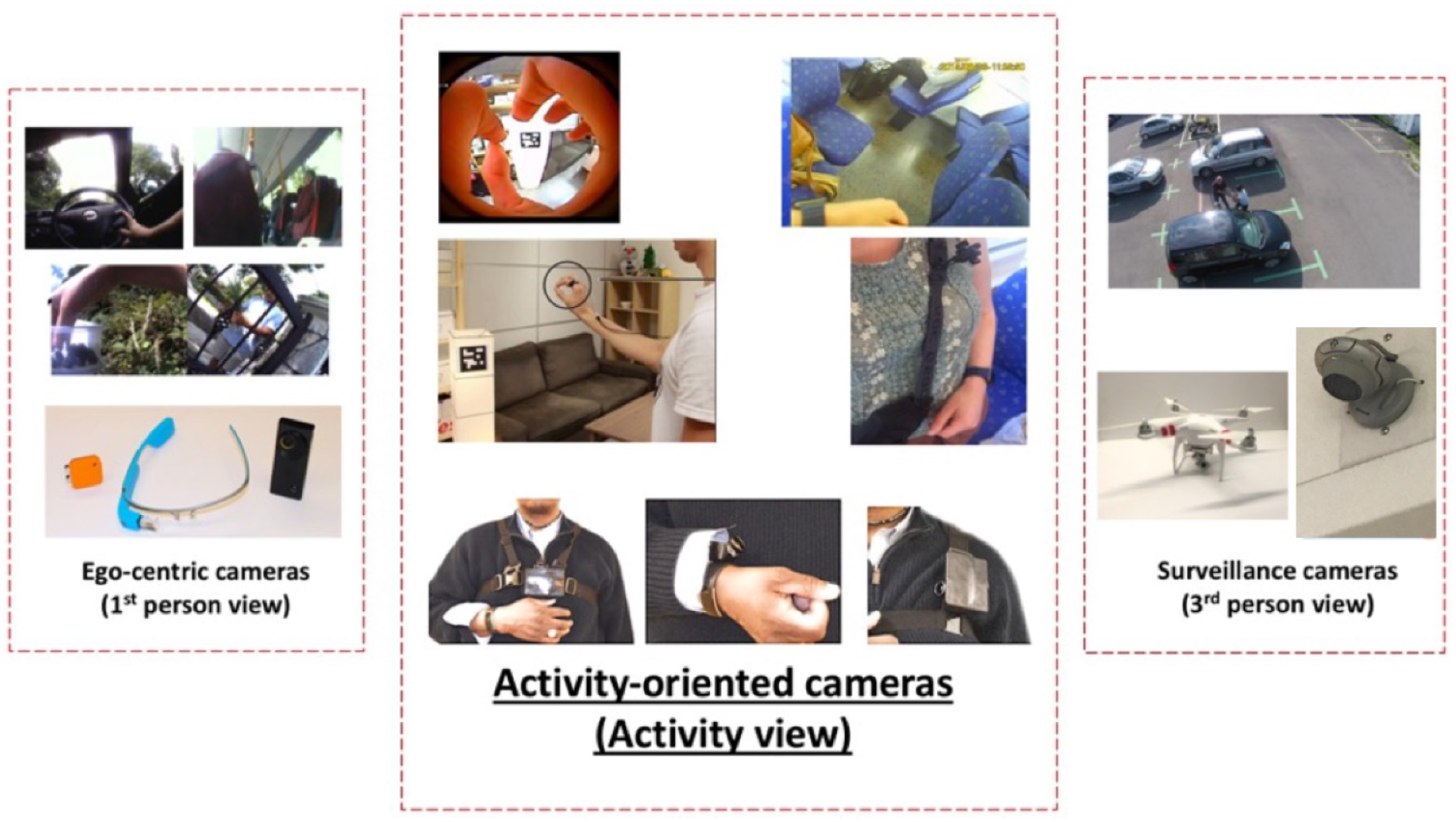
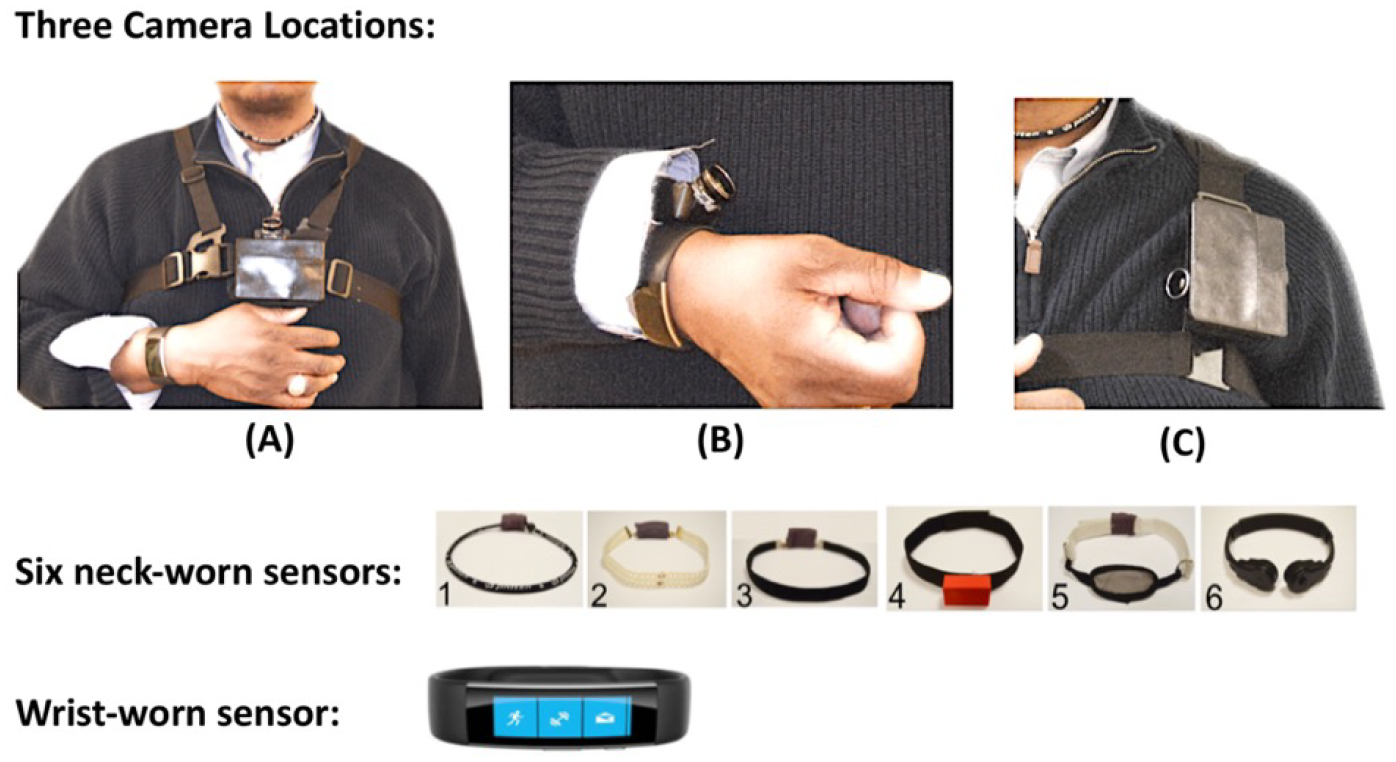
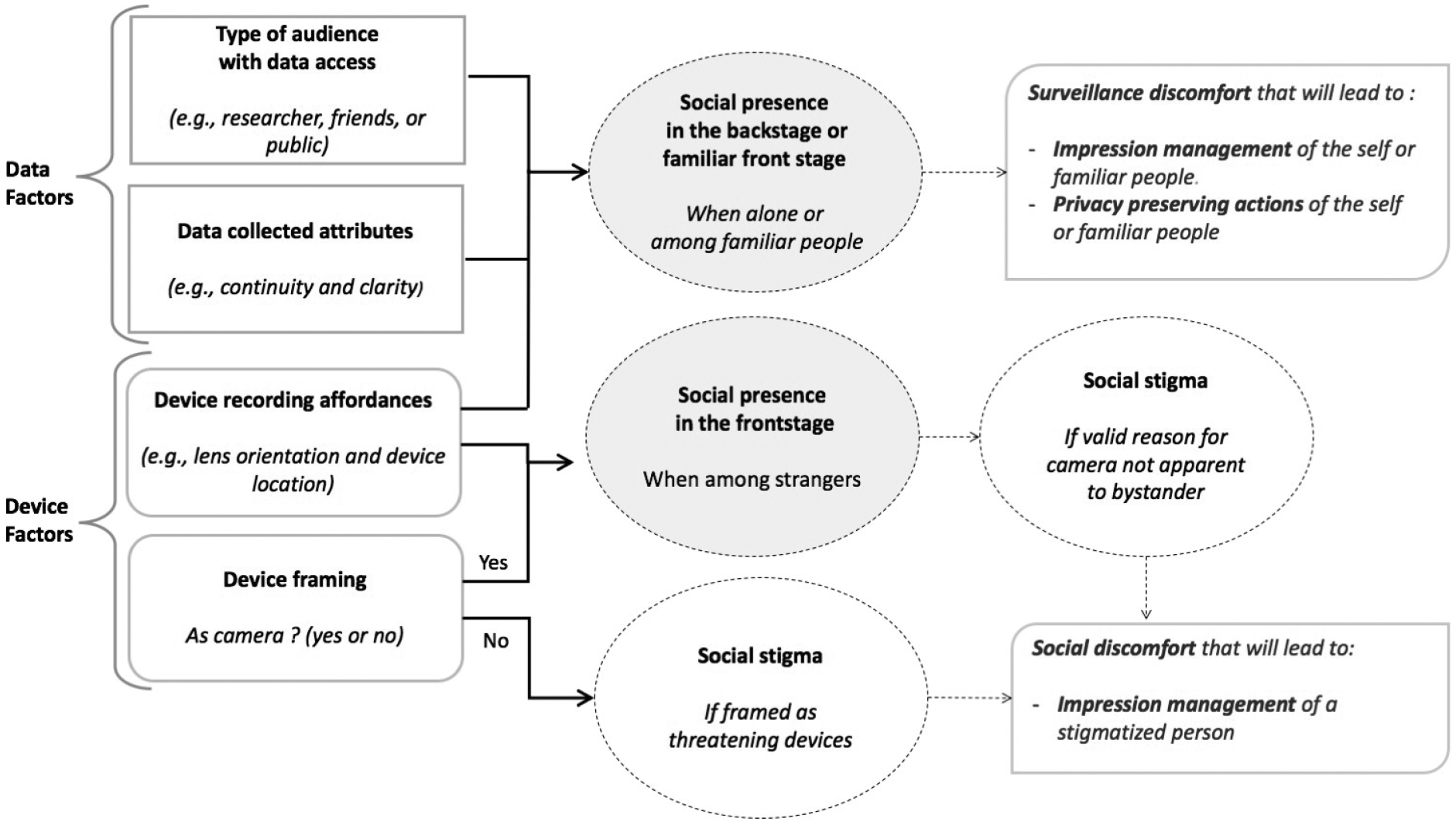
Wearable sensors can provide reliable, automated measures of health behaviors in free-living populations. However, validation of these measures is impossible without observable confirmation of behaviors. Participants have expressed discomfort during the use of ego-centric wearable cameras with first-person view. We argue that mounting the camera on different body locations with a different lens orientation, gives a device recording affordance that has the effect of reducing surveillance and social discomfort compared to ego-centric cameras. We call these types of cameras "activity-oriented" because they are designed to capture a particular activity, rather than the field of view of the wearer. We conducted an experiment of three camera designs with 24 participants, collecting qualitative data on participants' experience while wearing these devices in the wild. We provide a model explaining factors that lead to an increase in social presence and social stigma, which, therefore, create social and surveillance discomfort for the wearer. Wearers' attempts to reduce this discomfort by modifying their behavior or abandoning the device threatens the validity of observations of authentic behaviors. We discuss design implications and provide recommendations to help reduce social presence and stigma in order to improve the validity of observations with cameras in the wild.
Keywords: activity-oriented camera; free-living populations; groundtruth; privacy; social presence; stigma; wearables.
Figures
References
-
- Bedri Abdelkareem, Li Richard, Haynes Malcolm, Kosaraju Raj Prateek, Grover Ishaan, Prioleau Temiloluwa, Beh Min Yan, Goel Mayank, Starner Thad, and Abowd Gregory. 2017. EarBit: using wearable sensors to detect eating episodes in unconstrained environments. Proceedings of the ACM on Interactive, Mobile, Wearable and Ubiquitous Technologies 1, 3 (2017), 37. - PMC - PubMed
-
- Bonetto Margherita, Korshunov Pavel, Ramponi Giovanni, and Ebrahimi Touradj. 2015. Privacy in mini-drone based video surveillance In Automatic Face and Gesture Recognition (FG), 2015 11th IEEE International Conference and Workshops on, Vol. 4 IEEE, 1–6.
-
- Braun Virginia and Clarke Victoria. 2006. Using thematic analysis in psychology. Qualitative research in psychology 3, 2 (2006), 77–101.
-
- Brucato Ben. 2015. Policing made visible: Mobile technologies and the importance of point of view. Surveillance & society 13, 3/4 (2015), 455.
-
- Caprani Niamh, O’Connor Noel E, and Gurrin Cathal. 2013. Experiencing SenseCam: a case study interview exploring seven years living with a wearable camera In Proceedings of the 4th international SenseCam & pervasive imaging conference. ACM, 52–59.
Grants and funding
LinkOut - more resources
Full Text Sources
Other Literature Sources
Miscellaneous