


Clinical data analysis reveals the role of OGR1 (GPR68) in head and neck squamous cancer
- PMID: 32318660
- PMCID: PMC7167242
- DOI: 10.1002/ame2.12105
Clinical data analysis reveals the role of OGR1 (GPR68) in head and neck squamous cancer
Abstract
Background: Head and neck squamous cancer (HNSC) frequently occurs in the clinic. Revealing the role of the genes that correlate with cancer cell outgrowth will contribute to potential treatment target identification and tumor inhibition.
Methods: The gene expression profiles and gene ontology of the proton-sensing G-protein-coupled receptor OGR1 were analyzed using the TCGA (The Cancer Genome Atlas) database. The effects of sex, age, race, and degree of malignancy on HNSC were investigated, and the survival times of HNSC patients with high or low/medium expression levels of OGR1 were compared. Methylation of the OGR1 promoter CpG sites was also investigated and OGR1-related genes were analyzed using gene set enrichment analysis.
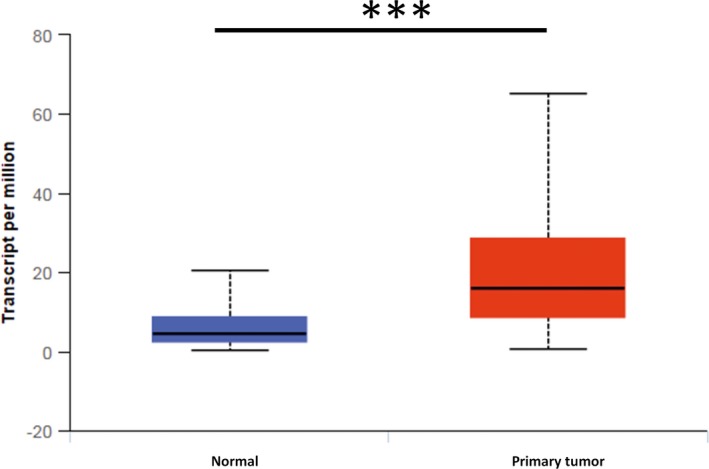
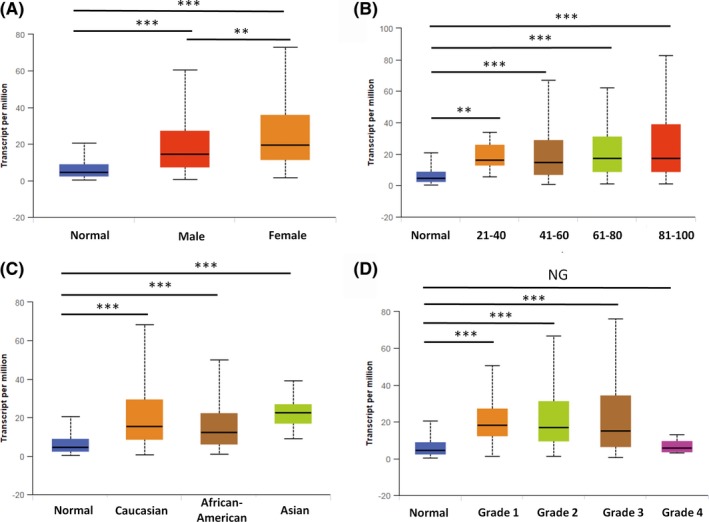
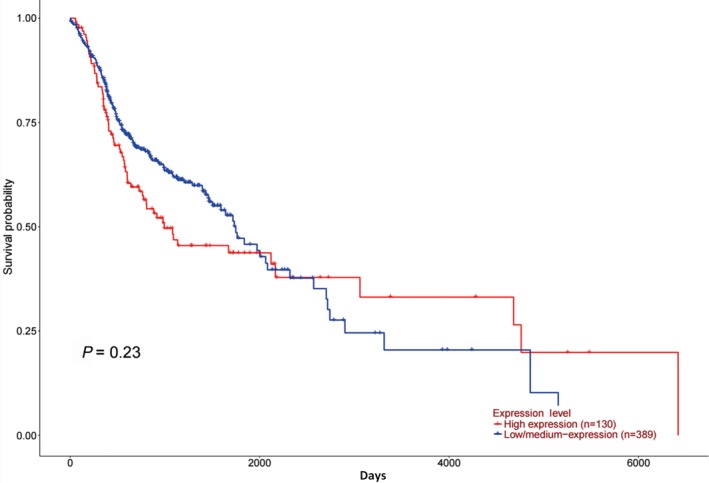
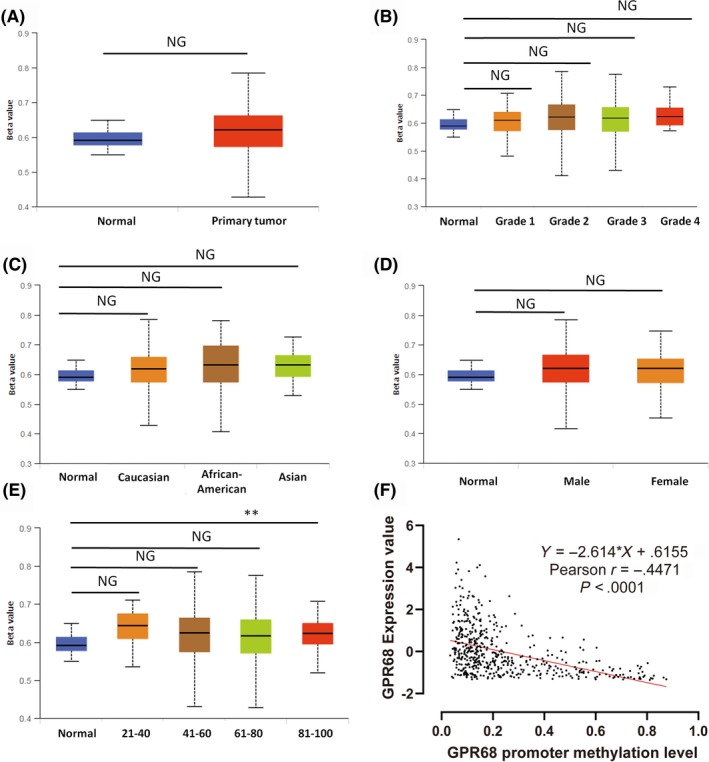
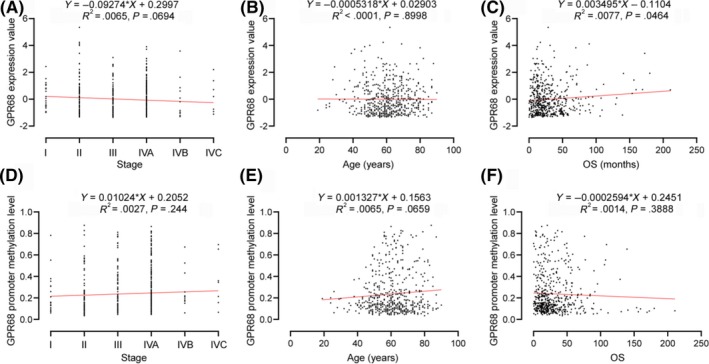
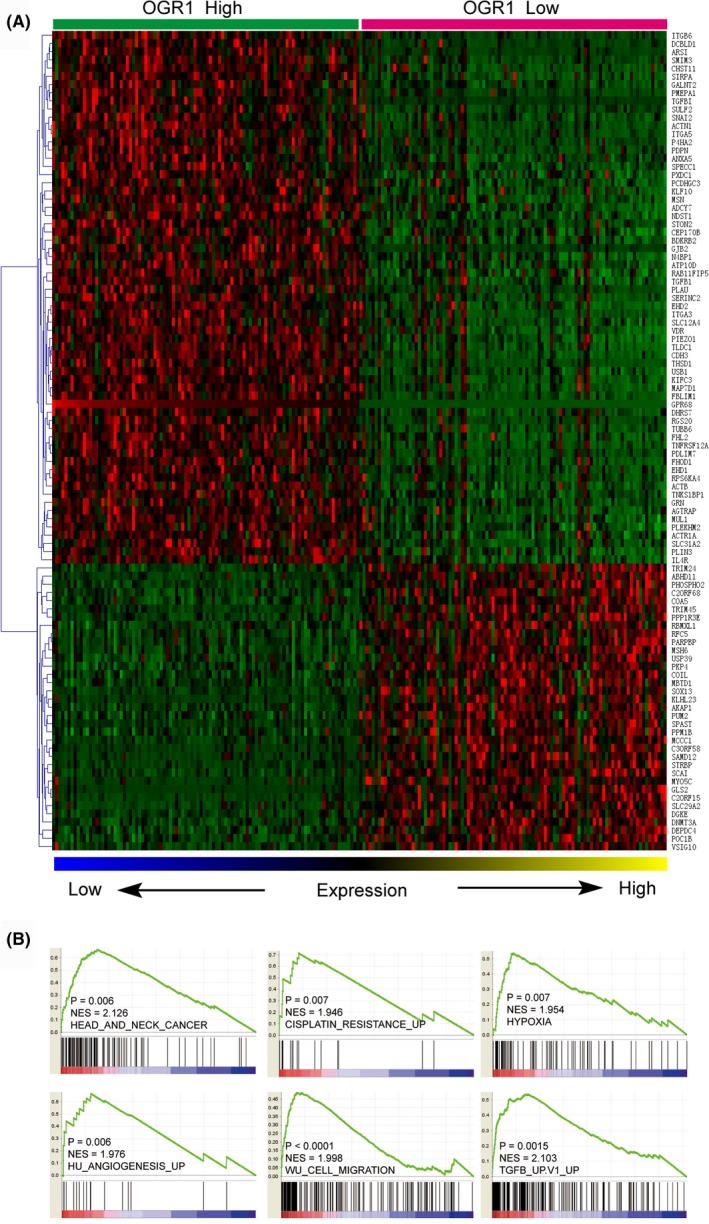
Results: OGR1 is overexpressed in HNSC patients. However, compared with the low/median expression group, the high OGR1 expression group did not have different survival rates. The OGR1 expression level differed across sex, age, race, and degree of malignancy, while the methylation of the OGR1 promoter CpG sites was maintained at a similar level. Gene set enrichment analysis revealed that OGR1 was positively correlated with head and neck cancer, cisplatin resistance, hypoxia, angiogenesis, cell migration, and TGF-β.
Conclusion: The expression of OGR1 correlated with HNSC progression and survival and thus can serve as a potential treatment target and prognostic marker.
Keywords: OGR1; TCGA; UALCAN; head and neck squamous cancer (HNSC).
© 2020 The Authors. Animal Models and Experimental Medicine published by John Wiley & Sons Australia, Ltd on behalf of The Chinese Association for Laboratory Animal Sciences.
Figures
References
-
- Jou A, Hess J. Epidemiology and molecular biology of head and neck cancer. Oncol Res Treat. 2017;40(6):328‐332. - PubMed
-
- Xu Y, Casey G. Identification of human OGR1, a novel G protein‐coupled receptor that maps to chromosome 14. Genomics. 1996;35(2):397‐402. - PubMed
-
- Afrasiabi E, Blom T, Ekokoski E, Tuominen RK, Tornquist K. Sphingosylphosphorylcholine enhances calcium entry in thyroid FRO cells by a mechanism dependent on protein kinase C. Cell Signal. 2006;18(10):1671‐1678. - PubMed
-
- Ludwig M‐G, Vanek M, Guerini D, et al. Proton‐sensing G‐protein‐coupled receptors. Nature. 2003;425(6953):93‐98. - PubMed
LinkOut - more resources
Full Text Sources
