


Complex Immune Dysregulation in COVID-19 Patients with Severe Respiratory Failure
- PMID: 32320677
- PMCID: PMC7172841
- DOI: 10.1016/j.chom.2020.04.009
Complex Immune Dysregulation in COVID-19 Patients with Severe Respiratory Failure
Abstract
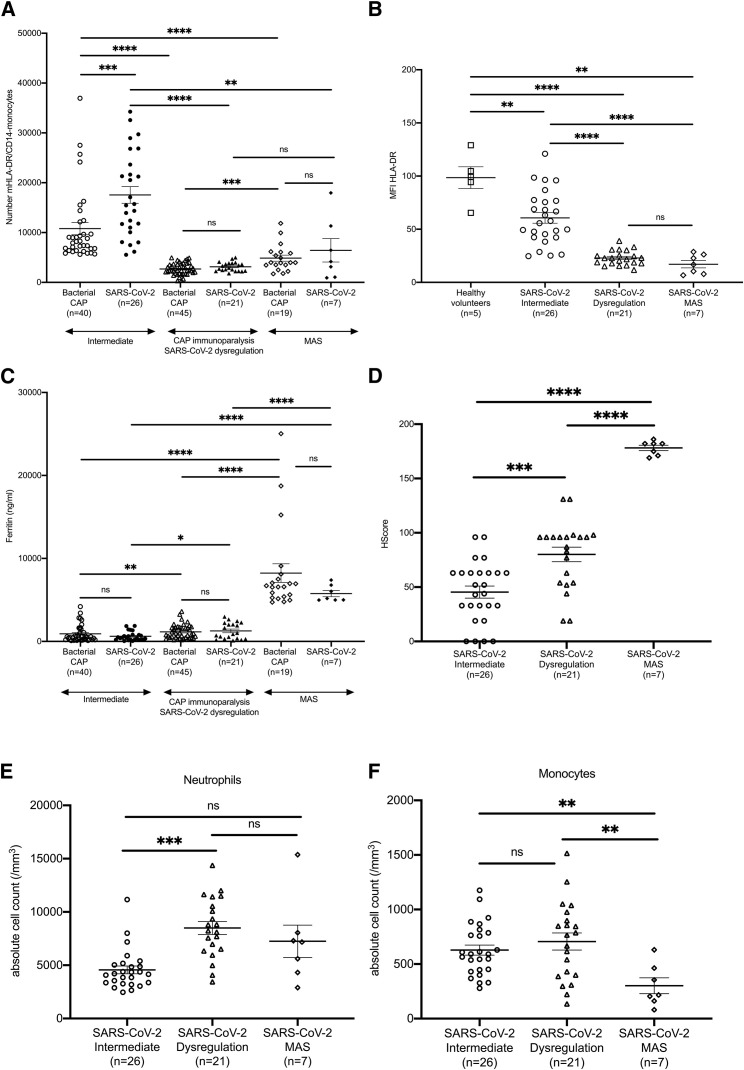
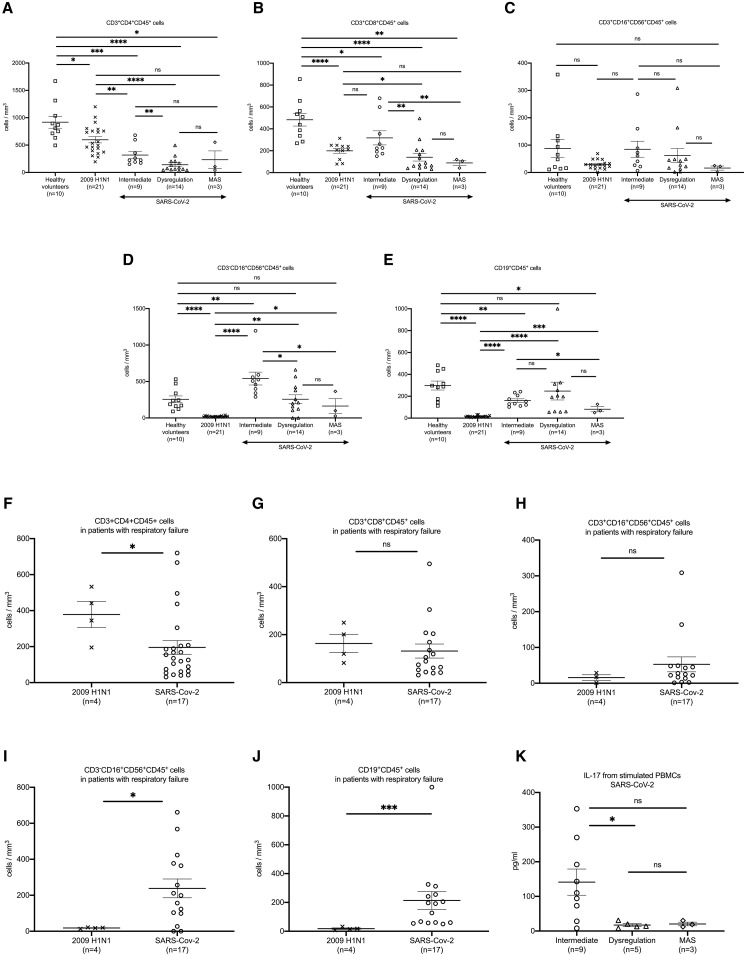
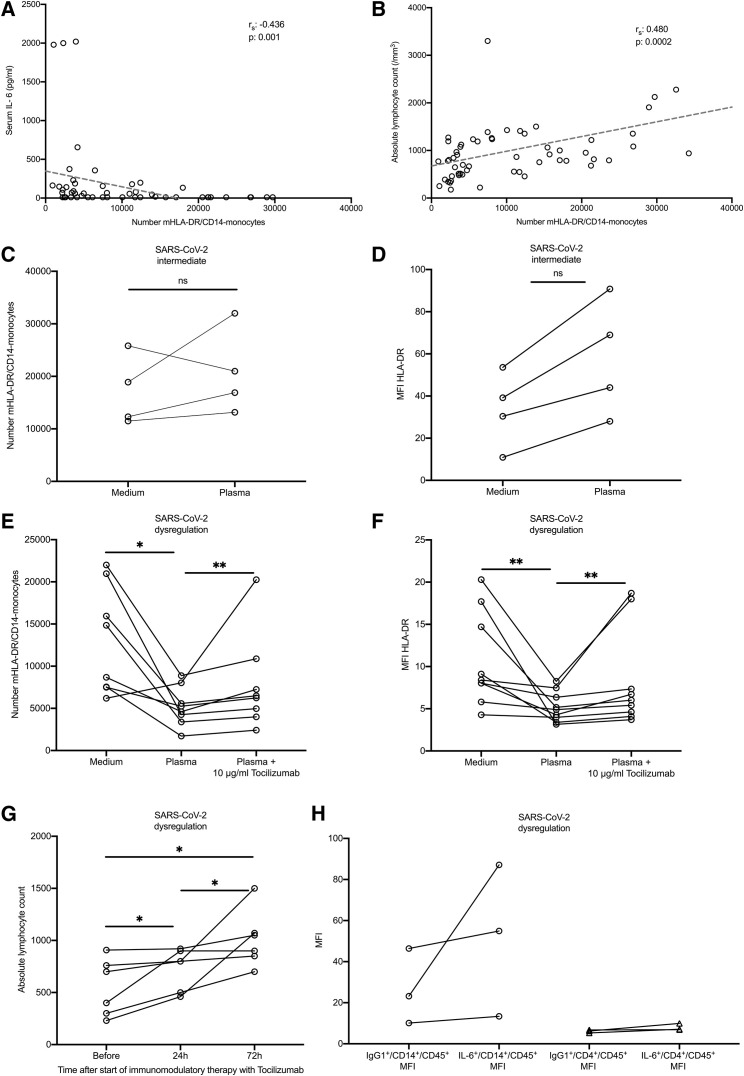
Proper management of COVID-19 mandates better understanding of disease pathogenesis. The sudden clinical deterioration 7-8 days after initial symptom onset suggests that severe respiratory failure (SRF) in COVID-19 is driven by a unique pattern of immune dysfunction. We studied immune responses of 54 COVID-19 patients, 28 of whom had SRF. All patients with SRF displayed either macrophage activation syndrome (MAS) or very low human leukocyte antigen D related (HLA-DR) expression accompanied by profound depletion of CD4 lymphocytes, CD19 lymphocytes, and natural killer (NK) cells. Tumor necrosis factor-α (TNF-α) and interleukin-6 (IL-6) production by circulating monocytes was sustained, a pattern distinct from bacterial sepsis or influenza. SARS-CoV-2 patient plasma inhibited HLA-DR expression, and this was partially restored by the IL-6 blocker Tocilizumab; off-label Tocilizumab treatment of patients was accompanied by increase in circulating lymphocytes. Thus, the unique pattern of immune dysregulation in severe COVID-19 is characterized by IL-6-mediated low HLA-DR expression and lymphopenia, associated with sustained cytokine production and hyper-inflammation.
Keywords: COVID-19; HLA-DR; SARS-CoV-2; dysregulation; ferritin; interleukin-6; lymphopenia; macrophage activation; monocytes; respiratory failure.
Copyright © 2020 Elsevier Inc. All rights reserved.
Conflict of interest statement
Declaration of Interests E.J.G.-B. has received honoraria from AbbVie USA, Abbott CH, InflaRx GmbH, MSD Greece, XBiotech Inc. and Angelini Italy; independent educational grants from AbbVie, Abbott, Astellas Pharma Europe, AxisShield, bioMérieux Inc, InflaRx GmbH, and XBiotech Inc; and funding from the FrameWork 7 program HemoSpec (granted to the National and Kapodistrian University of Athens), the Horizon2020 Marie-Curie Project European Sepsis Academy (granted to the National and Kapodistrian University of Athens), and the Horizon 2020 European Grant ImmunoSep (granted to the Hellenic Institute for the Study of Sepsis). A.A. has received honoraria and independent educational grants from Gilead, Pfizer, MSD, ViiV, Astellas, and Biotest.
Figures


References
-
- Fardet L., Galicier L., Lambotte O., Marzac C., Aumont C., Chahwan D., Coppo P., Hejblum G. Development and validation of the HScore, a score for the diagnosis of reactive hemophagocytic syndrome. Arthritis Rheumatol. 2014;66:2613–2620. - PubMed
-
- Giamarellos-Bourboulis E.J., van de Veerdonk F.L., Mouktaroudi M., Raftogiannis M., Antonopoulou A., Joosten L.A.B., Pickkers P., Savva A., Georgitsi M., van der Meer J.W., Netea M.G. Inhibition of caspase-1 activation in Gram-negative sepsis and experimental endotoxemia. Crit. Care. 2011;15:R27. - PMC - PubMed
MeSH terms
Substances
LinkOut - more resources
Full Text Sources
Other Literature Sources
Medical
Research Materials
Miscellaneous
