


Increasing fluoride content deteriorates rat bone mechanical properties
- PMID: 32320892
- PMCID: PMC7246161
- DOI: 10.1016/j.bone.2020.115369
Increasing fluoride content deteriorates rat bone mechanical properties
Abstract
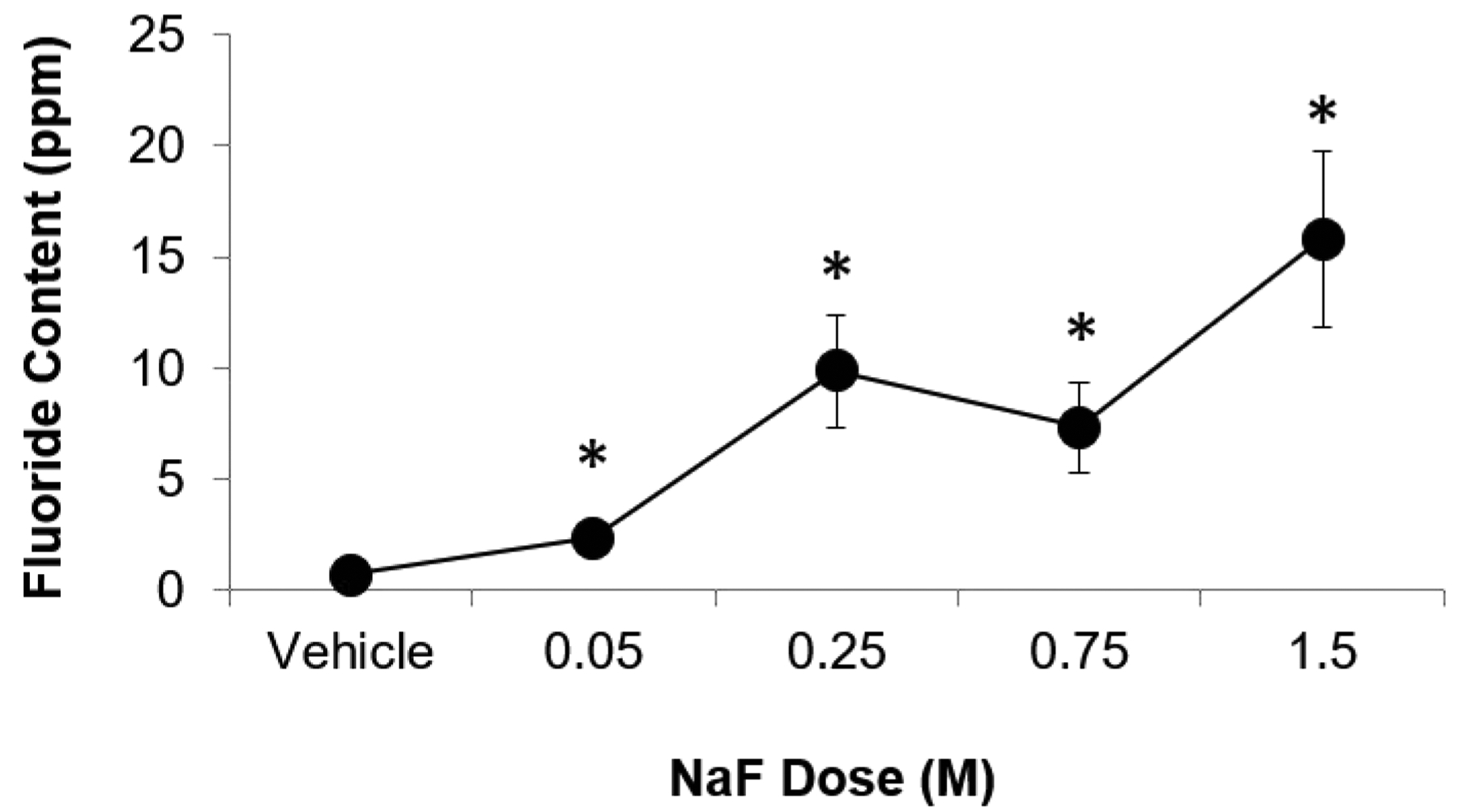
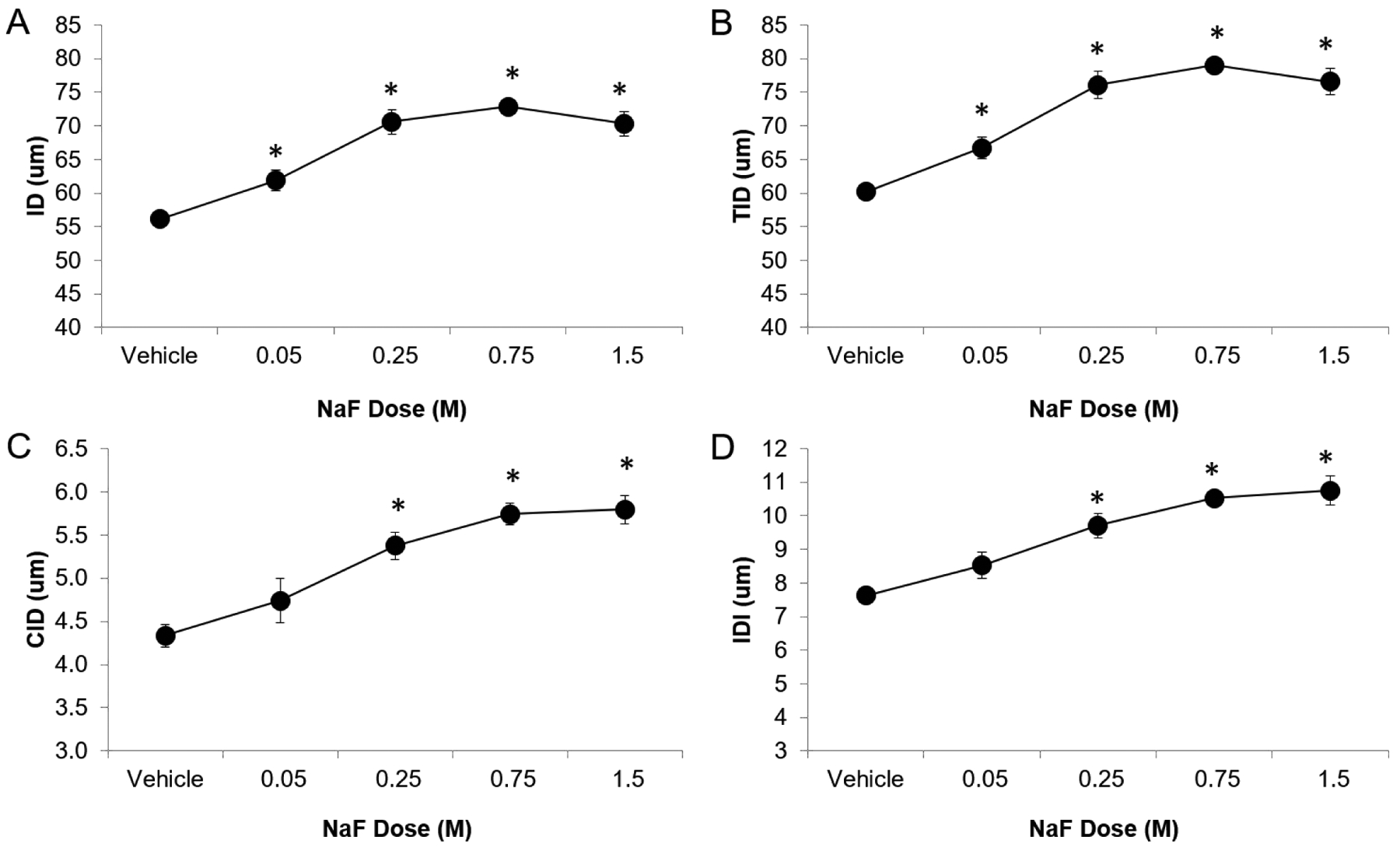
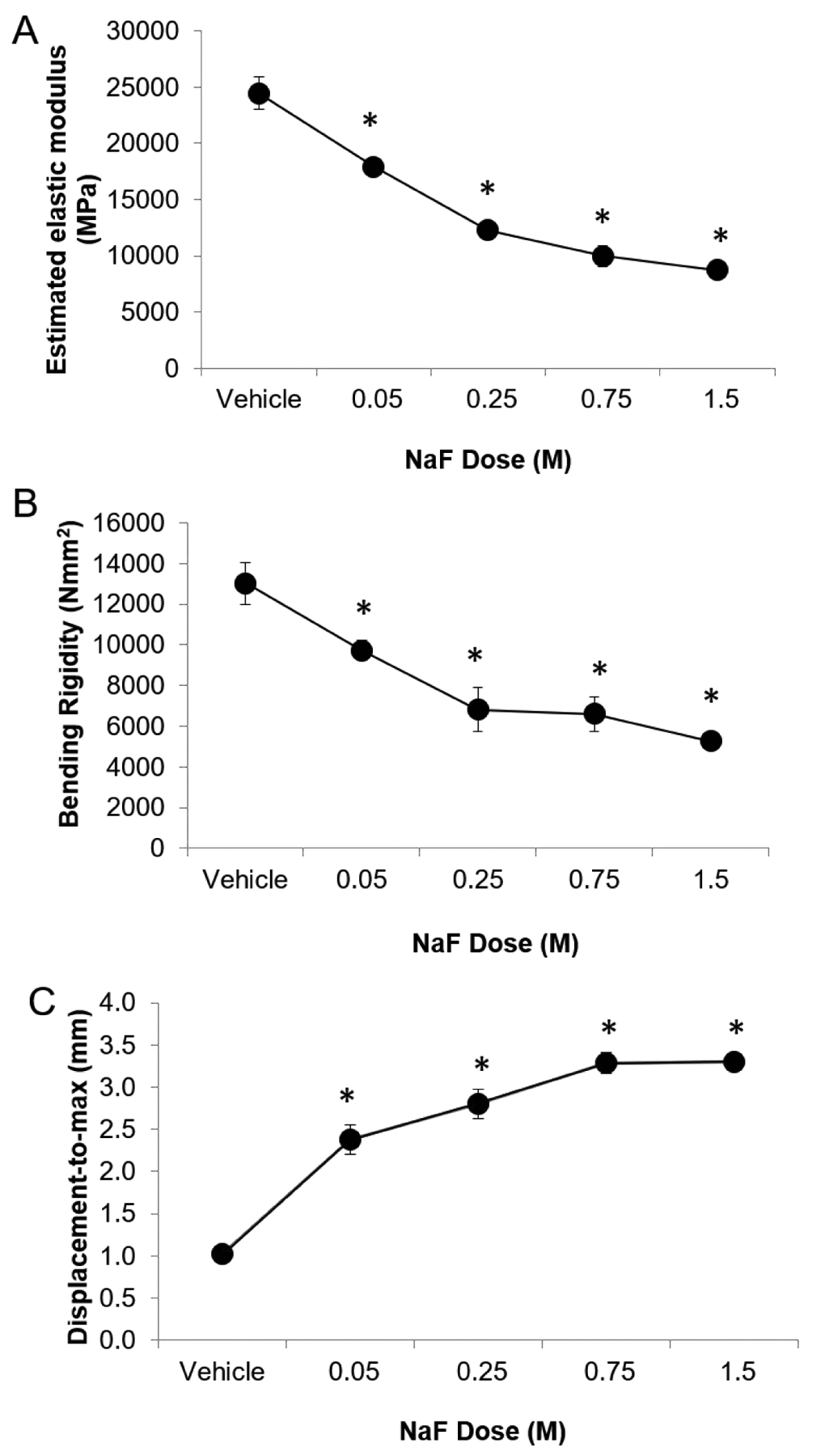
Elevation of bone fluoride levels due to drinking beverages with high fluoride content or other means such as inhalation can result in skeletal fluorosis and lead to increased joint pain, skeletal deformities, and fracture. Because skeletal fluorosis alters bone's mineral composition, it is likely to affect bone's tissue-level mechanical properties with consequent effects on whole bone mechanical behavior. To investigate this, we determined whether incubation with in vitro sodium fluoride (NaF) altered bone's mechanical behavior at both the tissue- and whole bone-levels using cyclic reference point indentation (cRPI) and traditional 3-point bending, respectively. Forty-two ulnas from female adult rats (5-6 months) were randomly divided into 5 groups (vehicle, 0.05 M NaF, 0.25 M NaF, 0.75 M NaF, and 1.5 M NaF). Bones were washed in a detergent solution to remove organic barriers to ion exchange and incubated in respective treatment solutions (12 h, 23 °C). Cortical tissue mineral density (TMD) and geometry at the mid-diaphysis were determined by microCT. cRPI was performed on the distal diaphysis (9 N, 2 Hz, 10 cycles), and then bones were tested in 3-point bending to assess whole bone mechanical properties. The incubations in vehicle (0 M) up to 1.5 M in vitro NaF concentrations achieved bone fluoride levels ranging from approximately 0.70 to 15.8 ppm. NaF-incubated bones had significantly greater indentation distances, higher displacement-to-maximum force, and lower estimated elastic modulus, ultimate stress, and bending rigidity with increasing NaF concentration compared to vehicle-incubated bones. cRPI variables were moderately correlated to whole bone mechanical properties such that higher indentation distances were associated with lower estimated elastic modulus, ultimate stress, and bending rigidity. In conclusion, in vitro NaF incubation mostly has a deleterious effect on bone mechanical behavior with increasing NaF levels that is independent of bone turnover and reflected, in part, by less resistance of the tissue to cRPI-based indentation.
Keywords: Bone; Mechanical properties; Reference point indentation; Skeletal fluorosis; Sodium fluoride.
Copyright © 2020 Elsevier Inc. All rights reserved.
Figures
References
-
- Whyte MP, Essmyer K, Gannon FH, Reinus WR, Skeletal fluorosis and instant tea, Am J Med 118(1) (2005) 78–82. - PubMed
-
- Choubisa S, Fluorosis in some tribal villages of Udaipur district (Rajasthan), J Environ Biol 19(4) (1998) 341–352.
-
- Choubisa S, Some observations on endemic fluorosis in domestic animals in Southern Rajasthan (India), Vet Res Comm 23(7) (1999) 457–465. - PubMed
-
- Roy S, Dass G, Fluoride contamination in drinking water–a review, Resour Environ 3(3) (2013) 53–58.
Publication types
MeSH terms
Substances
Grants and funding
LinkOut - more resources
Full Text Sources
Medical
