. 2020 Apr 22;10(1):6830.
doi: 10.1038/s41598-020-63793-z.

Applying nanotechnology to increase the rumen protection of amino acids in dairy cows

Affiliations

Applying nanotechnology to increase the rumen protection of amino acids in dairy cows

João Albuquerque et al. Sci Rep. .

Abstract

The amino acid requirements of high-production dairy cows represent a challenge to ensuring that their diet is supplied with available dietary resources, and thus supplementation with protected amino acids is necessary to increase their post-ruminal supply. Lysine is often the most limiting amino acid in corn-based diets. The present study proposes the use of lipid nanoparticles as novel rumen-bypass systems and assesses their capability to carry lysine. Solid lipid nanoparticles, nanostructured lipid carriers and multiple lipid nanoparticles were considered and their resistance in a rumen inoculum collected from fistulated cows was assessed. All nanoparticles presented diameters between 200-500 nm and surface charges lower than -30 mV. Lysine encapsulation was achieved in all nanoparticles, and its efficiency ranged from 40 to 90%. Solid lipid nanoparticles composed of arachidic or stearic acids and Tween 60 resisted ruminal digestion for up to 24 h. The nanoparticles were also proven to protect their lysine content from the ruminal microbiota. Based on our findings, the proposed nanoparticles represent promising candidates for rumen-bypass approaches and should be studied further to help improve the current technologies and overcome their limitations.


Conflict of interest statement

The authors declare no competing interests.

Figures
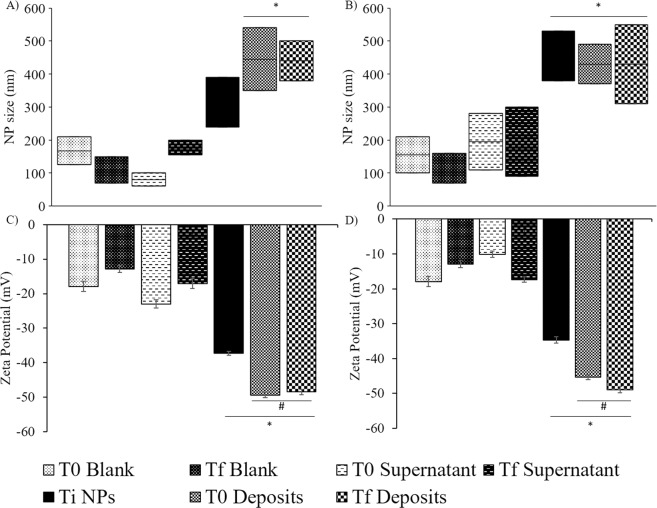
Figure 1
Figure 1
Diameter of SLN composed of stearic (A) and arachidic (B) acids with Tween 60 and zeta potential values for the same SLN (C and D, respectively) during the rumen stability assay. Results are shown for blanks and supernatants that contain bacteria (T0 and Tf) and deposits that contain NP (Ti, T0 and Tf), n = 6. *Statistically significant difference (p ≤ 0.05) from the blanks. #NP were statistically significantly different (p ≤ 0.05) from Ti NP.
Figure 2
Figure 2
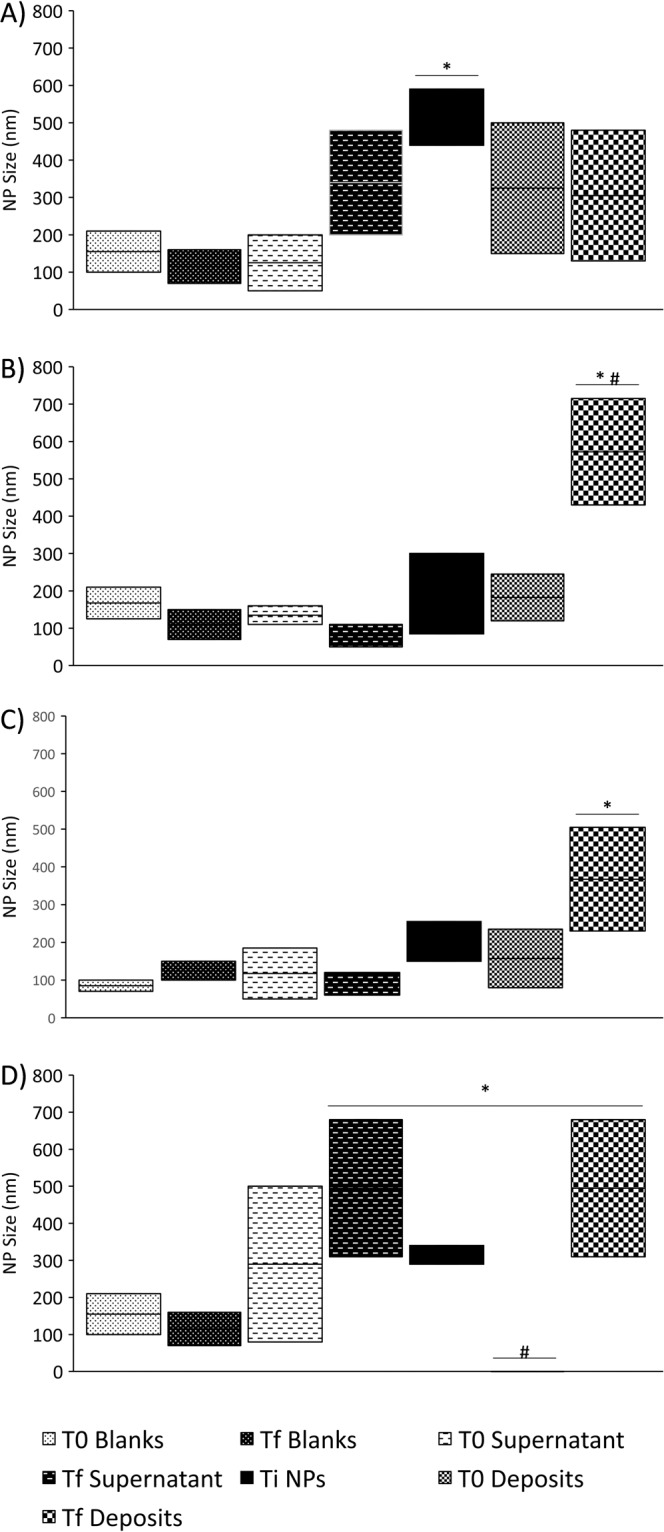
Diameters of SLN composed of arachidic acid (A) with Tween 80, NLC (B) and MLN (C) composed of arachidic acid measured during the rumen stability assay. Results are shown for blanks and supernatants that contain bacteria (T0 and Tf) and deposits that contain NP (Ti, T0 and Tf), n=6. *Statistically significantly different (p ≤ 0.05) from the blanks. #NP were statistically significantly different (p ≤ 0.05) from Ti NP.
Figure 3
Figure 3
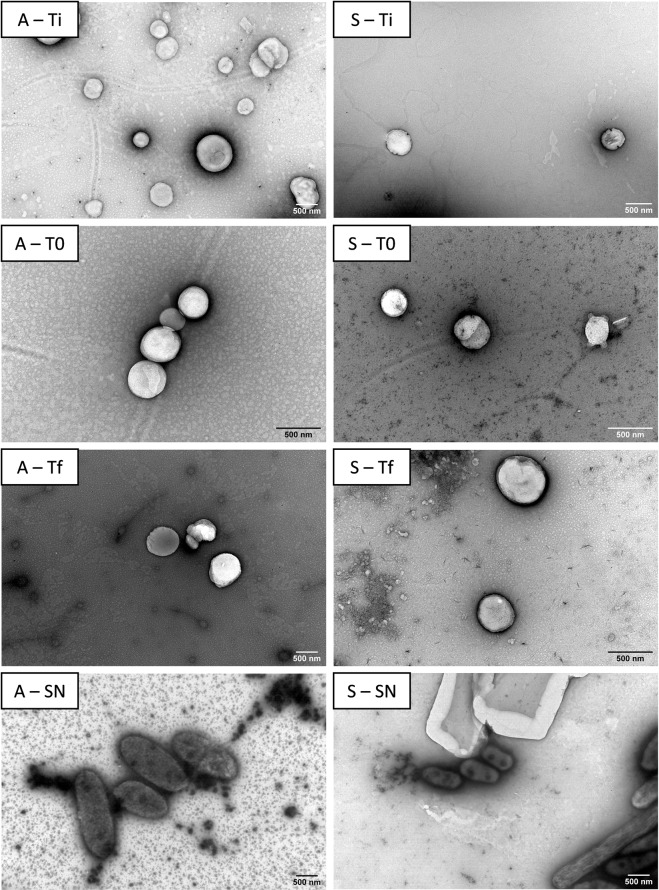
TEM photographs of both arachidic acid (A) and stearic acid (S) SLN with Tween 60. Ti – NP after synthesis, T0 – NP after contact with the rumen inoculum, Tf – NP after a 24 h incubation with the rumen inoculum, and SN - supernatant.
Figure 4
Figure 4
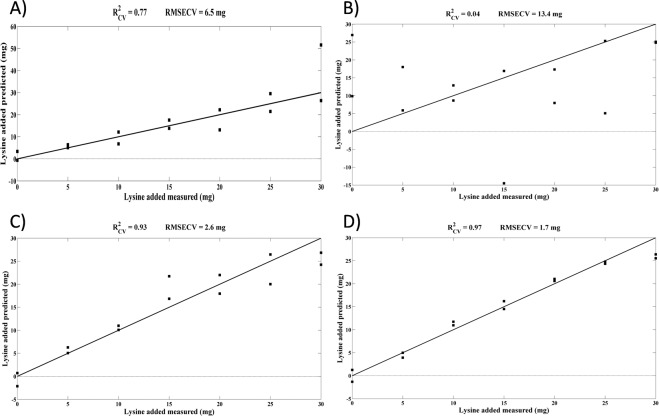
PLS models obtained at T0 (0 h of incubation) for NP with Lys added after production (A) or encapsulated during production (C) and Tf (24 h of incubation) for NP with Lys added after production (B) and encapsulated during production (D). Values of R2CV and RMSECV are shown for each model.

References

    1. Edmunds B, et al. The amino acid composition of rumen-undegradable protein: a comparison between forages. J. Dairy Sci. 2013;96:4568–4577. doi: 10.3168/jds.2012-6536. - DOI - PubMed
    1. Rulquin H, Verite R, Guinard-Flament J, Pisulewski PM. Amino acids truly digestible in the small intestine. Factors of variation in ruminants and consequences on milk protein secretion. Prod. Anim. 2001;14:201–210.
    1. Lee C, et al. Rumen-protected lysine, methionine, and histidine increase milk protein yield in dairy cows fed a metabolizable protein-deficient diet. J. Dairy Sci. 2012;95:6042–6056. doi: 10.3168/jds.2012-5581. - DOI - PubMed
    1. Elwakeel EA, et al. Hydroxymethyl lysine is a source of bioavailable lysine for ruminants. J. Anim. Sci. 2012;90:3898–3904. doi: 10.2527/jas.2011-4975. - DOI - PubMed
    1. Paz HA, Kononoff PJ. Lactation responses and amino acid utilization of dairy cows fed low-fat distillers dried grains with solubles with or without rumen-protected lysine supplementation. J. Dairy Sci. 2014;97:6519–6530. doi: 10.3168/jds.2014-8315. - DOI - PubMed

Publication types