


Possible introduction of Leishmania tropica to urban areas determined by epidemiological and clinical profiles of patients with cutaneous leishmaniasis in Casablanca (Morocco)
- PMID: 32322694
- PMCID: PMC7171526
- DOI: 10.1016/j.parepi.2019.e00129
Possible introduction of Leishmania tropica to urban areas determined by epidemiological and clinical profiles of patients with cutaneous leishmaniasis in Casablanca (Morocco)
Erratum in
-
Erratum regarding missing Declaration of Competing Interest statements in previously published articles.Parasite Epidemiol Control. 2020 Dec 15;11:e00194. doi: 10.1016/j.parepi.2020.e00194. eCollection 2020 Nov. Parasite Epidemiol Control. 2020. PMID: 33426316 Free PMC article.
Abstract
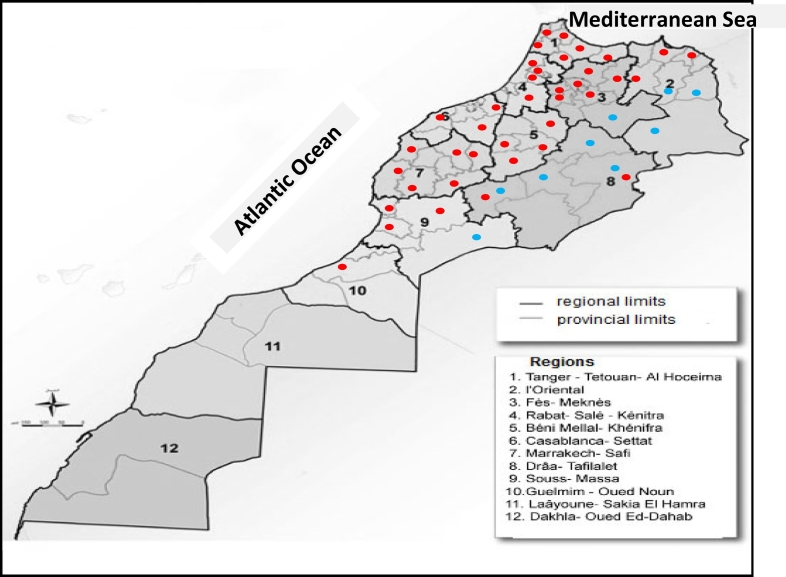
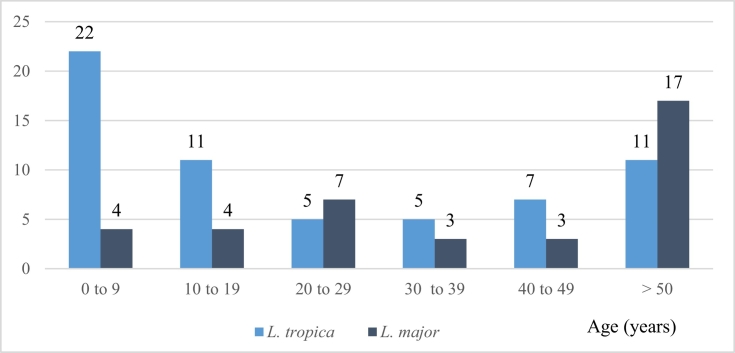
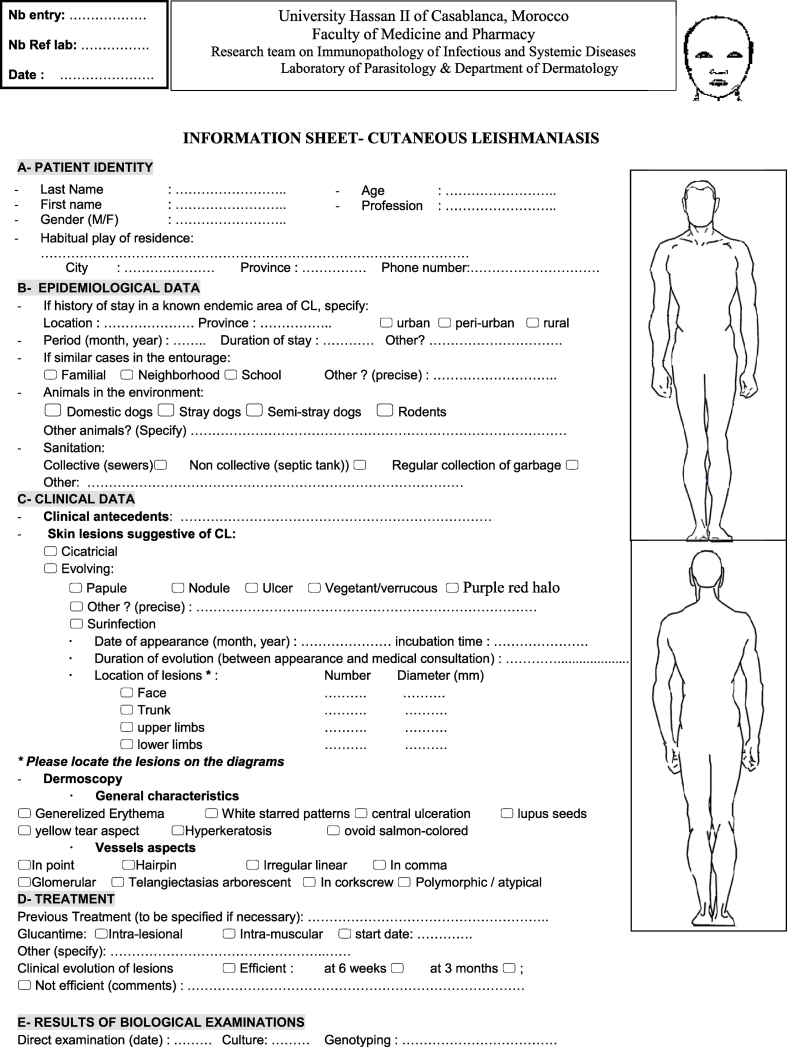
Leishmaniases are a group of infectious diseases caused by protozoan Leishmania parasites and are transmitted by the bites of infected phlebotomine sandflies. The heterogeneity of these diseases is influenced by both parasitic properties and host factors. Cutaneous leishmaniasis (CL) is a major public health problem in Morocco, where the geographical expansion of CL (particularly CL caused by Leishmania tropica), the heterogeneous appearance of lesions and the difficulty in diagnosing CL contribute to late diagnosis of CL and delayed treatment of patients. Therefore, the main objective of this study was to describe the epidemiological and clinical profiles of patients with CL diagnosed in Casablanca (Morocco), which is a non-endemic area for CL. A cross-sectional study was conducted between 2010 and 2016, during which epidemiological and clinical data were collected from patients that met the inclusion criteria through an information sheet. Then, samples were obtained from each patient for parasitological and molecular diagnosis, and only patients with positive polymerase chain reaction and genotyping results were included in the study. Overall, 106 cases of CL were genotyped, of which 61 (57.5%) were caused by L. tropica, 38 (35.9%) by L. major and 7 (6.6%) by L. infantum. While all age groups were affected, CL cases wherein L. tropica was the causative agent were most frequently diagnosed in children aged 0-9 years (p = 0.005), whereas those caused by L. major were more frequently diagnosed in elderly patients (p = 0.004). Multivariate logistic regression analysis showed that two clinical variables were significantly associated with CL caused by L. tropica: lesion size (p = 0.002) and occurrence of lesion on the face (p = 0.005). Furthermore, the results of our survey highlighted the association of Leishmania infection when travelling to endemic areas. The high number of endemic foci where patients with CL were infected with L. tropica illustrated the tendency of this form to spread and generate epidemics, exposing young people to a greater degree to the disease. The epidemic status of CL caused by L. tropica in Morocco and the increased movement of the population from rural to urban areas indicate a possible introduction of this species to urban areas.
Keywords: Clinical profile; Cutaneous leishmaniasis; Epidemiological profile; Leishmania major; Leishmania tropica; Morocco.
© 2020 The Authors. Published by Elsevier Ltd on behalf of World Federation of Parasitologists.
Figures
References
-
- Ait Kbaich M., Mhaidi I., Ezzahidi A., Dersi N., El Hamouchi A., Riyad M., Akarid K., Lemrani M. New epidemiological pattern of cutaneous leishmaniasis in two pre-Saharan arid provinces, southern Morocco. Acta Trop. 2017;173:11–16. - PubMed
-
- Aoun K., Ben Abda I., Bousslimi N., Bettaieb J., Siala E., Ben Abdallah R., Benmously R., Bouratbine A. Comparative characterization of skin lesions observed in the three endemic varieties of cutaneous leishmaniasis in Tunisia. Ann. Derm. Venereol. 2012;139(6–7):452–458. - PubMed
-
- Bailey M.S., Lockwood D.N. Cutaneous leishmaniasis. Clin. Dermatol. 2007;25(2):203–211. - PubMed
-
- Bennis I., De Brouwere V., Ameur B., El Idrissi Laamrani A., Chichaoui S., Hamid S., Boelaert M. Control of cutaneous leishmaniasis caused by Leishmania major in south-eastern Morocco. Tropical Med. Int. Health. 2015;20(10):1297–1305. - PubMed
LinkOut - more resources
Full Text Sources
Miscellaneous
