


Childhood diarrhoeal diseases in developing countries
- PMID: 32322707
- PMCID: PMC7160433
- DOI: 10.1016/j.heliyon.2020.e03690
Childhood diarrhoeal diseases in developing countries
Erratum in
-
Corrigendum to "Childhood diarrhoeal diseases in developing countries" [Heliyon 6 (4) (2020) e03690].Heliyon. 2020 Jun 10;6(6):e04040. doi: 10.1016/j.heliyon.2020.e04040. eCollection 2020 Jun. Heliyon. 2020. PMID: 32551376 Free PMC article.
Abstract
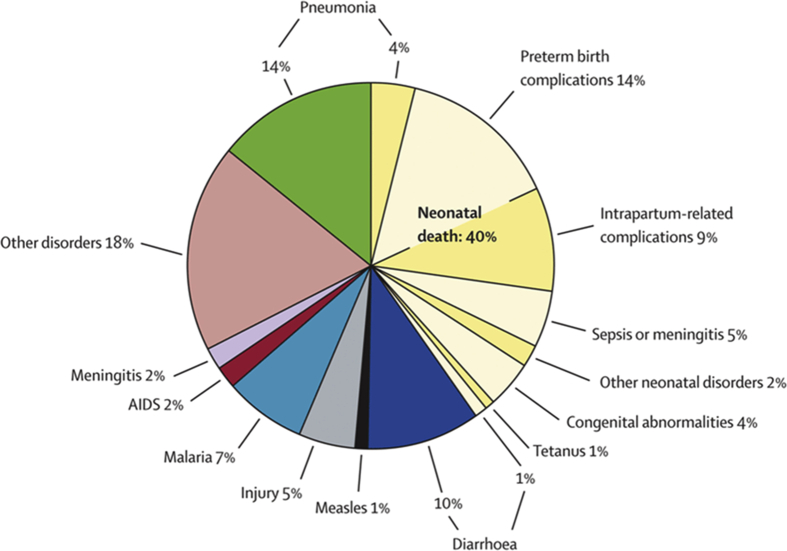
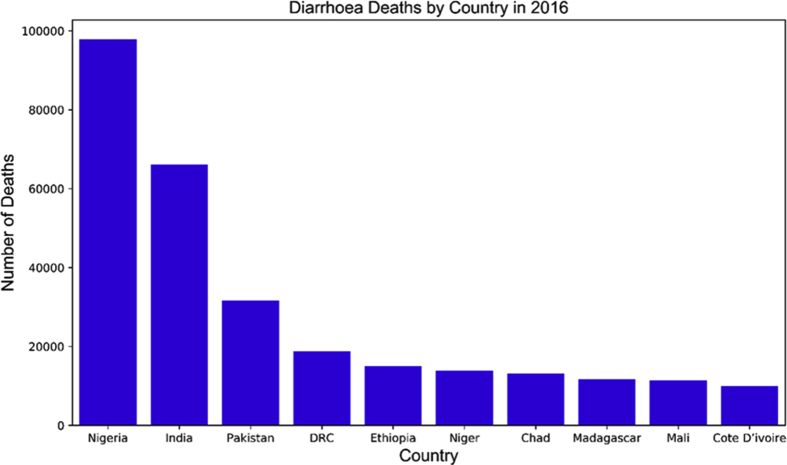
Diarrhoeal diseases collectively constitute a serious public health challenge globally, especially as the leading cause of death in children (after respiratory diseases). Childhood diarrhoea affecting children under the age of five accounts for approximately 63% of the global burden. Accurate and timely detection of the aetiology of these diseases is very crucial; but conventional methods, apart from being laborious and time-consuming, often fail to identify difficult-to-culture pathogens. The aetiological agent of an average of up to 40% of cases of diarrhoea cannot be identified. This review gives an overview of the recent trends in the epidemiology and treatment of diarrhoea and aims at highlighting the potentials of metagenomics technique as a diagnostic method for enteric infections.
Keywords: Childhood; Diagnostics; Diarrhoea; Epidemiology; Medical microbiology; Metagenomics; Microbiology; Microbiology epidemiology; Molecular biology; Therapy.
© 2020 The Authors.
Figures
References
-
- Abuzerr S., Nasseri S., Yunesian M., Hadi M., Zinszer K., Mahvi A.H., Mohammed S.H. Water, sanitation, and hygiene risk factors of acute diarrhea among children under five years in the Gaza Strip. J. Water, Sanit. Hyg. Dev. 2020;10(1):111–123.
-
- Ahmad N., Drew W.L., Plorde J.J. fifth ed. McGraw-Hill Companies; USA: 2010. Sherris Medical Microbiology; pp. 929–931.
Publication types
LinkOut - more resources
Full Text Sources
Medical
