


Tuberculous meningitis: where to from here?
- PMID: 32324614
- PMCID: PMC7259381
- DOI: 10.1097/QCO.0000000000000648
Tuberculous meningitis: where to from here?
Abstract
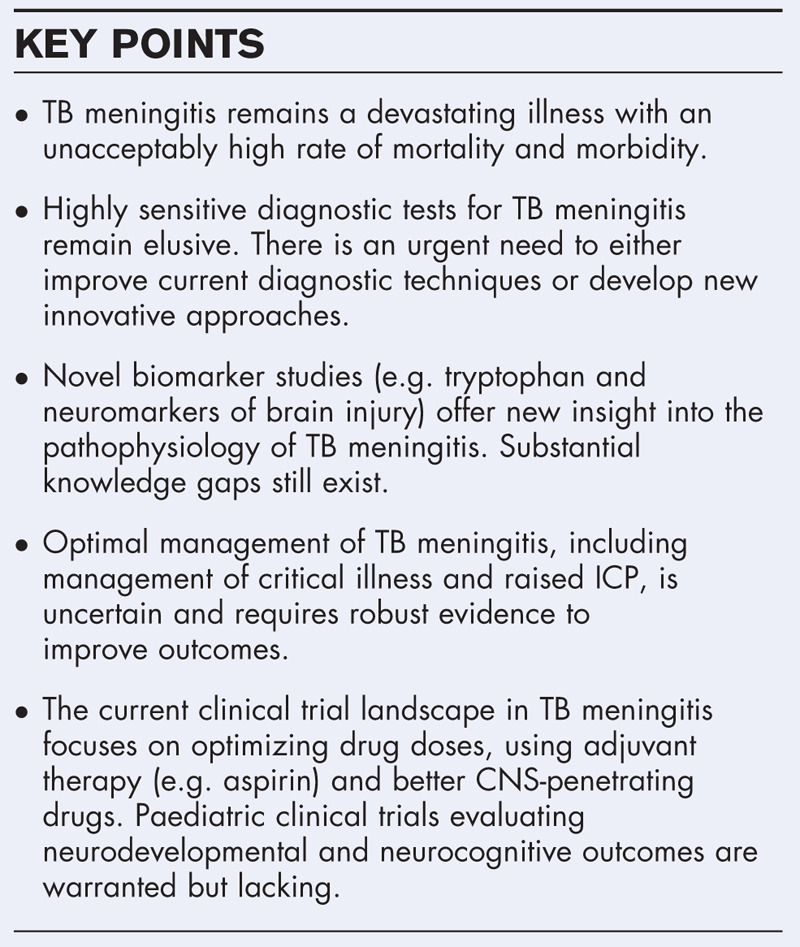
Purpose of review: Tuberculous meningitis (TBM) is associated with significant mortality and morbidity yet is difficult to diagnose and treat. We reviewed original research published in the last 2 years, since 1 January 2018, which we considered to have a major impact in advancing diagnosis, treatment and understanding of the pathophysiology of TBM meningitis in children and adults.
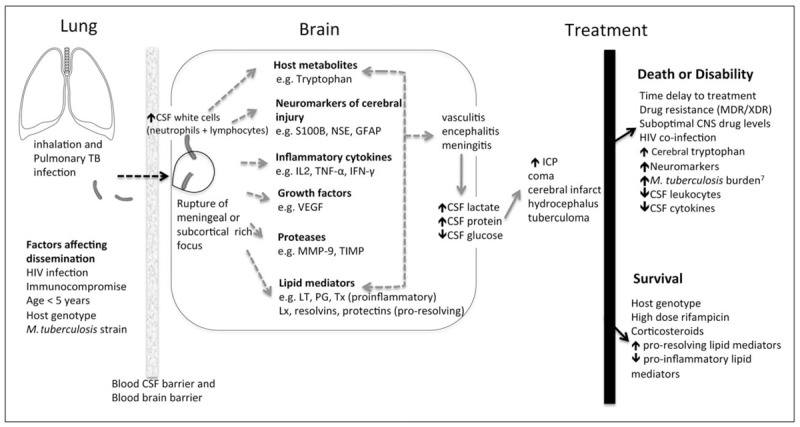
Recent findings: Studies have sought to identify a high sensitivity diagnostic test for TBM, with new data on modified Ziehl--Neelsen staining, urinary and cerebrospinal fluid (CSF) lipoarabinomannan and GeneXpert Ultra. Recent studies on CSF biomarkers provide a better understanding of the detrimental inflammatory cascade and neuromarkers of brain damage and suggest potential for novel host-directed therapy. Tryptophan metabolism appears to affect outcome and requires further study. Increased clinical trials activity in TBM focuses on optimizing antituberculosis drug regimens and adjuvant therapy; however, there are few planned paediatric trials.
Summary: Tuberculous meningitis still kills or disables around half of sufferers. Although some progress has been made, there remains a need for more sensitive diagnostic tests, better drug therapy, improved management of complications and understanding of host-directed therapy if outcomes are to improve.
Conflict of interest statement
There are no conflicts of interest.
Figures
References
-
- World Health Organization. Global tuberculosis report 2019. 2019. Available at: https://www.who.int/tb/global-report-2019 [Accessed 8 December 2019].
-
- du Preez K, Seddon JA, Schaaf HS, et al. Global shortages of BCG vaccine and tuberculous meningitis in children. Lancet Glob Heal 2019; 7:e28–e29. - PubMed
-
- Chiang SS, Khan FA, Milstein MB, et al. Treatment outcomes of childhood tuberculous meningitis: a systematic review and meta-analysis. Lancet Infect Dis 2014; 14:947–957. - PubMed
-
- Wilkinson RJ, Rohlwink U, Misra UK, et al. Tuberculous meningitis. Nat Rev Neurol 2017; 13:581–598. - PubMed
Publication types
MeSH terms
Substances
Grants and funding
LinkOut - more resources
Full Text Sources
Research Materials
