Review
. 2020 Jun 4;15(11):907-932.
doi: 10.1002/cmdc.202000223. Epub 2020 May 7.

Drug Development and Medicinal Chemistry Efforts toward SARS-Coronavirus and Covid-19 Therapeutics

Affiliations
Review

Drug Development and Medicinal Chemistry Efforts toward SARS-Coronavirus and Covid-19 Therapeutics

Arun K Ghosh et al. ChemMedChem. .

Abstract

The COVID-19 pandemic caused by SARS-CoV-2 infection is spreading at an alarming rate and has created an unprecedented health emergency around the globe. There is no effective vaccine or approved drug treatment against COVID-19 and other pathogenic coronaviruses. The development of antiviral agents is an urgent priority. Biochemical events critical to the coronavirus replication cycle provided a number of attractive targets for drug development. These include, spike protein for binding to host cell-surface receptors, proteolytic enzymes that are essential for processing polyproteins into mature viruses, and RNA-dependent RNA polymerase for RNA replication. There has been a lot of ground work for drug discovery and development against these targets. Also, high-throughput screening efforts have led to the identification of diverse lead structures, including natural product-derived molecules. This review highlights past and present drug discovery and medicinal-chemistry approaches against SARS-CoV, MERS-CoV and COVID-19 targets. The review hopes to stimulate further research and will be a useful guide to the development of effective therapies against COVID-19 and other pathogenic coronaviruses.

Keywords: Covid-19; SARS-CoV; coronavirus; drug discovery; protease inhibitors.


Conflict of interest statement

The authors declare no conflict of interest.

Figures
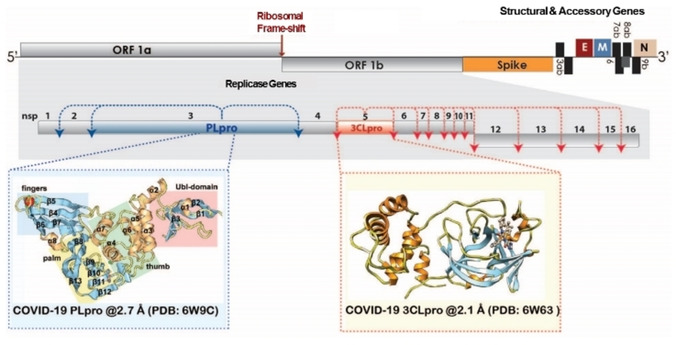
Figure 1
Figure 1
Genome organization of SARS‐CoV‐2, highlighting open reading frames (ORF 1a and ORF 1b) nonstructural, structural and accessory proteins along with both proteases and their corresponding cleavage sites. The 16 nsps are numbered and are shown shaded in gray with the exceptions of PLpro (blue) and 3CLpro (red). The structural and accessory proteins are shown and individual ribbon diagrams for each protease are also shown in individually colored boxes PLpro (blue dashed box) and 3CLpro (red dashed box). The PDB codes for 3CLpro and PLpro from SARS‐CoV‐2 (COVID‐19) are also shown.
Figure 2
Figure 2
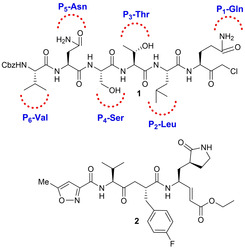
Structure of compounds 1 and 2.
Figure 3
Figure 3
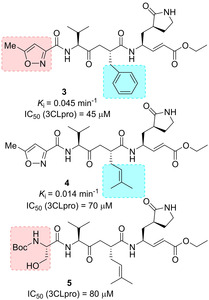
Structure of SARS‐CoV 3CLpro inhibitors 35.
Figure 4
Figure 4
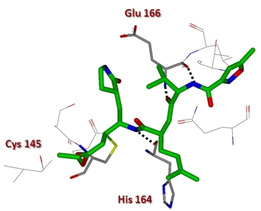
X‐ray crystal structure of compound 4 in the SARS‐CoV 3CLpro active site (PDB ID: 2ALV).
Figure 5
Figure 5
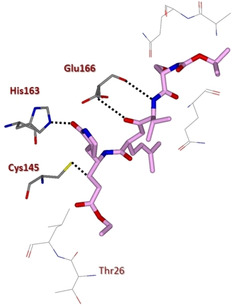
X‐ray crystal structure of compound 5 in the SARS‐CoV 3CLpro active site (PDB ID: 2QIQ).
Figure 6
Figure 6
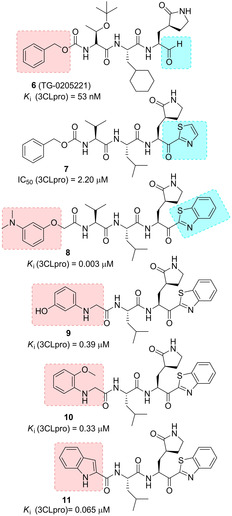
Structure of SARS‐CoV 3CLpro inhibitors 611.
Figure 7
Figure 7
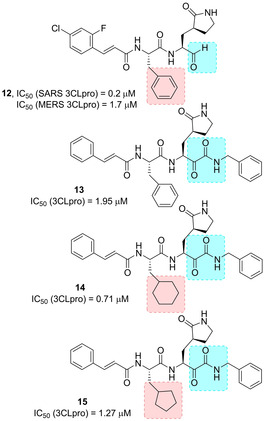
Structure of broad‐spectrum inhibitors 1215.
Figure 8
Figure 8
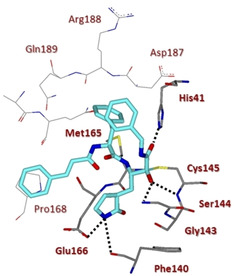
X‐ray crystal structure of compound 13 in the SARS‐CoV 3CLpro active site (PDB ID: 5N19).
Figure 9
Figure 9
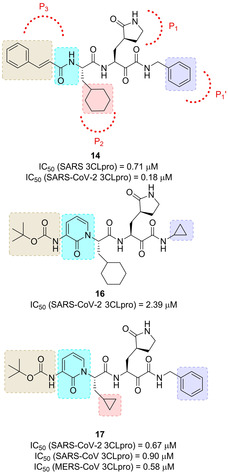
Structure of α‐ketoamide SARS‐CoV‐2 3CLpro inhibitors 16 and 17.
Figure 10
Figure 10
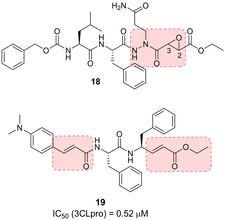
Structure of SARS‐CoV 3CLpro inhibitors 18 and 19.
Figure 11
Figure 11
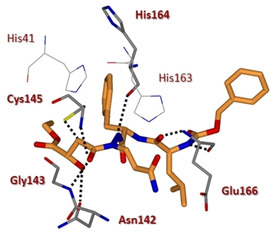
X‐ray crystal structure of compound 18 in the SARS‐CoV 3CLpro active site (PDB ID: 2A5K).
Figure 12
Figure 12
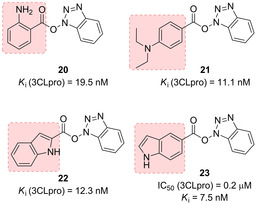
Benzotriazole esters 2023 as covalent SARS‐CoV 3CLpro inhibitors.
Figure 13
Figure 13
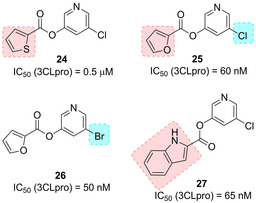
Halopyridinyl esters 2427 as covalent SARS‐CoV 3CLpro inhibitors.
Figure 14
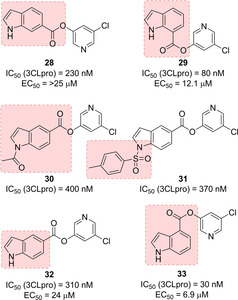
Figure 14
Covalent indole‐based SARS‐CoV 3CLpro inhibitors 2833.
Figure 15
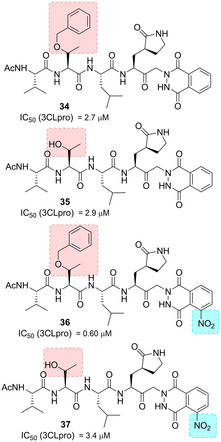
Figure 15
Structure of noncovalent SARS‐CoV 3CLpro inhibitors 3437.
Figure 16
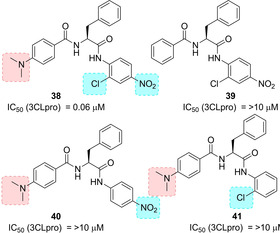
Figure 16
Structure of noncovalent SARS‐CoV 3CLpro inhibitors 3841.
Figure 17
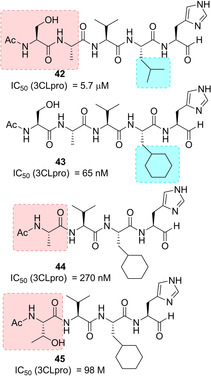
Figure 17
Structure of noncovalent SARS‐CoV 3CLpro inhibitors 4245.
Figure 18
Figure 18
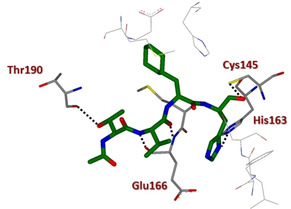
X‐ray crystal structure of compound 45 in the SARS‐CoV 3CLpro active site (PDB ID: 3ATW).
Figure 19
Figure 19
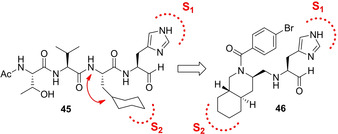
Design of decahydroisoquinolyl‐based scaffold for 3CLpro inhibitors.
Figure 20
Figure 20
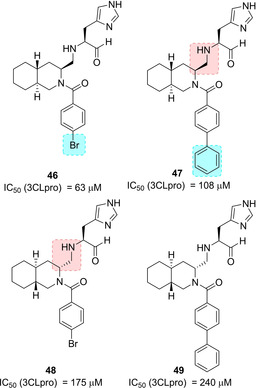
Decahydroisoquinolyl‐based SARS‐CoV 3CL pro inhibitors 4649.
Figure 21
Figure 21
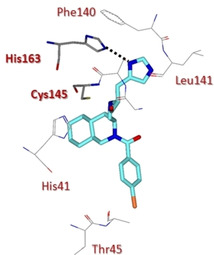
X‐ray crystal structure of compound 46 in the SARS‐CoV 3CLpro active site (PDB ID: 4TWW).
Figure 22
Figure 22
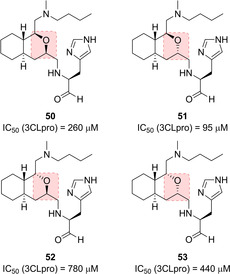
Octahydroisochromene‐based SARS‐CoV 3CLpro inhibitors 5053.
Figure 23
Figure 23
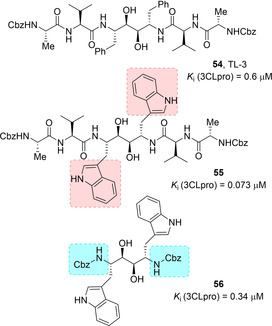
Structures of SARS‐CoV 3CLpro inhibitors 5456.
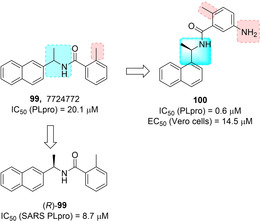
Figure 24
Figure 24
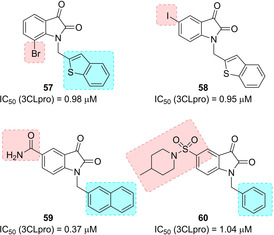
Structures of isatin‐based SARS‐CoV 3CLpro inhibitors 5760.
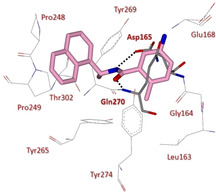
Figure 25
Figure 25
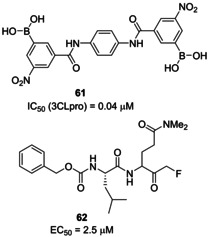
Structures of SARS‐CoV 3CLpro inhibitors 61 and 62.
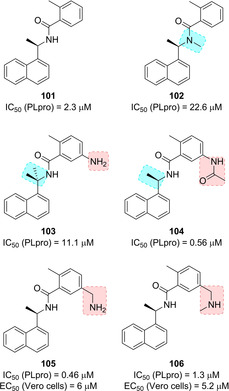
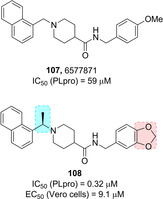
Figure 26
Figure 26
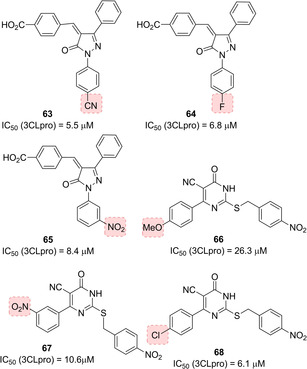
Structures of pyrazolone‐ and dihydropyrimidine‐based SARS‐CoV 3CLpro inhibitors 6368.
Figure 27
Figure 27
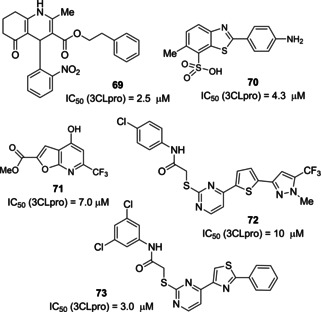
SARS‐CoV 3CLpro inhibitors 6973 derived from screening activities.
Figure 28
Figure 28
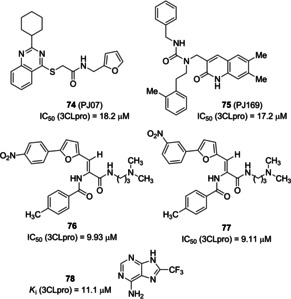
SARS‐CoV 3CLpro inhibitors 7478 derived from screening activities.
Figure 29
Figure 29
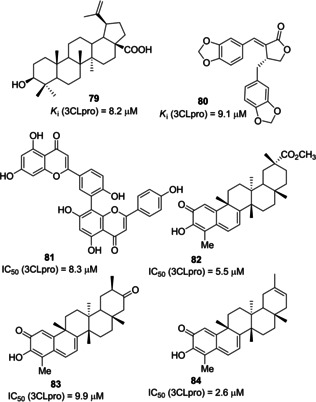
SARS‐CoV 3CLpro inhibitors 7984 derived from natural sources.
Figure 30
Figure 30
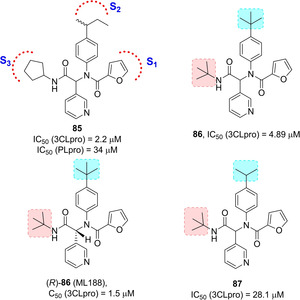
Hit compound 85 and optimized derivatives 86 and 87.
Figure 31
Figure 31
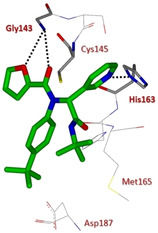
X‐ray crystal structure of compound 86 in the SARS‐CoV 3CLpro active site (PDB ID: 3 V3 M).
Figure 32
Figure 32
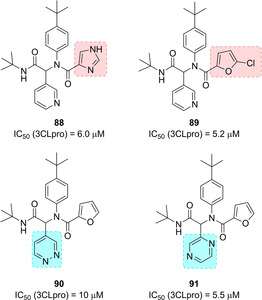
Structures of optimized SARS‐CoV 3CLpro inhibitors 88–91.
Figure 33
Figure 33
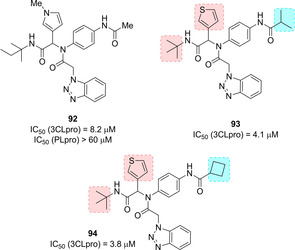
Hit compound 92 and optimized derivatives 93 and 94.
Figure 34
Figure 34
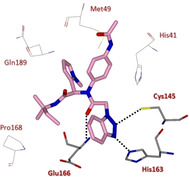
X‐ray crystal structure of compound 92 in the SARS‐CoV 3CLpro active site (PDB ID: 4MDS).
Figure 35
Figure 35
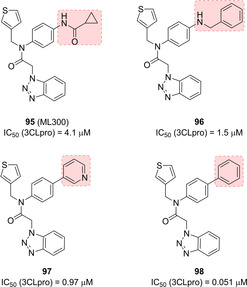
Structures of optimized SARS‐CoV 3CLpro inhibitors 95–98.
Figure 36
Figure 36
Hit compound 99 and optimized derivative 100.
Figure 37
Figure 37
X‐ray crystal structure of compound 100 in the SARS‐CoV PLpro active site (PDB ID: 3E9S)
Figure 38
Figure 38
Structures of PLpro inhibitors 101106.
Figure 39
Figure 39
Hit compound 107 and optimized derivative 108.
Figure 40
Figure 40
X‐ray crystal structure of compound 108 in the SARS‐CoV PLpro active site (PDB ID: 3MJ5).
Figure 41
Figure 41
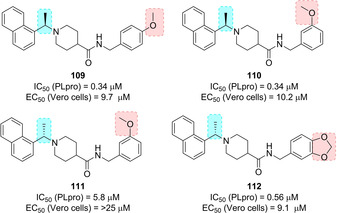
Structures of PLpro inhibitors 109112.
Figure 42
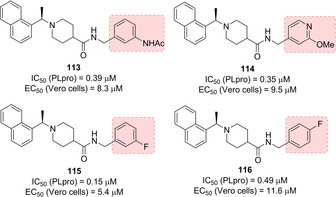
Figure 42
Structures of PLpro inhibitors 113116.
Figure 43
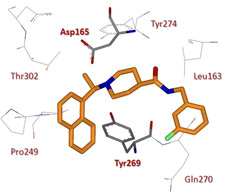
Figure 43
X‐ray crystal structure of compound 115 in the SARS‐CoV PLpro active site (PDB ID: 4OW0).
Figure 44
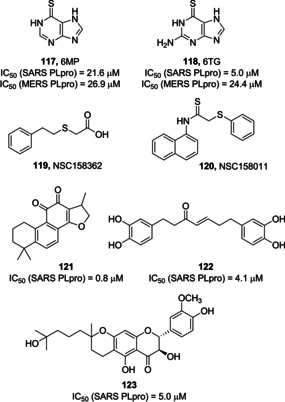
Figure 44
SARS‐CoV and MERS‐CoV PLpro inhibitors 117123.
Figure 45
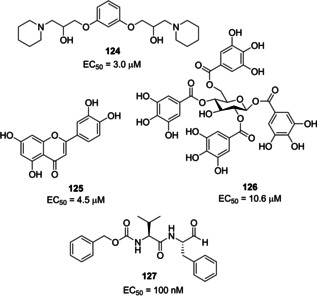
Figure 45
Viral entry inhibitors 124127.
Figure 46
Figure 46
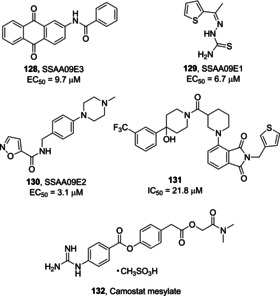
Viral entry inhibitors 128132.
Figure 47
Figure 47
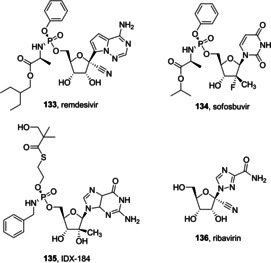
RdRp inhibitors 133136.
Figure 48
Figure 48
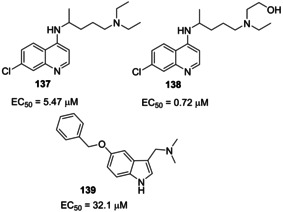
Structure of chloroquine (137), hydroxychloroquine (138) and compound 139.

References

    1. Wu F., Zhao S., Yu B., Chen Y M., Wang W., Song Z. G., Hu Y., Tao Z. W., Tian J. H., Pei Y. Y., Yuan M. L., Zhang Y. L., Dai F. H., Liu Y., Wang Q. M., Zheng J. J., Xu L., Holmes E. C., Zhang Y. Z., Nature 2020, 579, 265–269. - PMC - PubMed
    1. Zhou P., Yang X. L., Wang X. G., Hu B., Zhang L., Zhang W., Si H. R., Zhu Y., Li B., Huang C. L., Chen H. D., Chen J., Luo Y., Guo H., Jiang R. D., Liu M. Q., Chen Y., Shen X. R., Wang X., Zheng X. S., Zhao K., Chen Q. J., Deng F., Liu L. L., Yan B., Zhan F. X., Wang Y. Y., Xiao G. F., Shi Z. L., Nature 2020, 579, 270–273. - PMC - PubMed
    1. Wu Y., Ho W., Huang Y., Jin D. Y., Li S., Liu S. L., Liu X., Qiu J., Sang Y., Wang Q., Yuen K. Y., Zheng Z. M., Lancet 2020, 395, 949–950. - PMC - PubMed
    1. Coronavirus disease, COVID pandemic. Accessed: March 20, 2020: http://www.who.int/emergencies/diseases/novel-coronavirus-2019.
    1. Coronavirus disease COVID pandemic, 2020: situation summary. Accessed: March 20, 2020: https://www.cdc.gov/coronaviru/2019-ncov/cases-updates/summary.html.

Publication types

LinkOut - more resources