. 2020 Apr 19;25(8):1890.
doi: 10.3390/molecules25081890.

Chemical Composition and Biological Activities of Essential Oils from Peels of Three Citrus Species

Affiliations

Chemical Composition and Biological Activities of Essential Oils from Peels of Three Citrus Species

Lucia Caputo et al. Molecules. .

Abstract

Background: Fruit peels are generally underutilized byproducts of the food industry, although they are valuable sources of bioactive compounds. The aim of this study is to evaluate a new application for three Citrus peel EOs as bio-herbicides.

Methods: After a micro-morphological evaluation of Citrus peels by SEM analysis, the phytochemical composition of the EOs of Citrus × bergamia Risso & Poit., Citrus × myrtifolia Raf., and Citrus limon (L.) Osbeck was characterized by GC/FID and GC/MS analyses. The in vitro phytotoxicity against germination and initial radical elongation of several crop and weed species was evaluated. Furthermore, the eco-compatibility of these EOs has been assessed by the brine shrimp (Artemia salina) lethality assay.

Results: SEM analysis highlighted the morphometric differences of the schizolysigenous pockets among the peels of the three Citrus species. Oxygenated monoterpenes are the main constituents in C. × bergamia (51.09%), whereas monoterpene hydrocarbons represent the most abundant compounds in C. × myrtifolia (82.15%) and C. limon (80.33%) EOs. They showed marked and selective phytotoxic activity in vitro, often at very low concentration (0.1 μg/mL) against all plant species investigated, without showing any toxicity on Artemia salina, opening the perspective of their use as safe bio-herbicides.

Keywords: Citrus limon; Citrus × bergamia; Citrus × myrtifolia; eco-compatibility; essential oil; phytotoxicity.


Conflict of interest statement

The authors declare no conflict of interest.

Figures
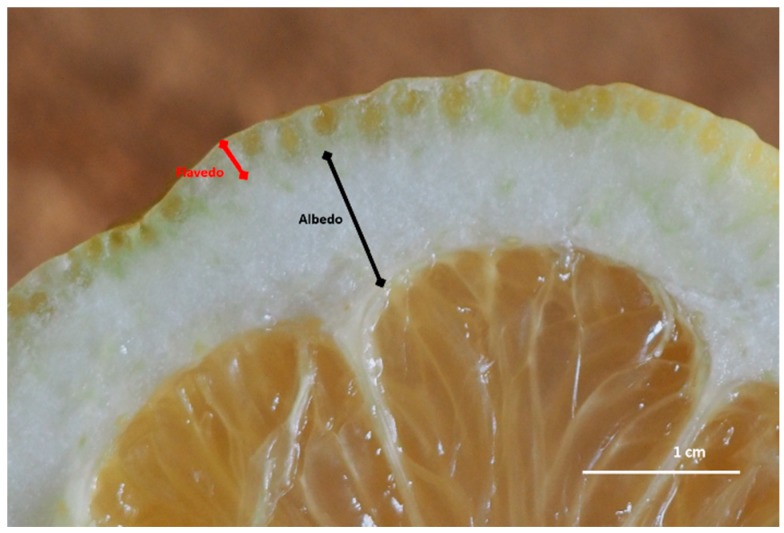
Figure 1
Figure 1
Cross section of Citrus limon peel. The exocarp is composed of two clearly distinguishable regions, the pigmented peripheral epicarp or flavedo, and the white middle layer called mesocarp or albedo. Enlarged oil glands are visible in the flavedo.
Figure 2
Figure 2
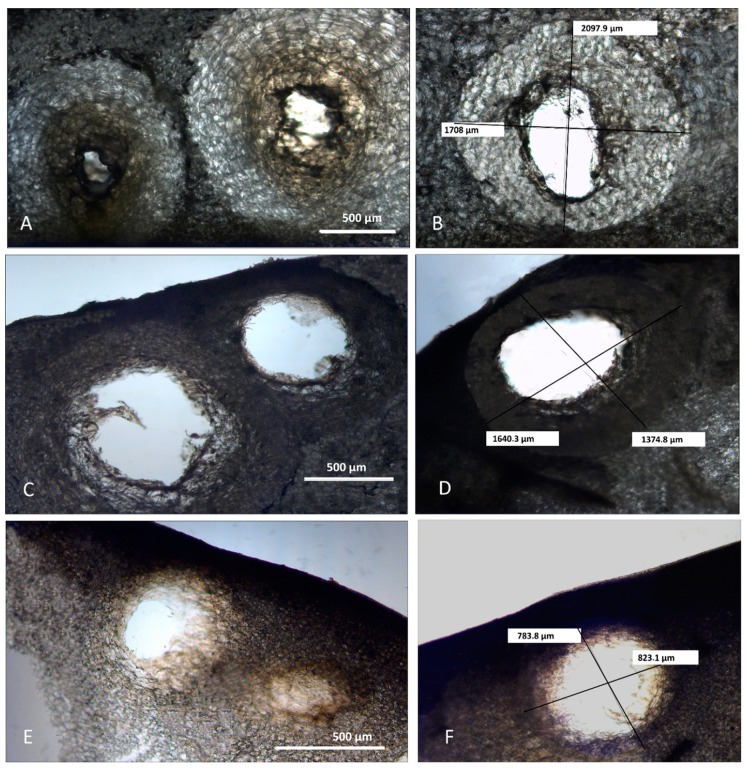
Light microscopy captures of oil glands from the peel of C. limon, C. × bergamia, and C. × myrtifolia, commonly known respectively as lemon, bergamot, and chinotto. Sub-prolate secretory cavities of C. limon (A,B). Oil glands sub-oblate to oblate-spheroidal in shape from the epicarp of C. × bergamia (C,D) and C. × myrtifolia (E,F). As shown by polar and equatorial diameter measures (B,D,F), lemon oil glands are larger and more oval with respect to those of bergamot and chinotto.
Figure 3
Figure 3
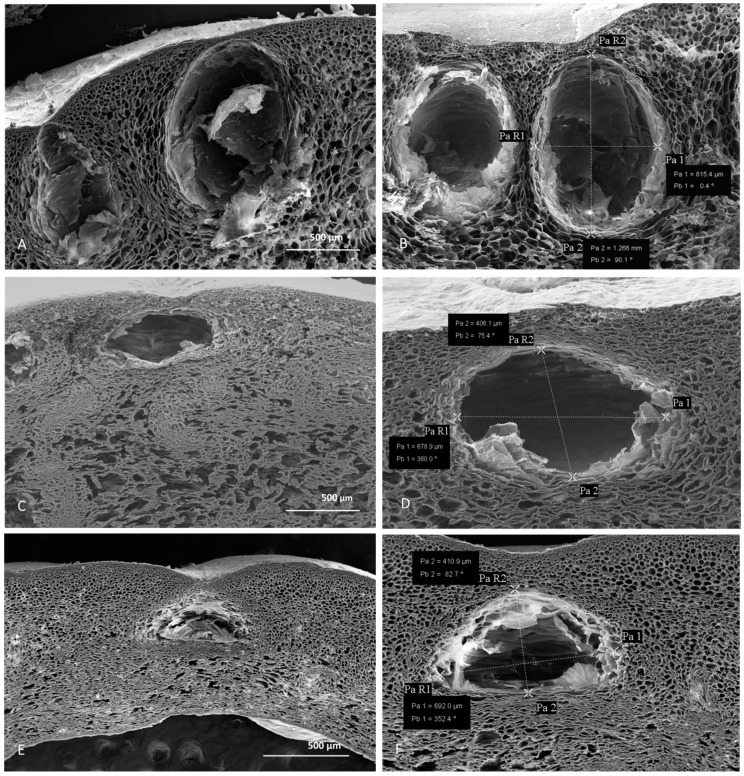
SEM micrographs of peel cross sections from C. lemon (A,B), C. × bergamia (C,D), and C. × mytifolia (E,F). Measures of the oil glands from the three different species are shown: lemon (B), bergamot (D) and chinotto (F).
Figure 4
Figure 4
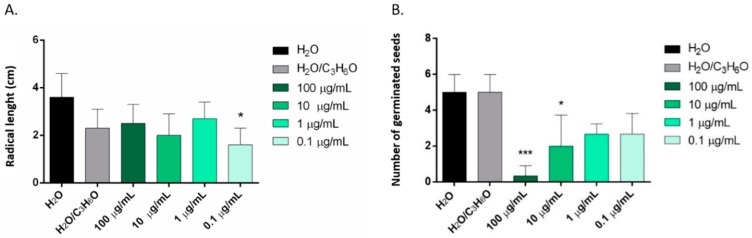
Phytotoxic activity of C. × myrtifolia EO against radical elongation of L. multiflorum (A) and germination of P. oleracea (B), 120 h after sowing. Results are the mean of three experiments ± standard deviation. * p < 0.05, *** p < 0.001 compared with control (ANOVA followed by Dunnett’s multiple comparison test).
Figure 5
Figure 5
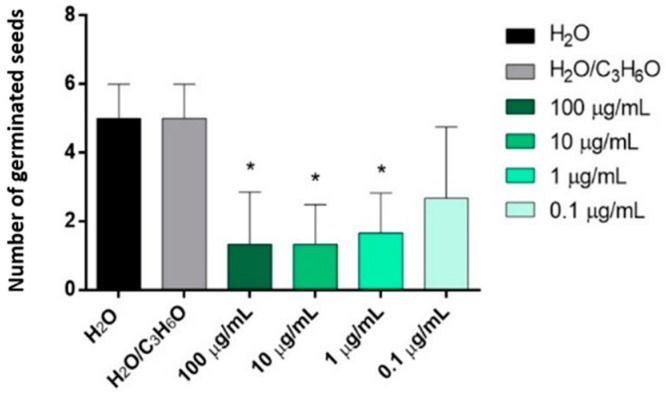
Phytotoxic activity of C. × bergamia (B) EOs against germination of P. oleracea, 120 h after sowing. Results are the mean of three experiments ± standard deviation. * p < 0.05 compared with control (ANOVA followed by Dunnett’s multiple comparison test).
Figure 6
Figure 6
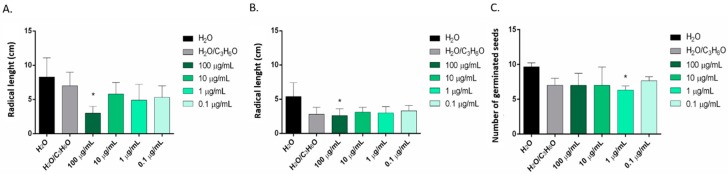
Phytotoxic activity of the EOs of C. limon against radical elongation of S. lycopersium (A), L. sativum (B) and germination of R. sativus (C), 120 h after sowing. Results are the mean of three experiments ± standard deviation. * p < 0.05 compared with control (ANOVA followed by Dunnett’s multiple comparison test).
Figure 7
Figure 7
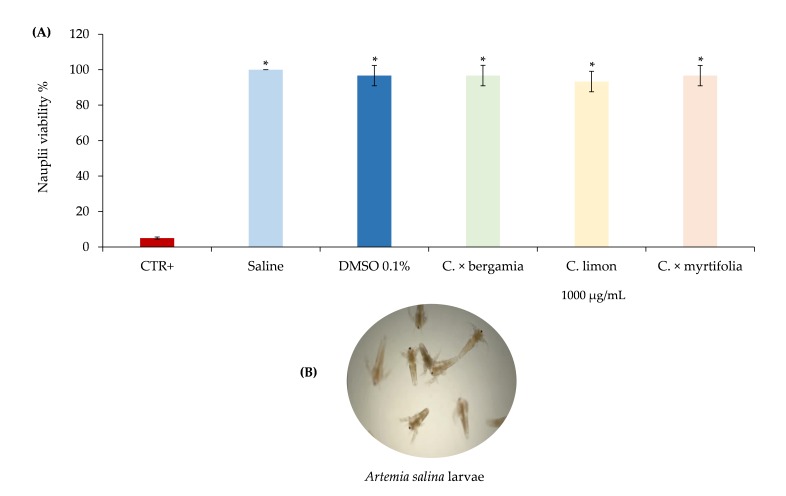
Brine shrimp lethality assay. Positive control (K2Cr2O7 50 μg/mL), negative controls (saline and DMSO 0.1%) as well as the highest concentration (1000 μg/mL) of the Citrus EOs investigated were provided in panel (A). A representative photo of Artemia salina larvae (magnification 10×) in the plate well, acquired by a stereomicroscope equipped with a digital camera is reported in panel (B). Results are the mean of three independent experiments ± standard deviation.* p < 0.001 vs. CTR+ (ANOVA followed by Dunnett’s test).
Figure 8
Figure 8
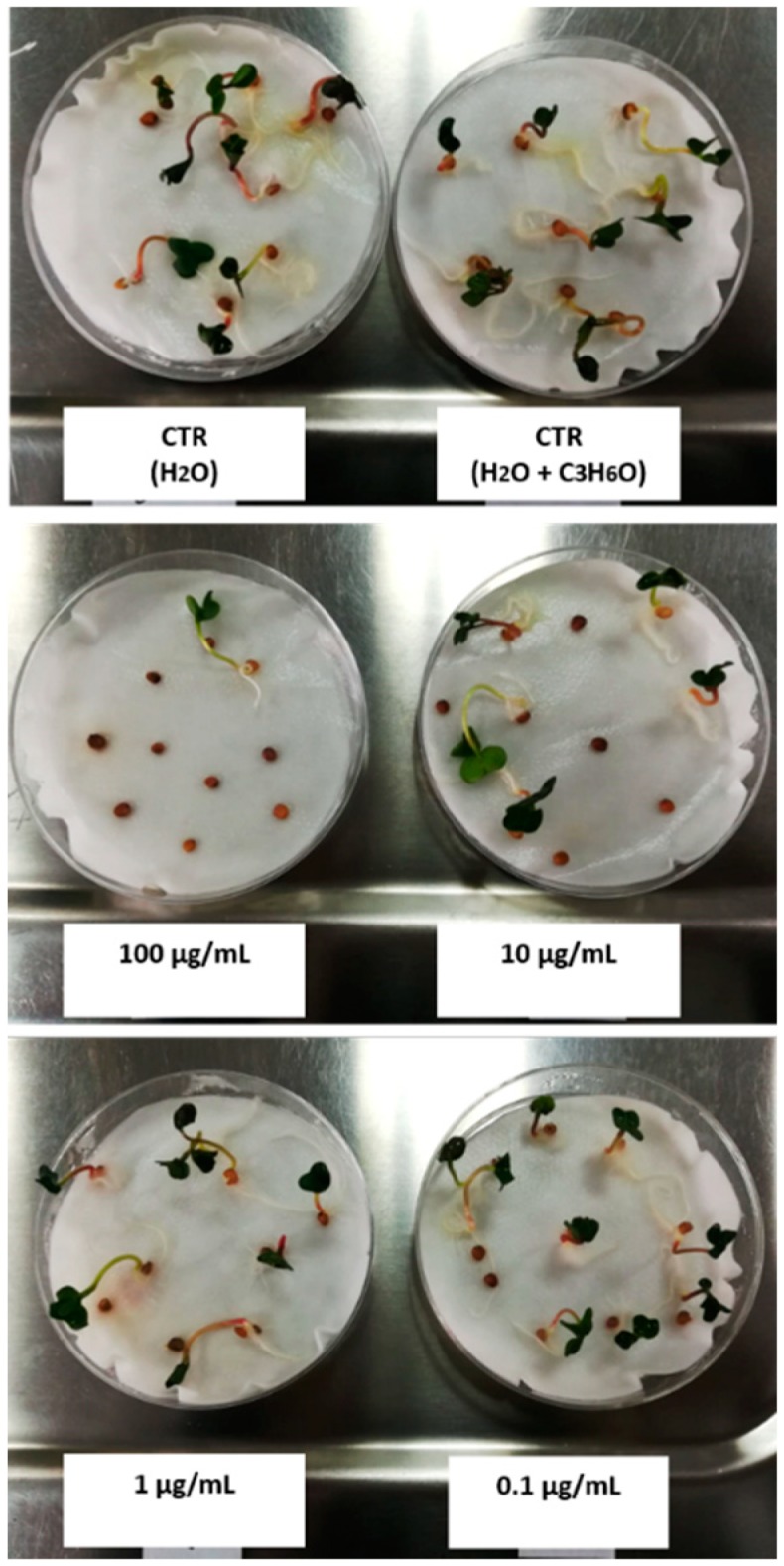
Representative photo of phytotoxic assay carried out on R. sativus seeds.

References

    1. Liu Y.Q., Heying E., Tanumihardjo S.A. History, Global Distribution, and Nutritional Importance of Citrus Fruits. Compr. Rev. Food Sci. Food Saf. 2012;11:530–545. doi: 10.1111/j.1541-4337.2012.00201.x. - DOI
    1. Italian Society for Horticultural Science (ISHS) [(accessed on 28 December 2019)]; Available online: http://www.soihs.it/public/HtSItaly_website%20version.pdf.
    1. Moshonas M.G., Shaw P.E. Composition of essence oil from overripe oranges. J. Agric. Food Chem. 1979;27:1337–1339. doi: 10.1021/jf60226a050. - DOI
    1. Schieber A., Stintzing F.C., Carle R. By-products of plant food processing as a source of functional compounds—Recent developments. Trends Food Sci. Technol. 2001;12:401–413. doi: 10.1016/S0924-2244(02)00012-2. - DOI
    1. Lv X., Zhao S., Ning Z., Zeng H., Shu Y., Tao O., Xiao C., Lu C., Liu Y. Citrus fruits as a treasure trove of active natural metabolites that potentially provide benefits for human health. Chem. Cent. J. 2015;9:68. doi: 10.1186/s13065-015-0145-9. - DOI - PMC - PubMed