


Hot and cold weather based on the spatial synoptic classification and cause-specific mortality in Sweden: a time-stratified case-crossover study
- PMID: 32328787
- PMCID: PMC7445203
- DOI: 10.1007/s00484-020-01921-0
Hot and cold weather based on the spatial synoptic classification and cause-specific mortality in Sweden: a time-stratified case-crossover study
Abstract
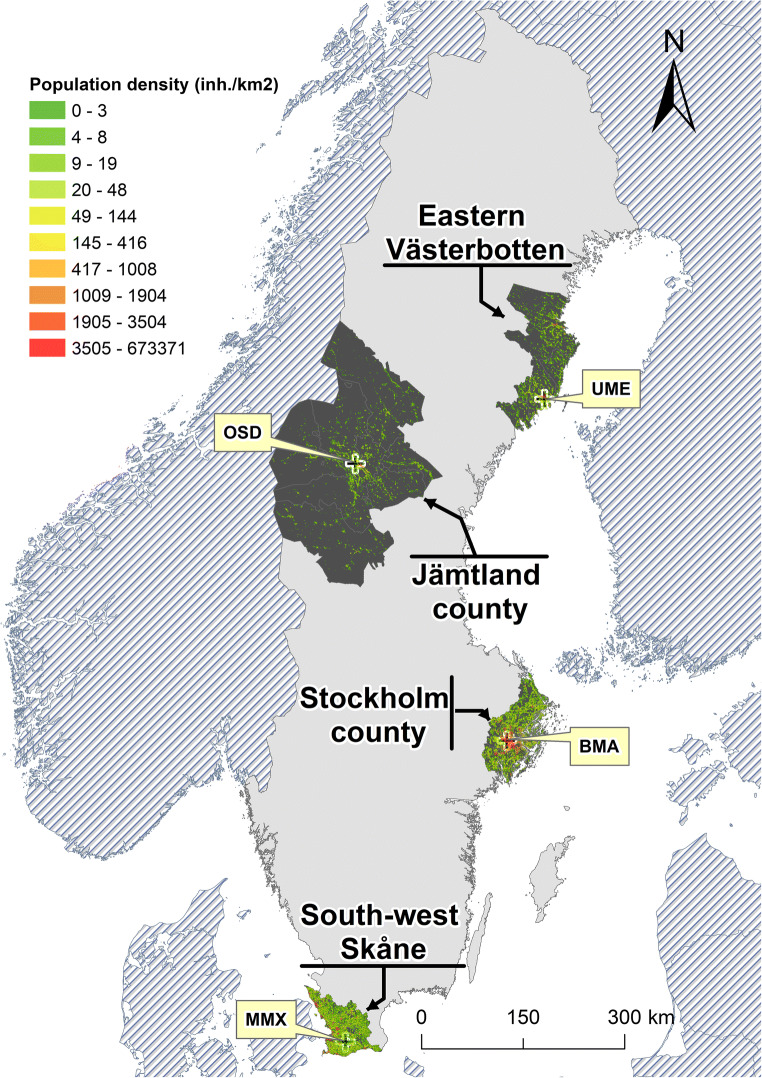
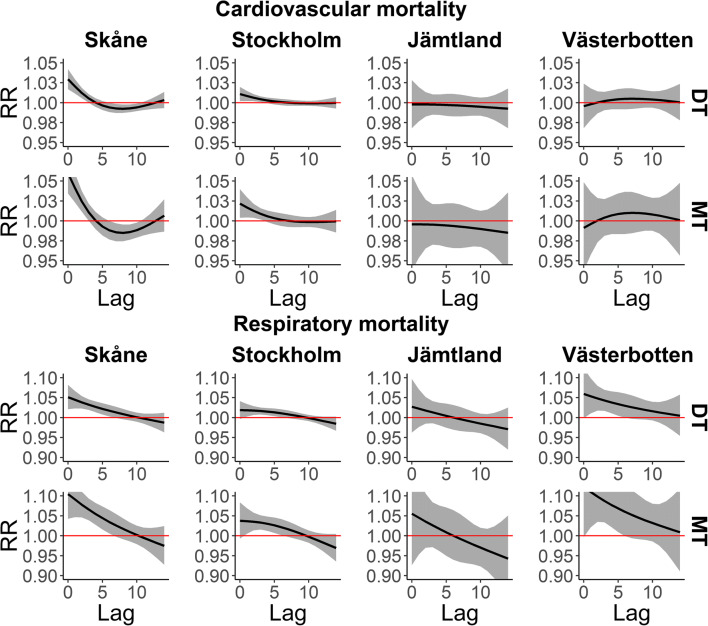
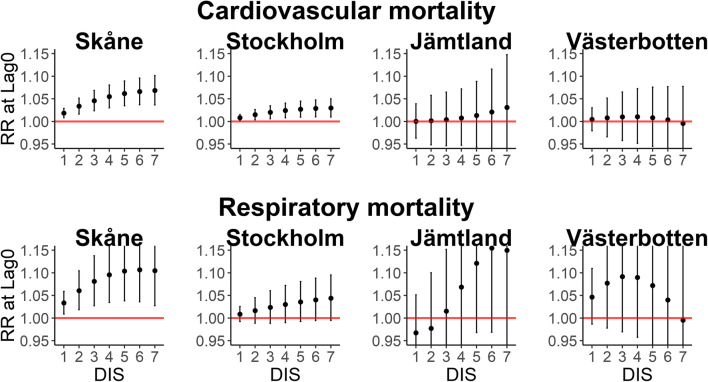
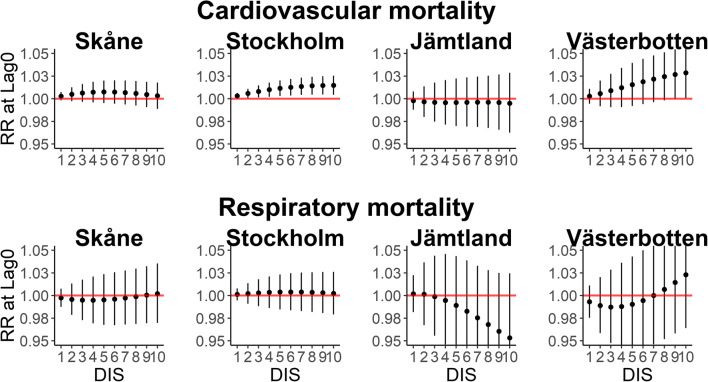
The spatial synoptic classification (SSC) is a holistic categorical assessment of the daily weather conditions at specific locations; it is a useful tool for assessing weather effects on health. In this study, we assessed (a) the effect of hot weather types and the duration of heat events on cardiovascular and respiratory mortality in summer and (b) the effect of cold weather types and the duration of cold events on cardiovascular and respiratory mortality in winter. A time-stratified case-crossover design combined with a distributed lag nonlinear model was carried out to investigate the association of weather types with cause-specific mortality in two southern (Skåne and Stockholm) and two northern (Jämtland and Västerbotten) locations in Sweden. During summer, in the southern locations, the Moist Tropical (MT) and Dry Tropical (DT) weather types increased cardiovascular and respiratory mortality at shorter lags; both hot weather types substantially increased respiratory mortality mainly in Skåne. The impact of heat events on mortality by cardiovascular and respiratory diseases was more important in the southern than in the northern locations at lag 0. The cumulative effect of MT, DT and heat events lagged over 14 days was particularly high for respiratory mortality in all locations except in Jämtland, though these did not show a clear effect on cardiovascular mortality. During winter, the dry polar and moist polar weather types and cold events showed a negligible effect on cardiovascular and respiratory mortality. This study provides valuable information about the relationship between hot oppressive weather types with cause-specific mortality; however, the cold weather types may not capture sufficiently effects on cause-specific mortality in this sub-Arctic region.
Keywords: Cardiovascular mortality; Cold weather; Hot weather; Respiratory mortality; Spatial synoptic classification; Sweden.
Conflict of interest statement
The authors declare that the research was conducted in the absence of any commercial or financial relationships that could be construed as a potential conflict of interest.
Figures

References
-
- Analitis A, Katsouyanni K, Biggeri A, Baccini M, Forsberg B, Bisanti L, Kirchmayer U, Ballester F, Cadum E, Goodman PG, Hojs A, Sunyer J, Tiittanen P, Michelozzi P. Effects of cold weather on mortality: results from 15 European cities within the PHEWE project. Am J Epidemiol. 2008;168:1397–1408. doi: 10.1093/aje/kwn266. - DOI - PubMed
MeSH terms
Grants and funding
LinkOut - more resources
Full Text Sources
