. 2020 Jun;34(6):2332-2358.
doi: 10.1007/s00464-020-07555-y. Epub 2020 Apr 23.

Clinical practice guidelines of the European Association for Endoscopic Surgery (EAES) on bariatric surgery: update 2020 endorsed by IFSO-EC, EASO and ESPCOP

Affiliations

Clinical practice guidelines of the European Association for Endoscopic Surgery (EAES) on bariatric surgery: update 2020 endorsed by IFSO-EC, EASO and ESPCOP

Nicola Di Lorenzo et al. Surg Endosc. 2020 Jun.

Abstract

Background: Surgery for obesity and metabolic diseases has been evolved in the light of new scientific evidence, long-term outcomes and accumulated experience. EAES has sponsored an update of previous guidelines on bariatric surgery.

Methods: A multidisciplinary group of bariatric surgeons, obesity physicians, nutritional experts, psychologists, anesthetists and a patient representative comprised the guideline development panel. Development and reporting conformed to GRADE guidelines and AGREE II standards.

Results: Systematic review of databases, record selection, data extraction and synthesis, evidence appraisal and evidence-to-decision frameworks were developed for 42 key questions in the domains Indication; Preoperative work-up; Perioperative management; Non-bypass, bypass and one-anastomosis procedures; Revisional surgery; Postoperative care; and Investigational procedures. A total of 36 recommendations and position statements were formed through a modified Delphi procedure.

Conclusion: This document summarizes the latest evidence on bariatric surgery through state-of-the art guideline development, aiming to facilitate evidence-based clinical decisions.

Keywords: AGREE II; Bariatric surgery; EAES; GRADE; Guidelines; Obesity.


Figures

Fig. 1
Fig. 1
Evidence-based decision tree on the decision for bariatric surgery or conservative management. BMI body mass index. BMI values are kg/m2. Thick arrows and frames, and bold fonts indicate strong recommendation
Fig. 2
Fig. 2
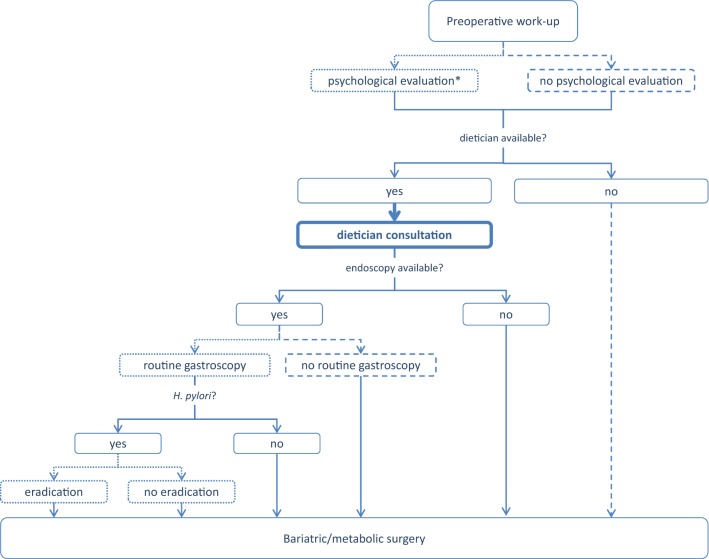
Evidence-based decision tree for preoperative work-up. *Psychological evaluation should be performed when psychological disorders are suspected. Binge eating and depression might not be a contraindication for bariatric/metabolic surgery. Thick arrows and frames, and bold fonts indicate strong recommendation. Dotted arrows and frames indicate conditional recommendation for the intervention. Dashed arrows and frames indicate conditional recommendation against the intervention
Fig. 3
Fig. 3
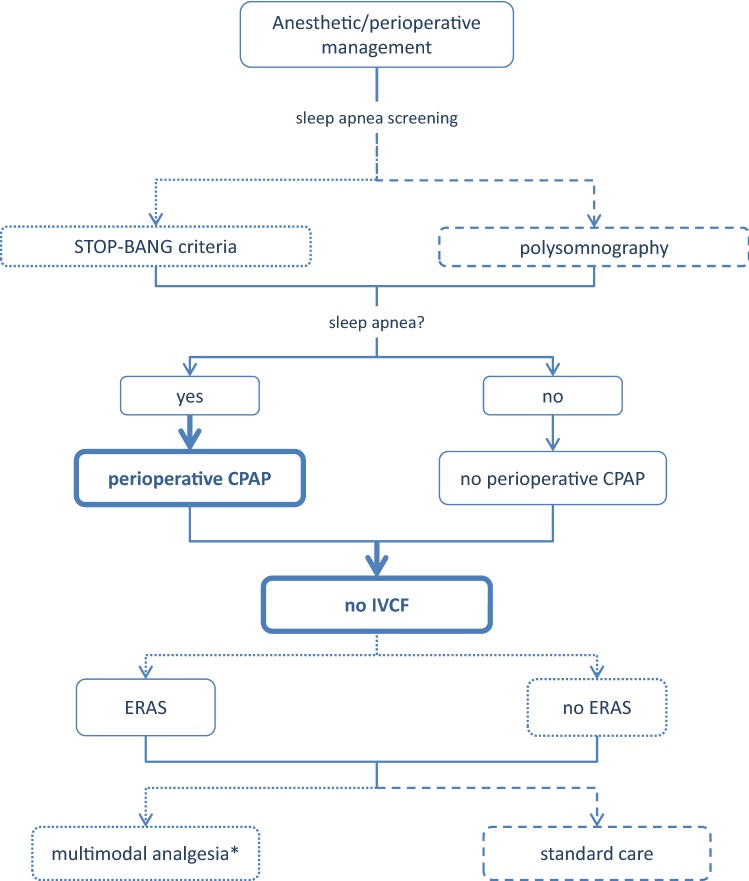
Evidence-based decision tree for anesthetic and perioperative management. CPAP continuous positive airway pressure, IVCF inferior vena cava filter, ERAS enhanced recovery after surgery. *with minimal use of opioids. Thick arrows and frames, and bold fonts indicate strong recommendation. Dotted arrows and frames indicate conditional recommendation for the intervention. Dashed arrows and frames indicate conditional recommendation against the intervention
Fig. 4
Fig. 4
Evidence-based decision tree for the selection of operative approach. BPD/DS biliopancreatic diversion with duodenal switch, AGB adjustable gastric banding, GERD gastroesophageal reflux disease, RYGB Roux-en-Y gastric bypass. Thick arrows and frames, and bold fonts indicate strong recommendation. Dotted arrows and frames indicate conditional recommendation for the intervention. Dashed arrows and frames indicate conditional recommendation against the intervention
Fig. 5
Fig. 5
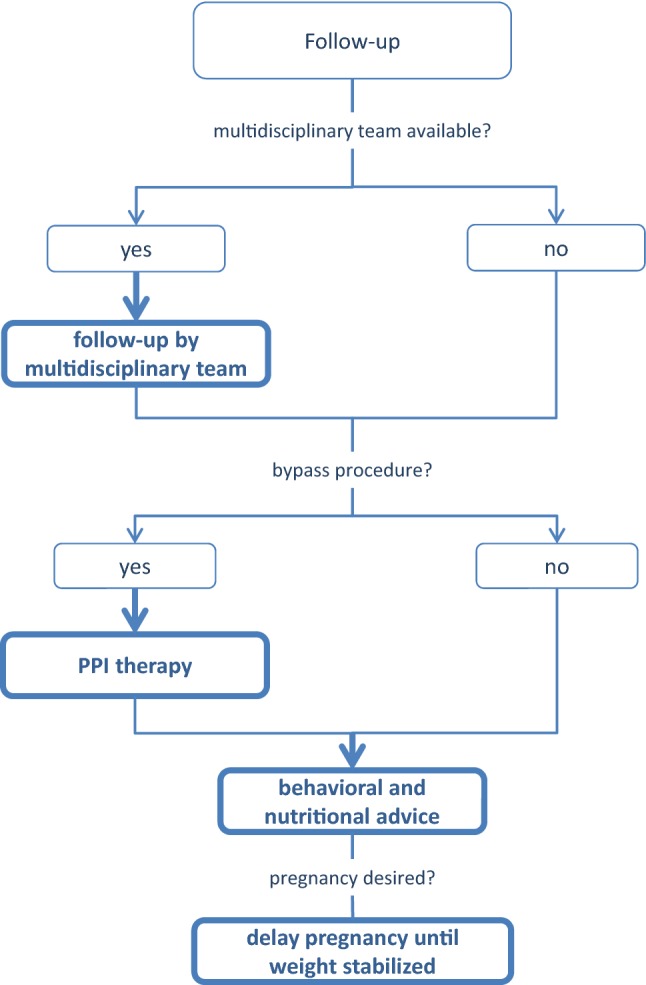
Evidence-based decision tree for postoperative follow-up. PPI proton-pump inhibitor. Thick arrows and frames, and bold fonts indicate strong recommendation

References

    1. Qasim A, Turcotte M, de Souza RJ, et al. On the origin of obesity: identifying the biological, environmental and cultural drivers of genetic risk among human populations. Obes Rev. 2018 doi: 10.1111/obr.12625. - DOI - PubMed
    1. WHO (2012) WHO obesity and overweight. World Heal Organ Media Cent Fact Sheet No 311
    1. Grundy SM, Barondess JA, Bellegie NJ, et al. Gastrointestinal surgery for severe obesity. Ann Intern Med. 1991 doi: 10.7326/0003-4819-115-12-956. - DOI

    1. Sauerland S, Angrisani L, Belachew M, et al. Obesity surgery: Evidence-based guidelines of the European Association for Endoscopic Surgery (EAES) Surg Endosc Other Interv Tech. 2005 doi: 10.1007/s00464-004-9194-1. - DOI - PubMed
    1. SAGES SAGES guideline for clinical application of laparoscopic bariatric surgery. Surg Obes Relat Dis. 2009 doi: 10.1016/j.soard.2009.01.010. - DOI - PubMed

Publication types