


Treatment of Blepharospasm and Oromandibular Dystonia with Botulinum Toxins
- PMID: 32331272
- PMCID: PMC7232182
- DOI: 10.3390/toxins12040269
Treatment of Blepharospasm and Oromandibular Dystonia with Botulinum Toxins
Abstract
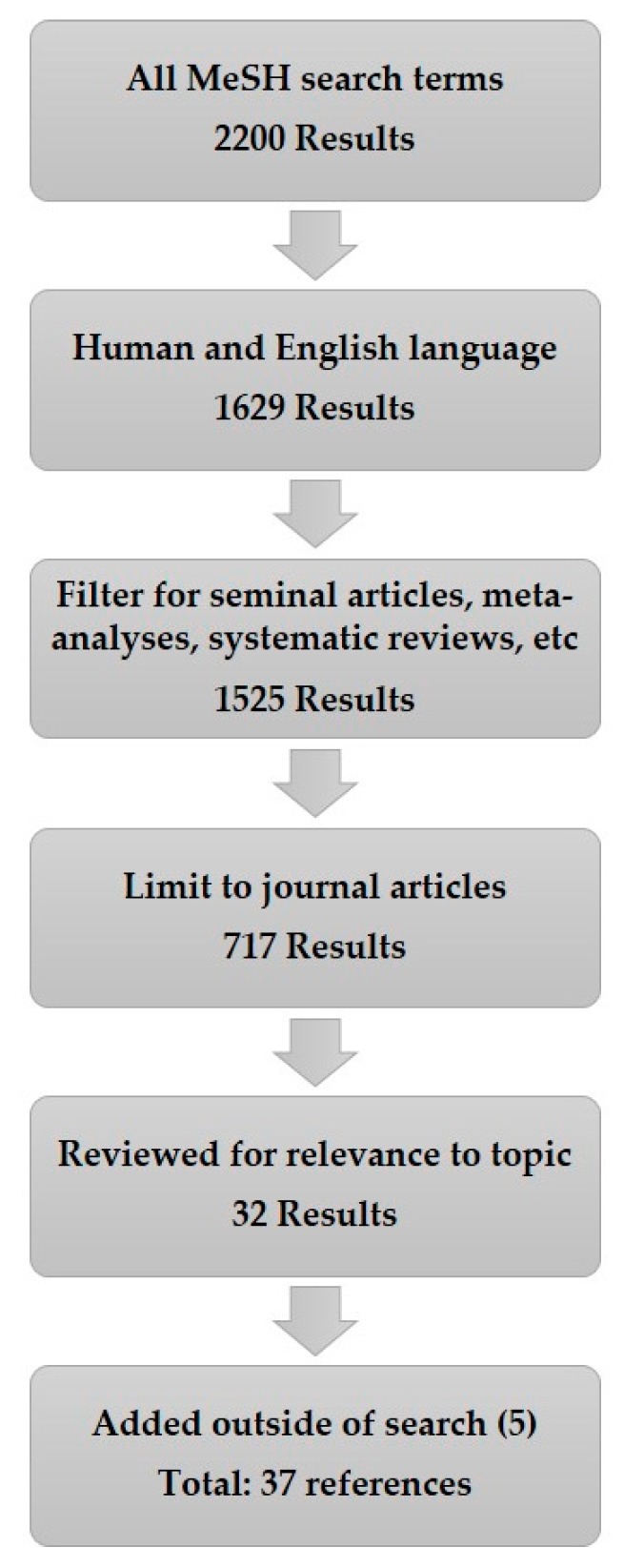
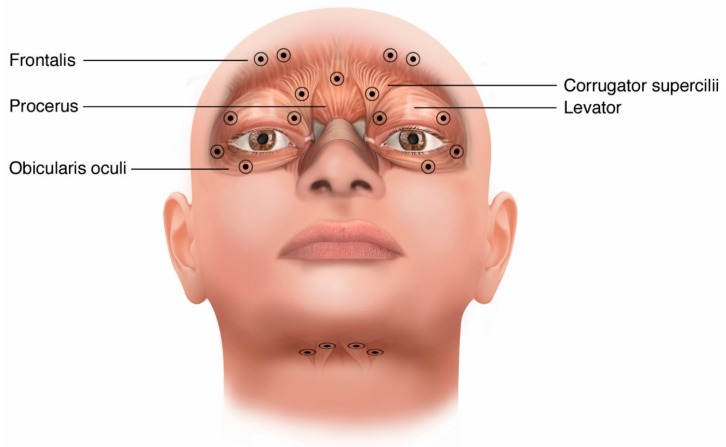
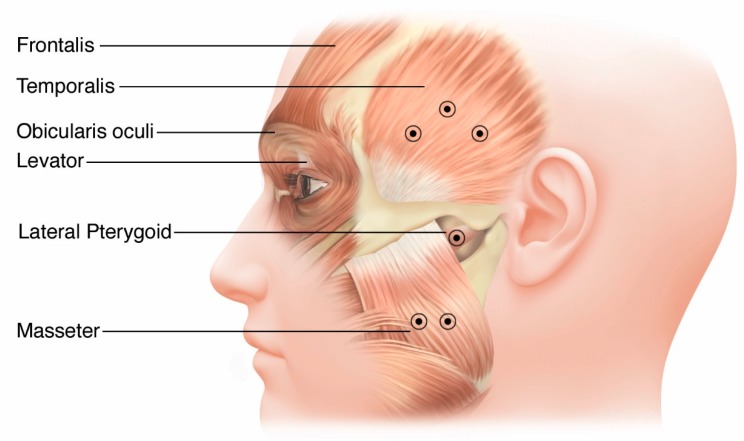
Blepharospasm and oromandibular dystonia are focal dystonias characterized by involuntary and often patterned, repetitive muscle contractions. There is a long history of medical and surgical therapies, with the current first-line therapy, botulinum neurotoxin (BoNT), becoming standard of care in 1989. This comprehensive review utilized MEDLINE and PubMed and provides an overview of the history of these focal dystonias, BoNT, and the use of toxin to treat them. We present the levels of clinical evidence for each toxin for both, focal dystonias and offer guidance for muscle and site selection as well as dosing.
Keywords: AbobotulinumtoxinA; DaxibotulinumtoxinA; IncobotulinumtoxinA; Meige syndrome; OnabotulinumtoxinA; RimabotulinumtoxinB; blepharospasm; botulinum toxin; oromandibular dystonia.
Conflict of interest statement
Hassell has received honoraria income from Medtronic. Vanderbilt University Medical Center receives income from Abbott, Allergan, Boston Scientific, Impax, Ipsen, Lundbeck, Merz, Medtronic, Pharma 2B, US World Meds, and Voyager for research or educational programs led by Charles.Charles has received income from Allergan, Alliance for Patient Access, Ipsen, Revance, and USA WorldMeds, for consulting services.
Figures
References
-
- H M. Les convulsions de la face, une forme clinique de convulsion faciale bilaterale et mediane. Revue Neurol. 1910;20:437–443.
Publication types
MeSH terms
Substances
LinkOut - more resources
Full Text Sources
Medical
