


Cutaneous Squamous Cell Carcinoma: From Biology to Therapy
- PMID: 32331425
- PMCID: PMC7216042
- DOI: 10.3390/ijms21082956
Cutaneous Squamous Cell Carcinoma: From Biology to Therapy
Abstract
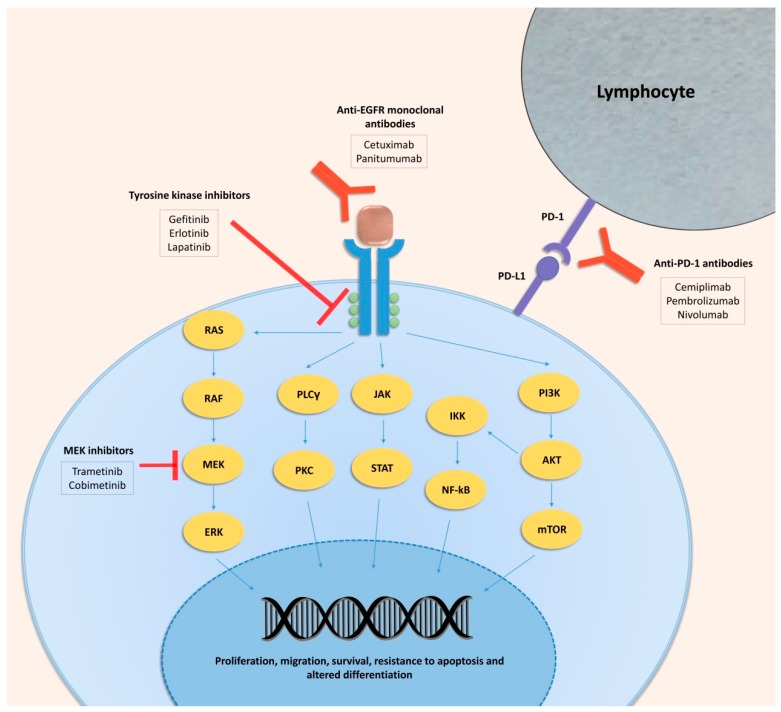
Cutaneous squamous cell carcinoma (CSCC) is the second most frequent cancer in humans and its incidence continues to rise. Although CSCC usually display a benign clinical behavior, it can be both locally invasive and metastatic. The signaling pathways involved in CSCC development have given rise to targetable molecules in recent decades. In addition, the high mutational burden and increased risk of CSCC in patients under immunosuppression were part of the rationale for developing the immunotherapy for CSCC that has changed the therapeutic landscape. This review focuses on the molecular basis of CSCC and the current biology-based approaches of targeted therapies and immune checkpoint inhibitors. Another purpose of this review is to explore the landscape of drugs that may induce or contribute to the development of CSCC. Beginning with the pathogenetic basis of these drug-induced CSCCs, we move on to consider potential therapeutic opportunities for overcoming this adverse effect.
Keywords: BRAF inhibitors; azathioprine; cutaneous squamous cell carcinoma; cyclosporine; epidermal growth factor receptor (EGFR) inhibitors; immunotherapy.
Conflict of interest statement
The authors declare no conflicts of interest. The funders had no role in the design of the study; in the collection, analyses, or interpretation of data; in the writing of the manuscript, or in the decision to publish the results.
Figures
References
-
- Muzic J.G., Schmitt A.R., Wright A.C., Alniemi D.T., Zubair A.S., Olazagasti Lourido J.M., Sosa Seda I.M., Weaver A.L., Baum C.L. Incidence and Trends of Basal Cell Carcinoma and Cutaneous Squamous Cell Carcinoma: A Population-Based Study in Olmsted County, Minnesota, 2000 to 2010. Mayo Clin. Proc. 2017;92:890–898. doi: 10.1016/j.mayocp.2017.02.015. - DOI - PMC - PubMed
Publication types
MeSH terms
Substances
Grants and funding
LinkOut - more resources
Full Text Sources
Medical
Research Materials
Miscellaneous
