


Latest Developments in Polypoidal Choroidal Vasculopathy: Epidemiology, Etiology, Diagnosis, and Treatment
- PMID: 32332215
- PMCID: PMC7299215
- DOI: 10.1097/01.APO.0000656992.00746.48
Latest Developments in Polypoidal Choroidal Vasculopathy: Epidemiology, Etiology, Diagnosis, and Treatment
Abstract
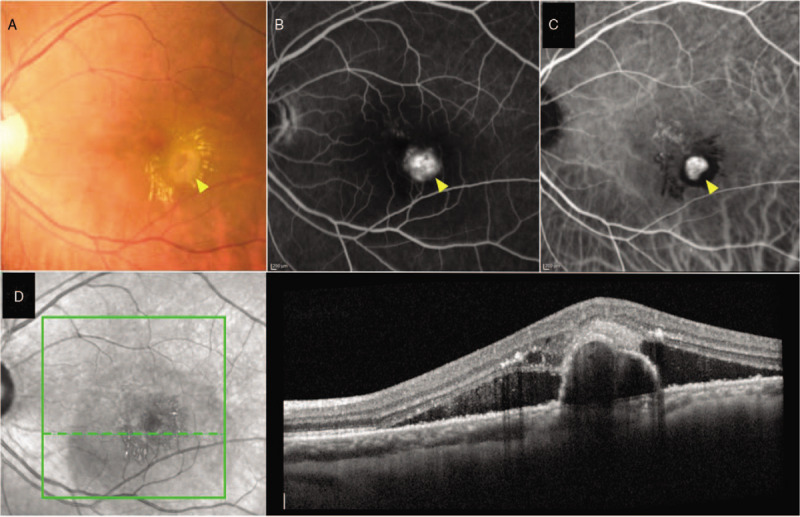
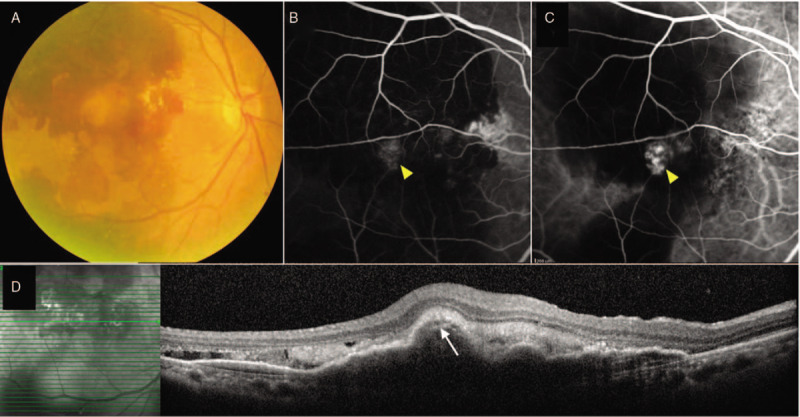
Polypoidal choroidal vasculopathy (PCV) is a condition characterized by multiple, recurrent, serosanguineous pigment epithelial detachments, and neurosensory retinal detachments due to abnormal aneurysmal neovascular lesions. It is generally considered as a variant of neovascular age-related macular degeneration, but there are some differences between the clinical presentation, natural history, and treatment response between patients with PCV and typical neovascular age-related macular degeneration patients. Over the past decade, new research and technological advancements have greatly improved our understanding of the PCV disease process and the management of PCV. This review aims to summarize the recent research findings to highlight the epidemiology, pathogenesis, genetics, the application of various diagnostic tools for PCV, and the available treatment options for PCV.
Conflict of interest statement
The authors declare no conflicts of interest.
Figures
References
-
- Yannuzzi LA, Sorenson J, Spaide RF, Lipson B. Idiopathic polypoidal choroidal vasculopathy (IPCV). Retina 1990; 10:1–8. - PubMed
-
- Kleiner RC, Brucker AJ, Johnston RL. The posterior uveal bleeding syndrome. Retina 1990; 10:9–17. - PubMed
-
- Wong CW, Yanagi Y, Lee WK, et al. Age-related macular degeneration and polypoidal choroidal vasculopathy in Asians. Prog Retin Eye Res 2016; 53:107–139. - PubMed
-
- Yannuzzi LA, Ciardella A, Spaide RF, Rabb M, Freund KB, Orlock DA. The expanding clinical spectrum of idiopathic polypoidal choroidal vasculopathy. Arch Ophthalmol 1997; 115:478–485. - PubMed
-
- Li Y, You QS, Wei WB, et al. Polypoidal choroidal vasculopathy in adult chinese: the Beijing Eye Study. Ophthalmology 2014; 121:2290–2291. - PubMed
Publication types
MeSH terms
LinkOut - more resources
Full Text Sources
Miscellaneous
