


Behavioural risk factors and healthy life expectancy: evidence from two longitudinal studies of ageing in England and the US
- PMID: 32332825
- PMCID: PMC7181761
- DOI: 10.1038/s41598-020-63843-6
Behavioural risk factors and healthy life expectancy: evidence from two longitudinal studies of ageing in England and the US
Abstract
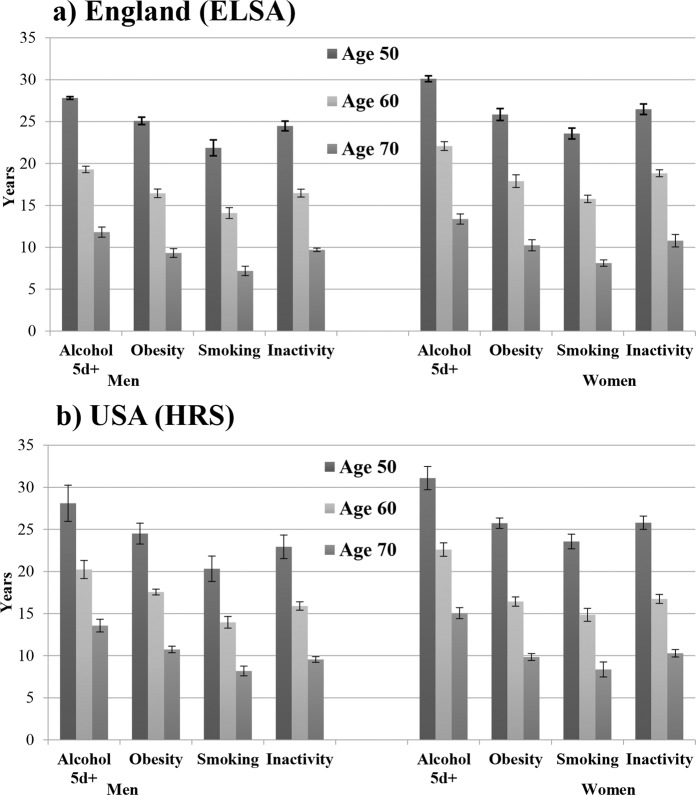
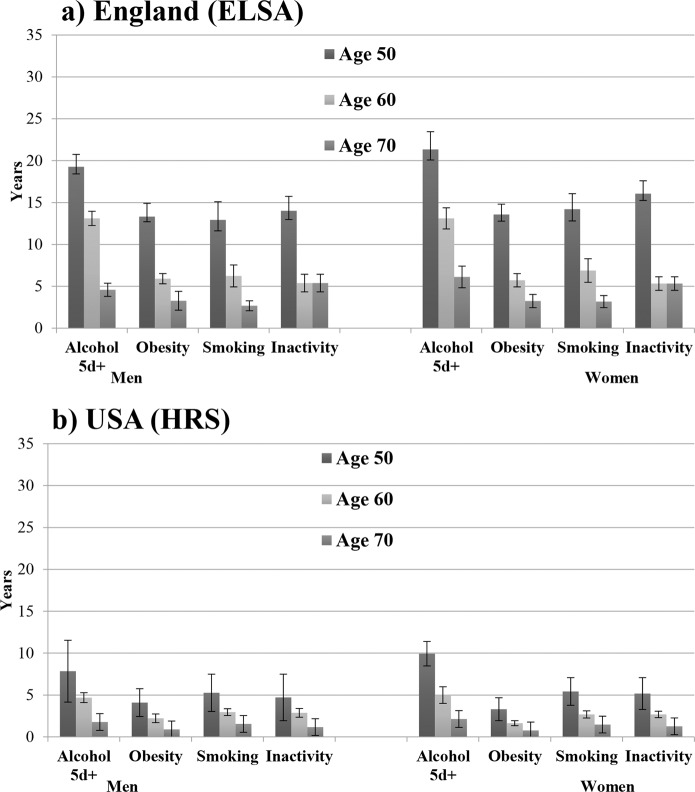
We examined whether the co-occurrence of four behavioural risk factors (alcohol consumption, smoking, physical inactivity and obesity) is associated with disability-free and chronic disease-free life expectancy similarly in two longitudinal studies of ageing in England and the United States. Data were from 17,351 individuals aged 50+ from the US Health and Retirement Study (HRS) and, 10,388 from the English Longitudinal Study of Ageing (ELSA), from 2002 to 2013. Disability-free life expectancy was estimated using repeat measures of limitations with instrumental activities and activities of daily living and, chronic disease-free life expectancy was based on chronic health conditions. Multistate life table models were used to estimate sex-specific health expectancy at the ages of 50, 60 and 70. In both countries and at all ages, there was a clear gradient towards shorter health expectancy with increasing number of behavioural risk factors. Compared to people with 2+ behavioural risk factors, in both countries, those with no behavioural risk factors could expect to live up to 11 years longer without disability and, up to 12 years longer without chronic conditions. Individual and co-occurring behavioural risk factors were strongly associated with shorter healthy life expectancy in both countries, attesting to the robustness of the contribution of lifestyle factors on health expectancy.
Conflict of interest statement
The authors declare no competing interests.
Figures
References
-
- Murray CJ, et al. Global, regional, and national disability-adjusted life years (DALYs) for 306 diseases and injuries and healthy life expectancy (HALE) for 188 countries, 1990-2013: quantifying the epidemiological transition. Lancet. 2015;386(10009):2145–91. doi: 10.1016/S0140-6736(15)61340-X. - DOI - PMC - PubMed
Publication types
MeSH terms
Grants and funding
LinkOut - more resources
Full Text Sources
