


The high protein expression of FOXO3, but not that of FOXO1, is associated with markers of good prognosis
- PMID: 32332845
- PMCID: PMC7181619
- DOI: 10.1038/s41598-020-63895-8
The high protein expression of FOXO3, but not that of FOXO1, is associated with markers of good prognosis
Abstract
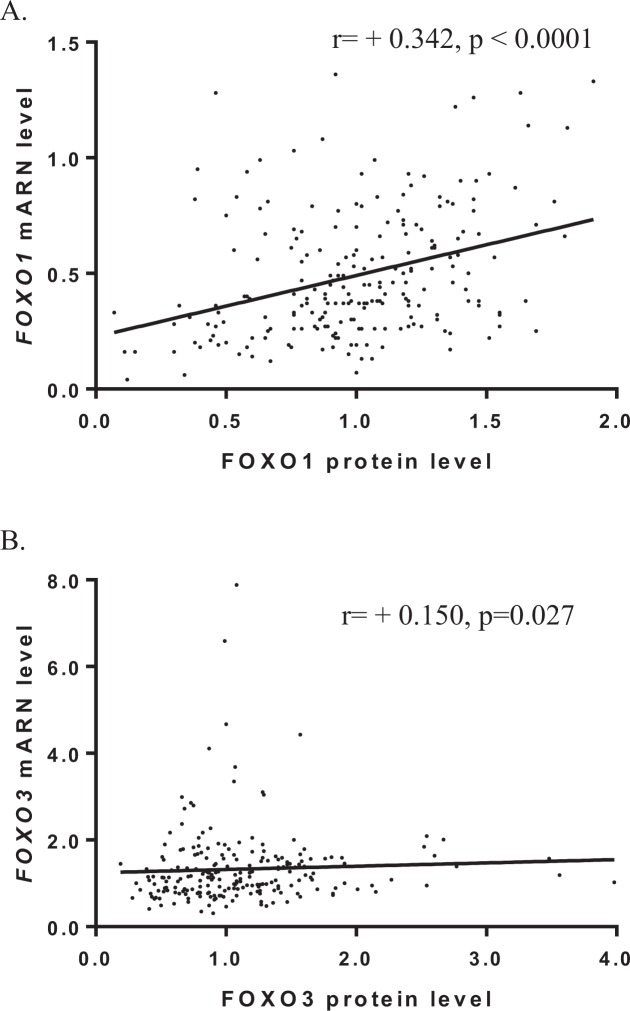
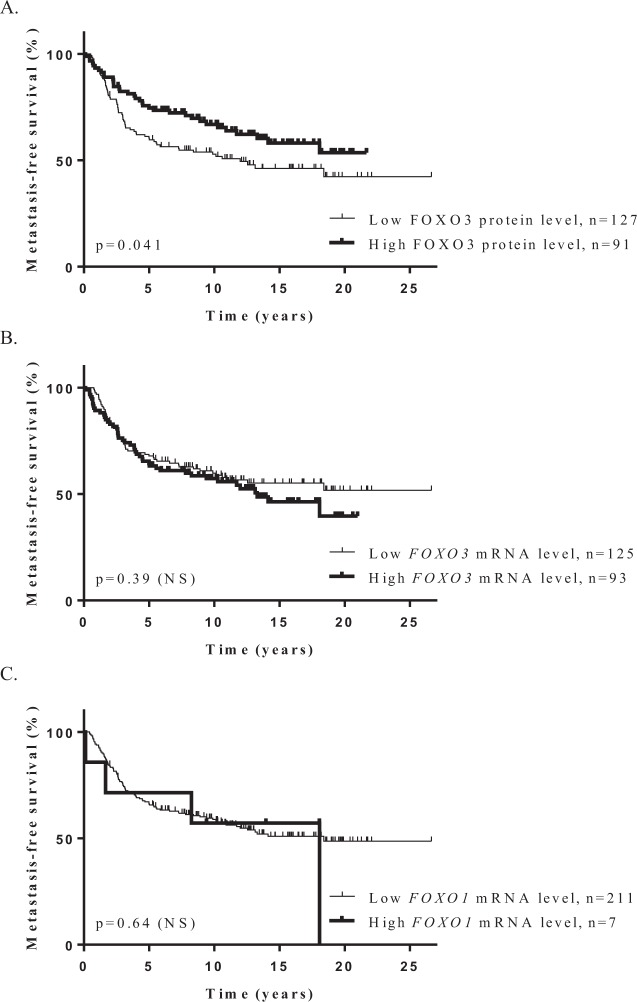
To better define the role of FOXO1 and FOXO3 transcriptional factors in breast carcinogenesis, we performed a comparative study of their expression at both the RNA and protein levels in a series of human breast tumors. We used qRT-PCR assay to quantify mRNA expression and Reverse Phase Protein Arrays (RPPA) to quantify protein expression in 218 breast tumors from patients with known clinical/pathological status and outcome. Weak correlations were observed between mRNA and protein expressions for both FOXO1 and FOXO3 genes. High expression of FOXO3 protein, but not FOXO1 protein, was a good prognostic marker, negatively correlated with KI67 and markers of activity of the PI3K/AKT/mTOR oncogenic pathway, and positively correlated with p53, a marker of apoptosis. Moreover, FOXO3 protein expression, but not FOXO1 protein expression, was also negatively correlated with various proteins involved in different DNA repair mechanisms. FOXO3 protein, but not FOXO1 protein, appears to be a tumor suppressor that inhibits breast cancer by altering DNA damage response (DDR), thereby inducing p53-dependent apoptosis. This antitumor effect appears to be suppressed by excessive activity of the PI3K/AKT/mTOR pathway. High FOXO3 protein expression could be a biomarker of deficient DDR in breast tumors.
Conflict of interest statement
The authors declare no competing interests.
Figures
References
Publication types
MeSH terms
Substances
LinkOut - more resources
Full Text Sources
Medical
Molecular Biology Databases
Research Materials
Miscellaneous
