


Co-production of gallic acid and a novel cell-associated tannase by a pigment-producing yeast, Sporidiobolus ruineniae A45.2
- PMID: 32334591
- PMCID: PMC7183711
- DOI: 10.1186/s12934-020-01353-w
Co-production of gallic acid and a novel cell-associated tannase by a pigment-producing yeast, Sporidiobolus ruineniae A45.2
Abstract
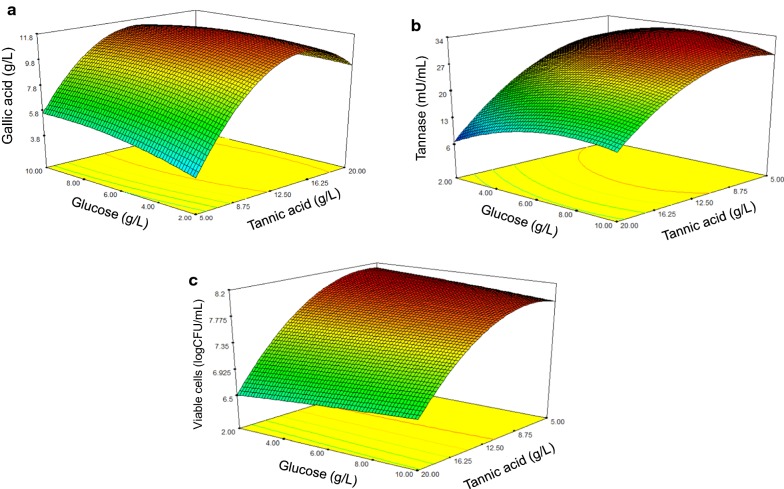
Background: Gallic acid has received a significant amount of interest for its biological properties. Thus, there have been recent attempts to apply this substance in various industries and in particular the feed industry. As opposed to yeasts, fungi and bacteria and their tannases have been well documented for their potential bioconversion and specifically for the biotransformation of tannic acid to gallic acid. In this research, Sporidiobolus ruineniae A45.2 is introduced as a newly pigment-producing and tannase-producing yeast that has gained great interest for its use as an additive in animal feed. However, there is a lack of information on the efficacy of gallic acid production from tannic acid and the relevant tannase properties. The objective of this research study is to optimize the medium composition and conditions for the co-production of gallic acid from tannic acid and tannase with a focus on developing an integrated production strategy for its application as a feed additive.
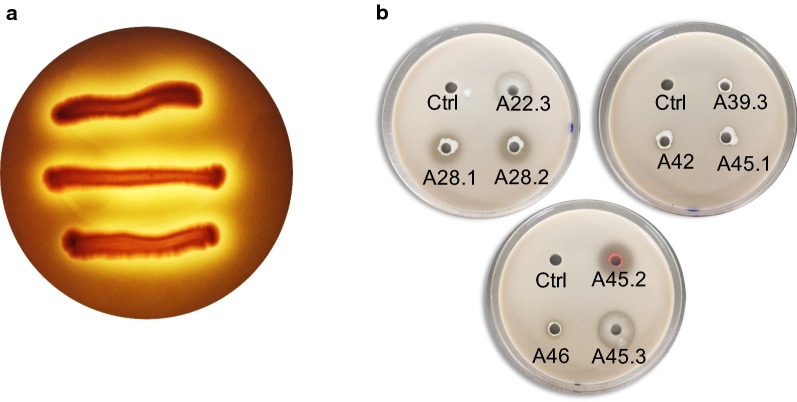
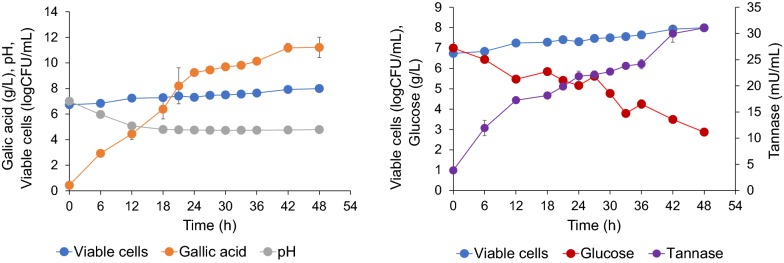
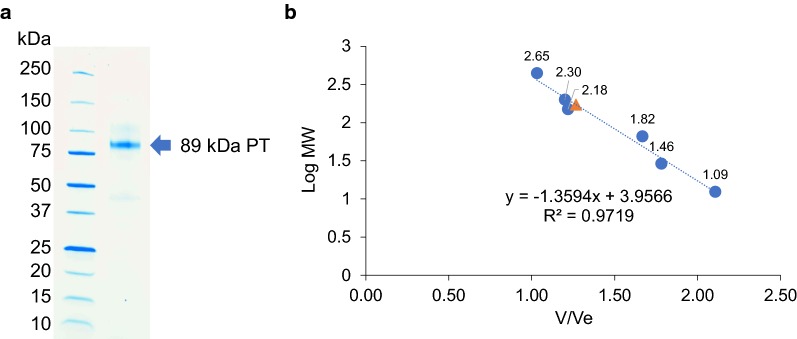
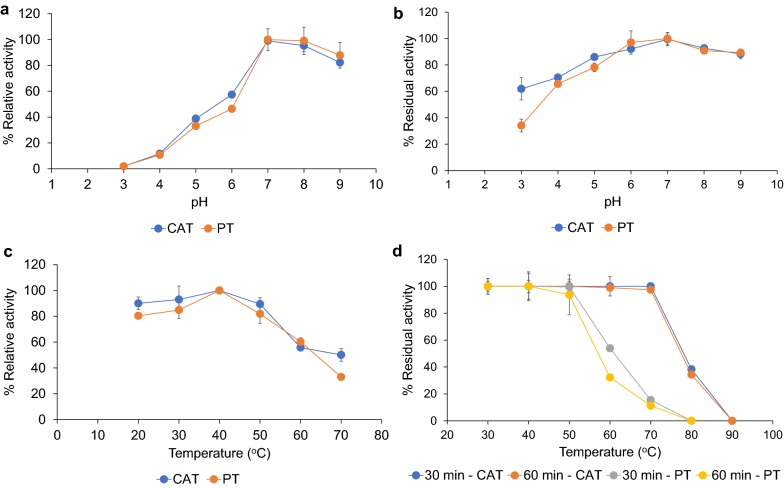
Results: Tannase produced by S. ruineniae A45.2 has been classified as a cell-associated tannase (CAT). Co-production of gallic acid obtained from tannic acid and CAT by S. ruineniae A45.2 was optimized using response surface methodology and then validated with the synthesis of 11.2 g/L gallic acid from 12.3 g/L tannic acid and the production of 31.1 mU/mL CAT after 48 h of cultivation in a 1-L stirred tank fermenter. Tannase was isolated from the cell wall, purified and characterized in comparison with its native form (CAT). The purified enzyme (PT) revealed the same range of pH and temperature optima (pH 7) as CAT but was distinctively less stable. Specifically, CAT was stable at up to 70 °C for 60 min, and active under its optimal conditions (40 °C) at up to 8 runs.
Conclusion: Co-production of gallic acid and CAT is considered an integrated and green production strategy. S. ruineniae biomass could be promoted as an alternative source of carotenoids and tannase. Thus, the biomass, in combination with gallic acid that was formed in the fermentation medium, could be directly used as a feed additive. On the other hand, gallic acid could be isolated and purified for food and pharmaceutical applications. This paper is the first of its kind to report that the CAT obtained from yeast can be resistant to high temperatures of up to 70 °C.
Keywords: Gallic acid; Miang; Sporidiobolus ruineniae; Tannase; Tannins; Yeast.
Conflict of interest statement
The authors declare that they have no conflict of interest.
Figures

References
-
- Nowak R, Olech M, Nowacka N. Chapter 97—plant polyphenols as chemopreventive agents. In: Watson RR, Preedy VR, Zibadi S, editors. Polyphenols in human health and disease. San Diego: Academic Press; 2014. pp. 1289–1307.
MeSH terms
Substances
Grants and funding
LinkOut - more resources
Full Text Sources
Research Materials
Miscellaneous
