


Systematic Review of Factors Affecting Quality of Life After Cytoreductive Surgery with Hyperthermic Intraperitoneal Chemotherapy
- PMID: 32335752
- PMCID: PMC7471142
- DOI: 10.1245/s10434-020-08379-9
Systematic Review of Factors Affecting Quality of Life After Cytoreductive Surgery with Hyperthermic Intraperitoneal Chemotherapy
Abstract
Background: Previous studies have shown that, overall, quality of life (QoL) decreases within the first 3-6 months after cytoreductive surgery with hyperthermic intraperitoneal chemotherapy (CRS + HIPEC), returning to baseline levels by 6-12 months. This systematic review aims to evaluate the factors affecting QoL after CRS + HIPEC within 12 months of surgery.
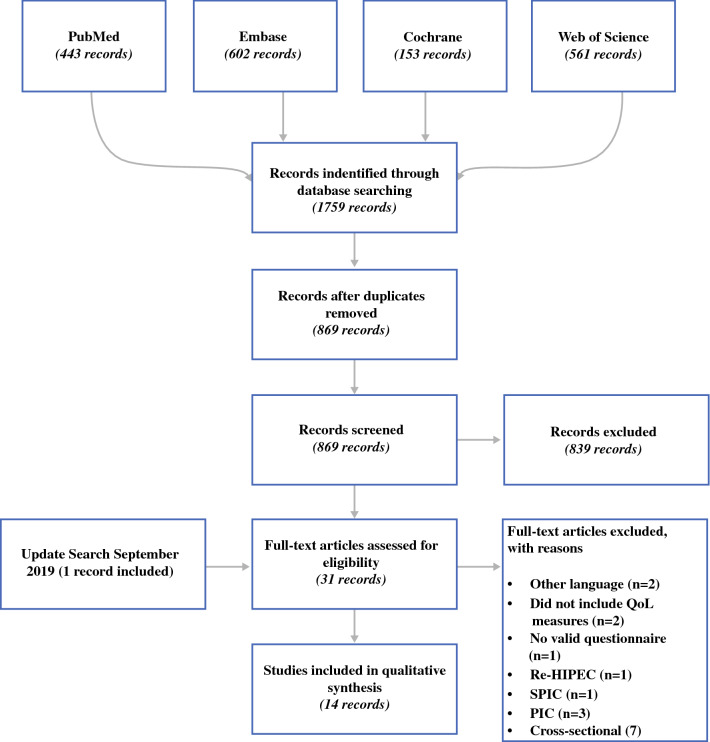
Methods: Electronic databases were investigated searching for articles reporting QoL with validated questionnaires up to September 2019. Risk of bias was assessed with the methodological index for non-randomized studies tool. The primary outcomes were short-term (< 6 months after surgery) and medium-term (6-12 months after surgery) determinants of QoL after CRS + HIPEC. Secondary outcomes were QoL and reported symptoms over time.
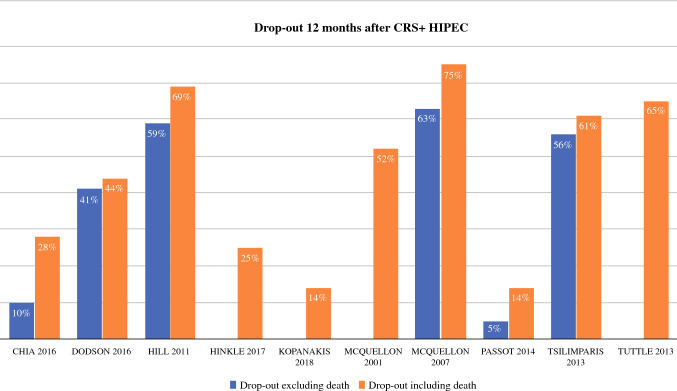
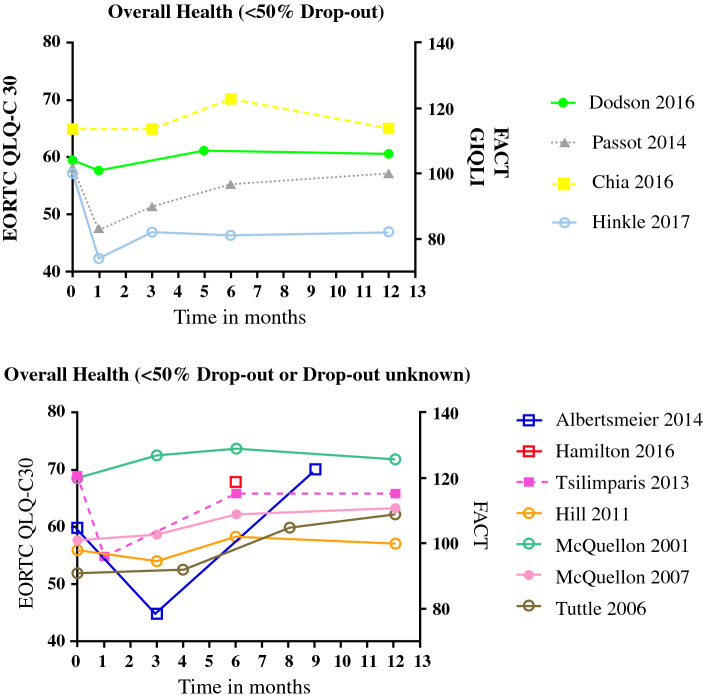
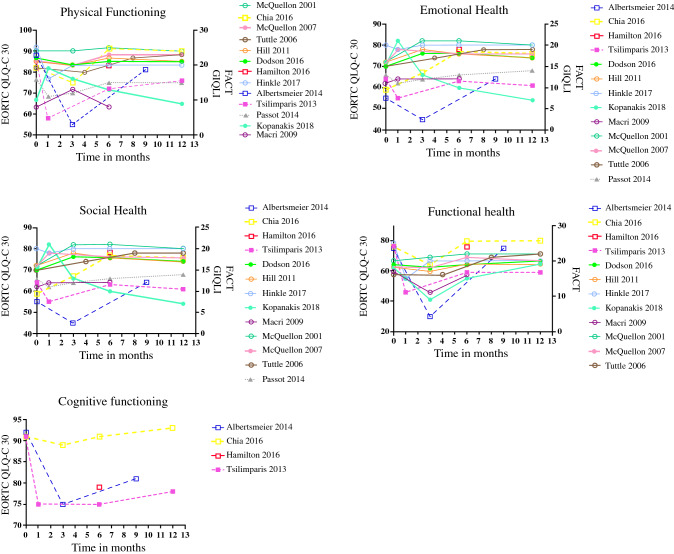
Results: We included 14 studies that used 12 different questionnaires. The reported data were collected prospectively or retrospectively for 1556 patients (dropout < 50% in four studies). Overall, studies showed diminished QoL within 3 months after surgery and a recovery to baseline or greater by 12 months. QoL was negatively influenced by higher age, female sex, prolonged operation time, extensive disease, residual disease, adjuvant chemotherapy, complications, stoma placement, and recurrent disease. QoL results were comparable between studies, with dropout rates above and below 50%.
Conclusions: QoL returns to baseline levels within 12 months after CRS + HIPEC provided the disease does not recur, and this recovery process is influenced by several factors.
Conflict of interest statement
The authors have no conflicts of interest to declare.
Figures
References
-
- Cao C, Yan TD, Black D, Morris DL. A systematic review and meta-analysis of cytoreductive surgery with perioperative intraperitoneal chemotherapy for peritoneal carcinomatosis of colorectal origin. Ann Surg Oncol. 2009;16(8):2152–2165. - PubMed
-
- Deraco M, Baratti D, Kusamura S. Morbidity and quality of life following cytoreduction and HIPEC. Cancer Treat Res. 2007;134:403–418. - PubMed
-
- Sadeghi B, Arvieux C, Glehen O, et al. Peritoneal carcinomatosis from non-gynecologic malignancies: results of the EVOCAPE 1 multicentric prospective study. Cancer. 2000;88(2):358–363. - PubMed
-
- Jayne DG, Fook S, Loi C, Seow-Choen F. Peritoneal carcinomatosis from colorectal cancer. Br J Surg. 2002;89(12):1545–1550. - PubMed
Publication types
MeSH terms
LinkOut - more resources
Full Text Sources
Medical
