


Greater Influence of Aerobic Fitness on Autonomic Support of Blood Pressure in Young Women Than in Older Women
- PMID: 32336237
- PMCID: PMC7249227
- DOI: 10.1161/HYPERTENSIONAHA.119.14042
Greater Influence of Aerobic Fitness on Autonomic Support of Blood Pressure in Young Women Than in Older Women
Abstract
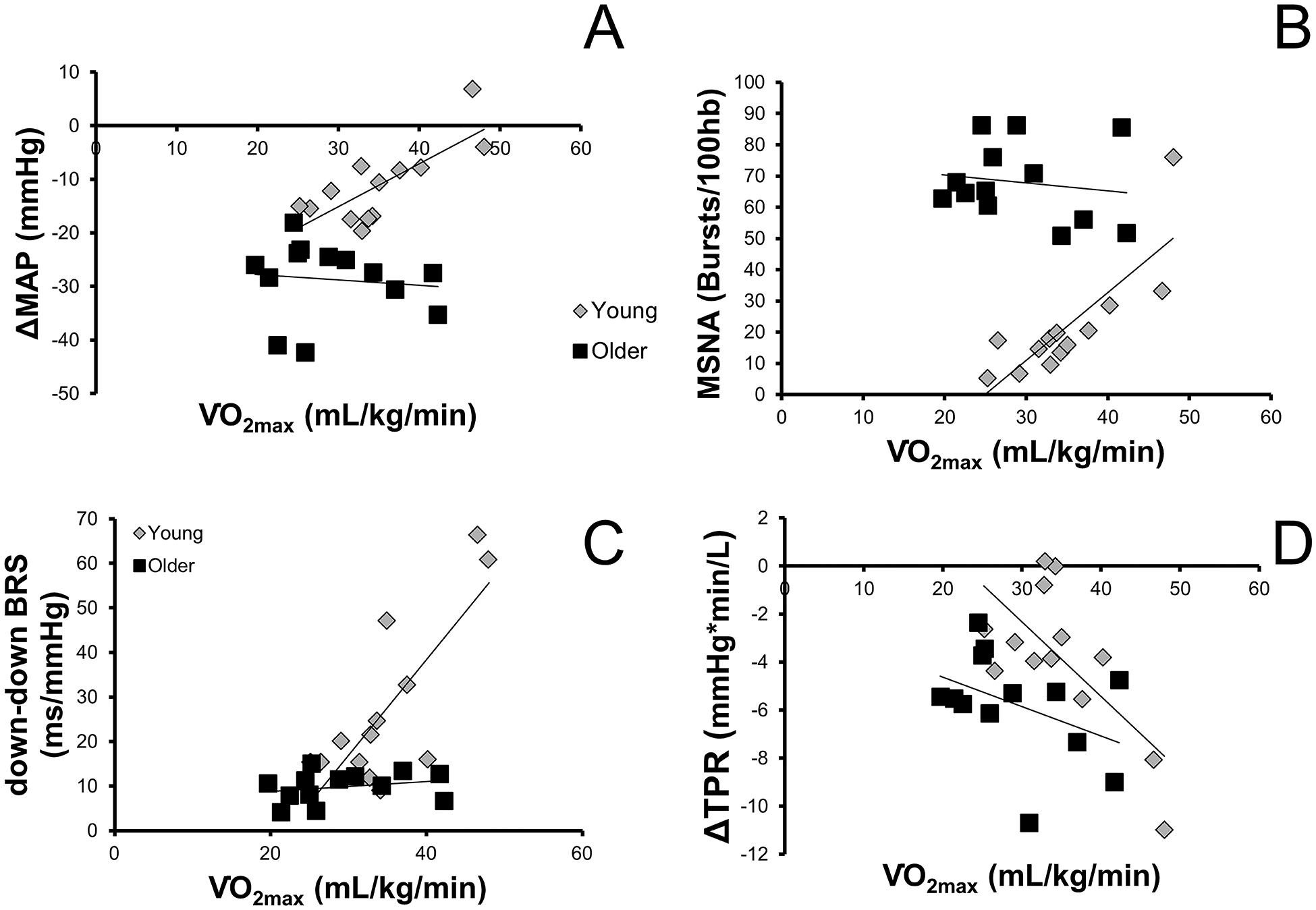
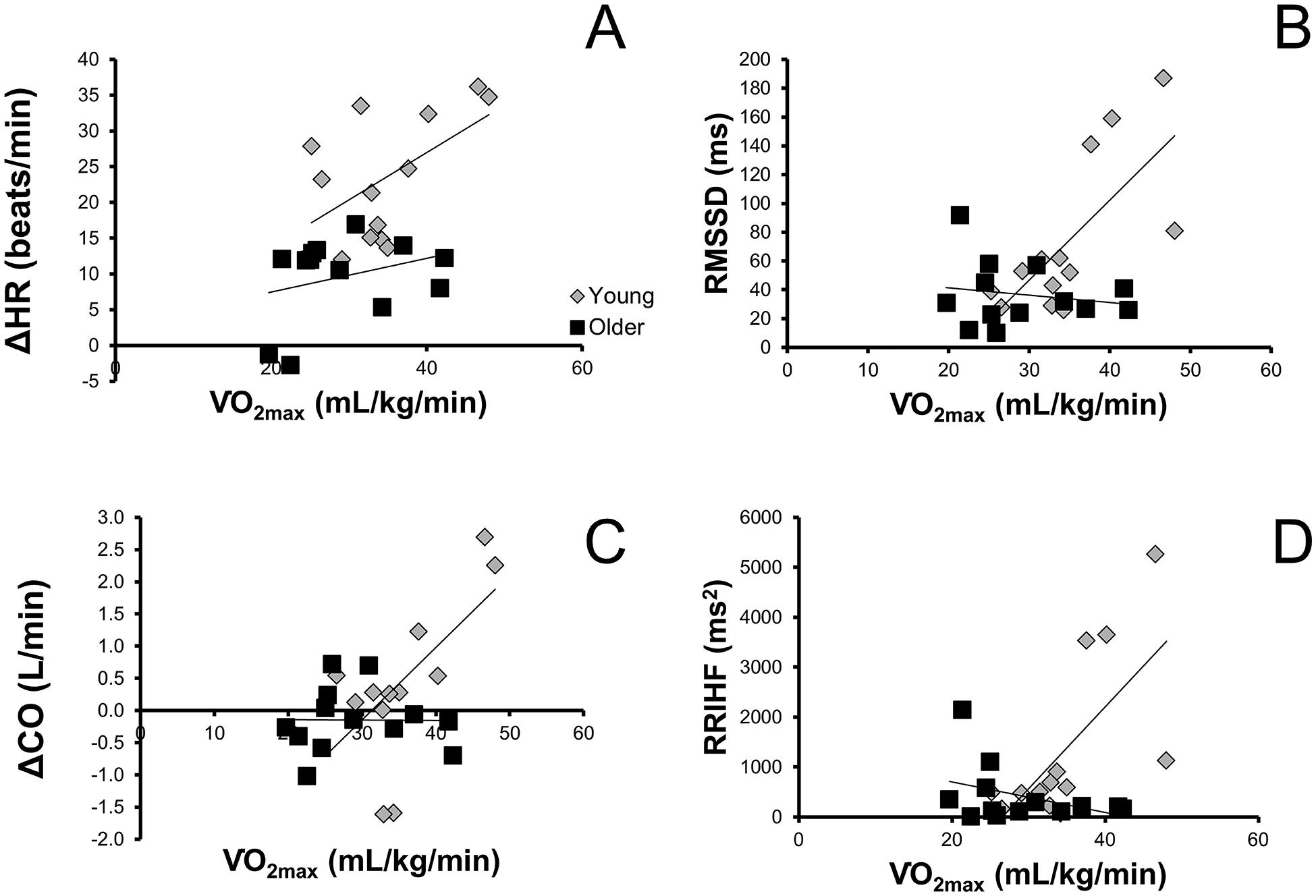
Aging increases autonomic support of blood pressure; however, the impact of aerobic fitness on autonomic support of blood pressure has not been addressed in women. As such, we hypothesized that aerobic fitness would be related to the change in blood pressure during ganglionic blockade such that women with greater aerobic fitness would have a blunted fall in blood pressure during ganglionic blockade due to increased vagal tone. Thirteen young premenopausal and 13 older postmenopausal women completed a screening visit where aerobic fitness (maximal oxygen consumption, VO2max) was measured. On a separate study day, participants were instrumented for assessment of muscle sympathetic nerve activity, heart rate (electrocardiography), and beat by beat blood pressure (arterial catheter and pressure transducer) and underwent pharmacological blockade of the autonomic ganglia using trimethaphan camyslate. Heart rate, blood pressure, and muscle sympathetic nerve activity were analyzed before and during ganglionic blockade. In young women, there was a significant relationship between aerobic fitness and the change in blood pressure during ganglionic blockade (r=0.761, P=0.003). In older women, there was no relationship between aerobic fitness and the change in blood pressure during ganglionic blockade (r=-0.106, P=0.73). Measures of heart rate variability were related to fitness in young women, but not older women (root mean square of successive differences between normal heartbeats, r=0.713, P=0.006 versus r=-0.172, P=0.575). Our data suggest that in young women, autonomic support of blood pressure is attenuated in those that are highly fit; however, this relationship is not significant in older women.
Keywords: aging; blood pressure; heart rate; menopause; women.
Figures
References
-
- Jones PP, Christou DD, Jordan J and Seals DR. Baroreflex buffering is reduced with age in healthy men. Circulation. 2003;107:1770–4. - PubMed
-
- Sugawara J, Komine H, Hayashi K, Yoshizawa M, Otsuki T, Shimojo N, Miyauchi T, Yokoi T, Maeda S and Tanaka H. Systemic alpha-adrenergic and nitric oxide inhibition on basal limb blood flow: effects of endurance training in middle-aged and older adults. Am J Physiol Heart Circ Physiol. 2007;293:H1466–72. - PubMed
-
- Poehlman ET and Danforth E, Jr. Endurance training increases metabolic rate and norepinephrine appearance rate in older individuals. Am J Physiol. 1991;261:E233–9. - PubMed
Publication types
MeSH terms
Grants and funding
LinkOut - more resources
Full Text Sources
Medical
Research Materials
