Review
. 2020 Apr 23;12(4):1050.
doi: 10.3390/cancers12041050.

DNA Damage/Repair Management in Cancers

Affiliations
Review

DNA Damage/Repair Management in Cancers

Jehad F Alhmoud et al. Cancers (Basel). .

Abstract

DNA damage is well recognized as a critical factor in cancer development and progression. DNA lesions create an abnormal nucleotide or nucleotide fragment, causing a break in one or both chains of the DNA strand. When DNA damage occurs, the possibility of generated mutations increases. Genomic instability is one of the most important factors that lead to cancer development. DNA repair pathways perform the essential role of correcting the DNA lesions that occur from DNA damaging agents or carcinogens, thus maintaining genomic stability. Inefficient DNA repair is a critical driving force behind cancer establishment, progression and evolution. A thorough understanding of DNA repair mechanisms in cancer will allow for better therapeutic intervention. In this review we will discuss the relationship between DNA damage/repair mechanisms and cancer, and how we can target these pathways.

Keywords: DNA damage; DNA lesion; DNA repair pathway; genomic instability.


Conflict of interest statement

The authors declare no conflict of interest.

Figures
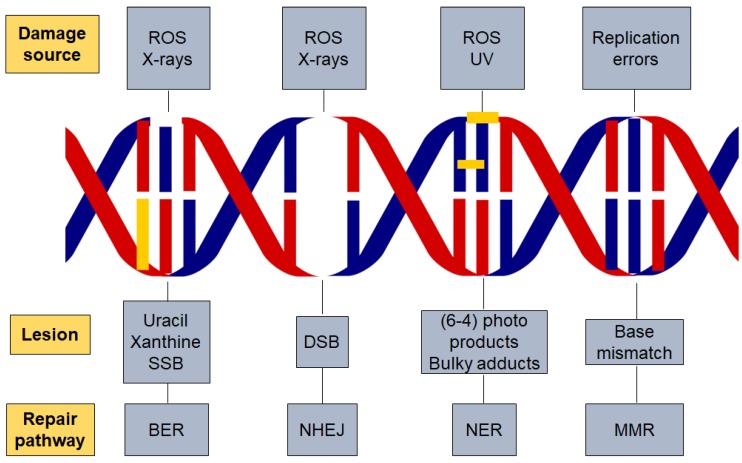
Figure 1
Figure 1
DNA damage and repair pathways. Different factors are responsible for initiating DNA damage such as radiation and reactive oxygen species which cause several types of lesions in the DNA double helix. The repair pathway involved in the process is dependent on the damaging agent and lesion generated. Base excision repair (BER), nucleotide excision repair (NER), non-homologous end joining (NHEJ), reactive oxygen species (ROS) and DNA mismatch repair (MMR).
Figure 2
Figure 2
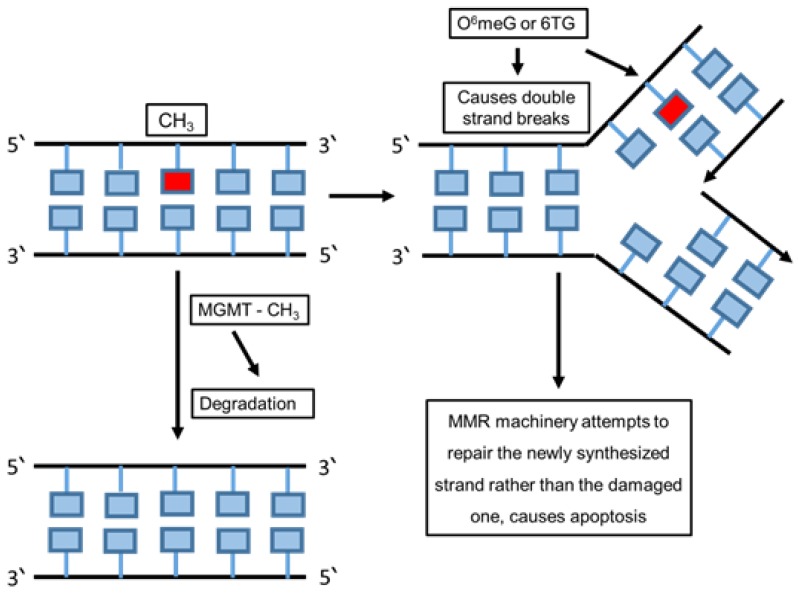
Direct DNA repair pathway. The schematic figure summarizes the direct repair mechanism after the damage on the template DNA strand. This type of repair leads to exclusion of DNA and RNA damage using chemical reversion that does not need a nucleotide template and breakage of the phosphodiester backbone or DNA synthesis.
Figure 3
Figure 3
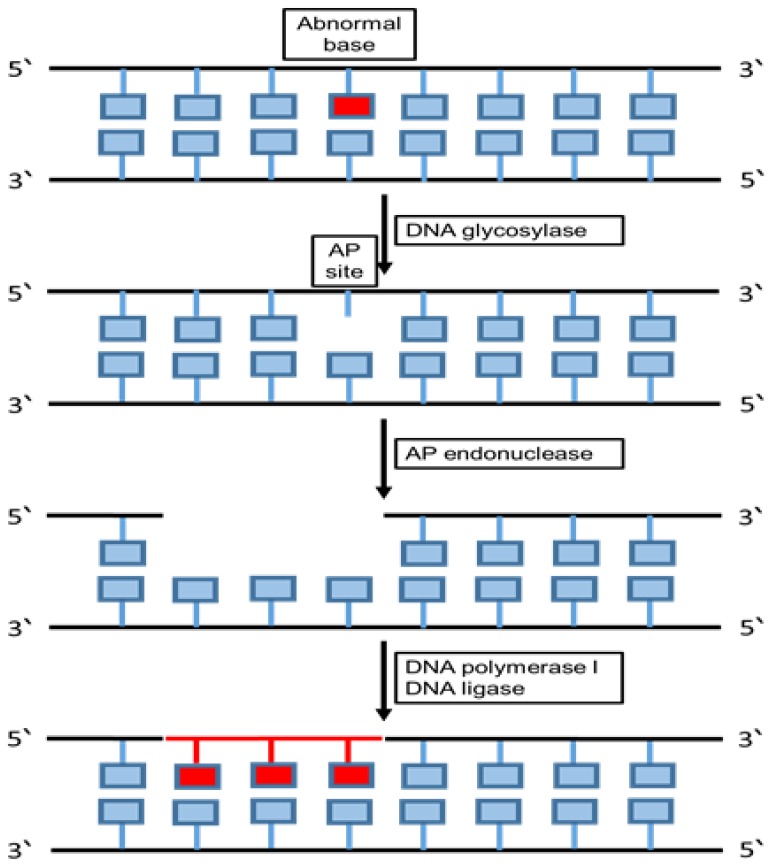
Base excision repair pathway. The schematic diagram summarizes the main components and the mechanism of the base excision repair (BER) pathway. This repairing pathway removes and replaces the faulty DNA segment with a new segment through allowing the cells to eliminate part of a damaged DNA strand and substitute it through DNA synthesis using the undamaged strand as a template.
Figure 4
Figure 4
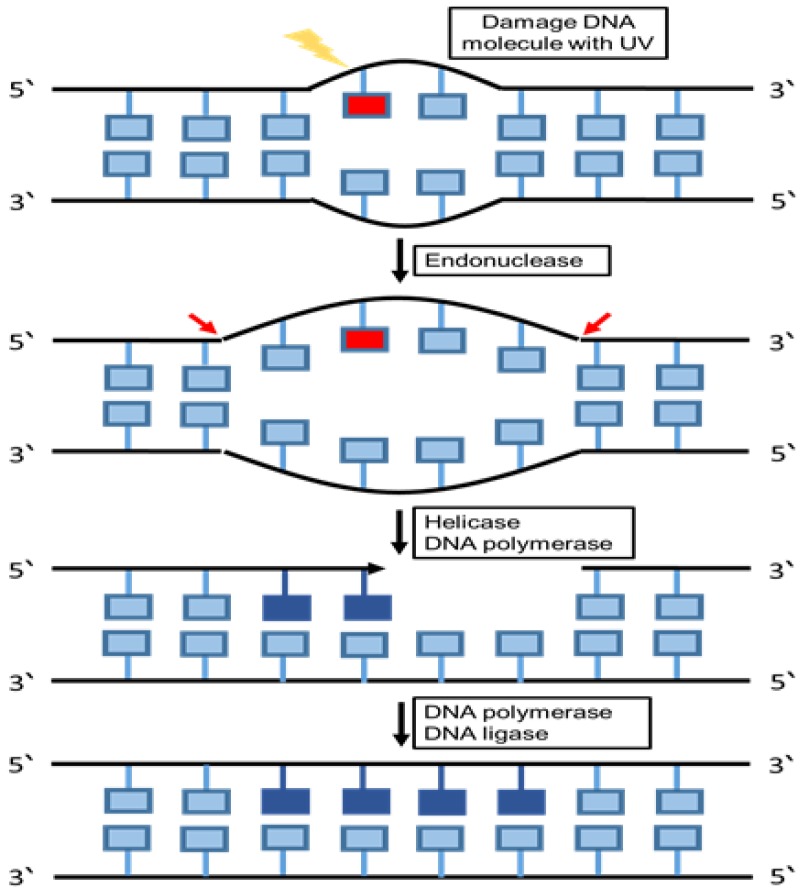
Nucleotide excision repair pathway. The schematic diagram summarizes the main components and the mechanism of the nucleotide excision repair pathway. In this repairing pathway the damaged bases are cut out within a sequence of nucleotides, and replaced with DNA as directed by the undamaged template strand. The nucleotides modified by bulky chemical adducts and pyrimidine dimers formed by UV radiation were removed in this repair system.
Figure 5
Figure 5
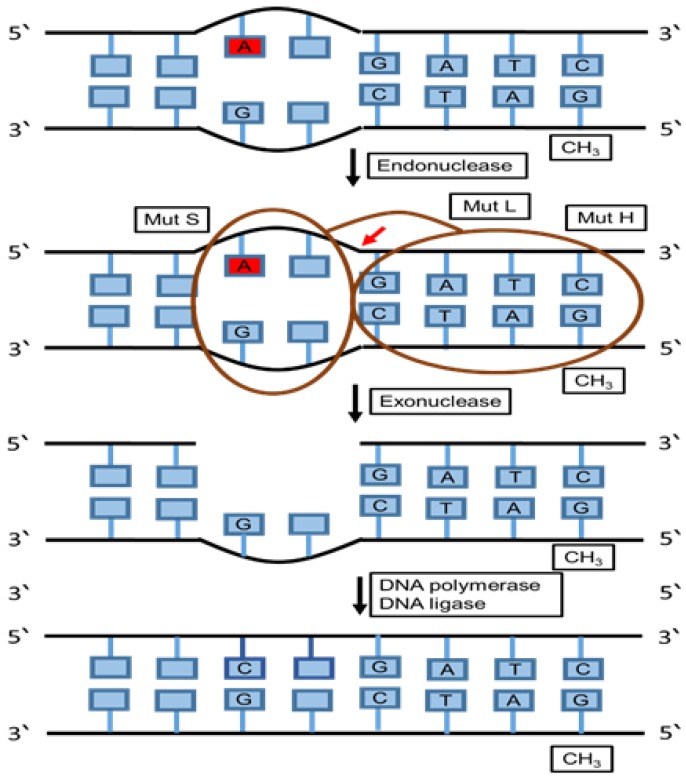
Mismatch repair (MMR) pathway. The schematic diagram summarizes the main components and the mechanism of the mismatch repair pathway. This repairing pathway removes and replaces mispaired bases that were not fixed during proofreading using a group of proteins that recognizes and binds to the mispaired base. Then, other protein complexes chop off the DNA near the mismatch, which is followed by cutting of the incorrect nucleotide and surrounding patches of DNA using specific enzymes in order to be able to replace the missing section with the correct nucleotides.
Figure 6
Figure 6
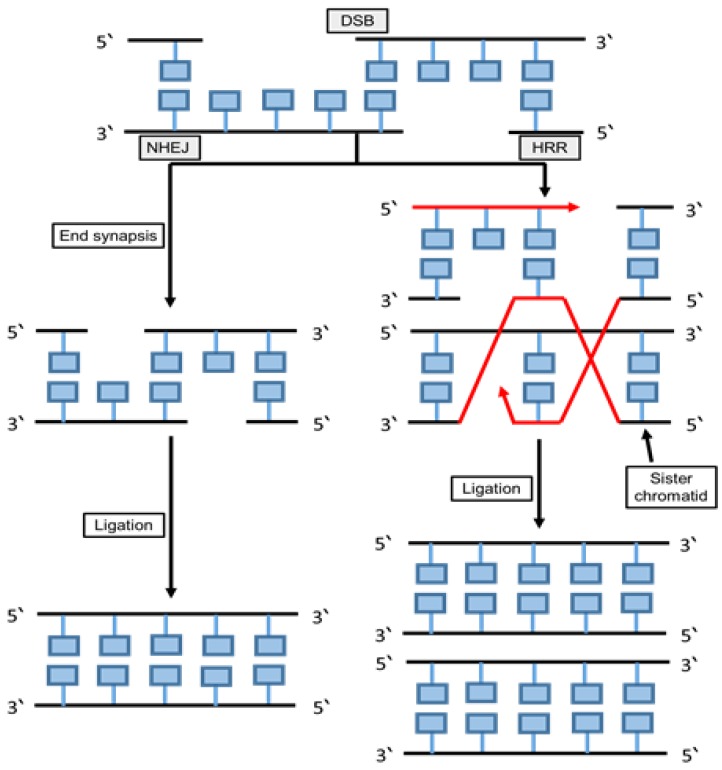
Non-homologous end joining and homologous recombination repair. The schematic diagram summarizes the main components and the mechanisms of the non-homologous end joining and homologous recombination repair pathways. In NHEJ the break ends are directly ligated without the need for a homologous template, as it typically utilizes short homologous DNA sequences called microhomologies to guide repair. In HRR, nucleotide sequences are replaced with two matching molecules of double-stranded or single-stranded nucleic acids, as this pathway requires a homologous sequence to guide repair.
Figure 7
Figure 7
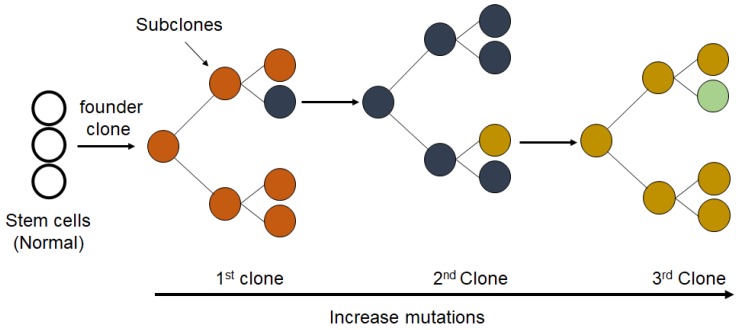
Proposed mechanism for the clonal evolution of cancer. The clonal expansion of a population of mutated cells (cancer cells) from an individual single-cell causes tumor heterogeneity in pathology and molecular profiles with acquired genetic and epigenetic changes.

References

    1. Srinivas U.S., Tan B.W., Vellayappan B., Jeyasekharan A. ROS and the DNA damage response in cancer. Redox Boil. 2019 doi: 10.1016/j.redox.2018.101084. - DOI - PMC - PubMed
    1. Terradas M., Martin M., Tusell L., Genescà A. Genetic activities in micronuclei: Is the DNA entrapped in micronuclei lost for the cell? Mutat. Res. Mutat. Res. 2010 doi: 10.1016/j.mrrev.2010.03.004. - DOI - PubMed
    1. Cannan W., Pederson D.S. Mechanisms and Consequences of Double-Strand DNA Break Formation in Chromatin. J. Cell. Physiol. 2016 doi: 10.1002/jcp.25048. - DOI - PMC - PubMed
    1. Jackson S.P., Bartek J. The DNA-damage response in human biology and disease. Nature. 2009 doi: 10.1038/nature08467. - DOI - PMC - PubMed
    1. Pucci B., Kasten M., Giordano A. Cell Cycle and Apoptosis. Neoplasia. 2000 doi: 10.1038/sj.neo.7900101. - DOI - PMC - PubMed

LinkOut - more resources