


Oculocerebrorenal syndrome of Lowe: Survey of ophthalmic presentations and management
- PMID: 32340490
- PMCID: PMC8177091
- DOI: 10.1177/1120672120920544
Oculocerebrorenal syndrome of Lowe: Survey of ophthalmic presentations and management
Abstract
Background: Lowe syndrome is a rare X-linked disease that is characterized by renal dysfunction, developmental delays, congenital cataracts and glaucoma. Mutations in the oculocerebral renal syndrome of Lowe (OCRL) gene are found in Lowe syndrome patients. Although loss of vision is a major concern for families and physicians who take care of Lowe syndrome children, definitive cause of visual loss is still unclear. Children usually present with bilateral dense cataracts at birth and glaucoma, which occurs in more than half of cases, either concurrently or following cataract surgery.
Materials and methods: A retrospective review was conducted on the prevalence and characteristics of ocular findings among families of patients with Lowe syndrome with 137 uniquely affected individuals.
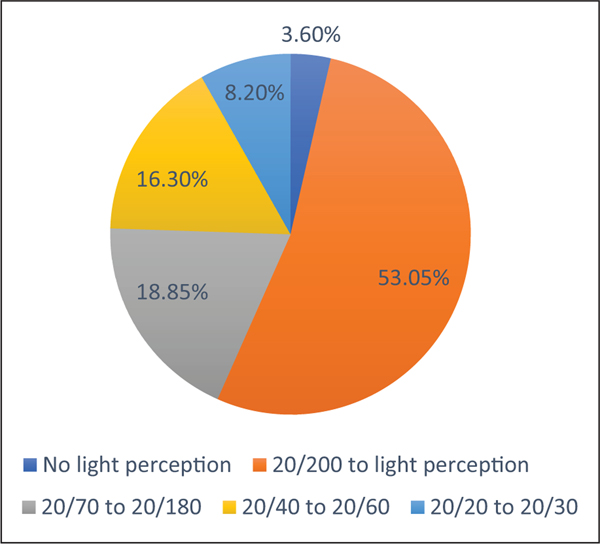
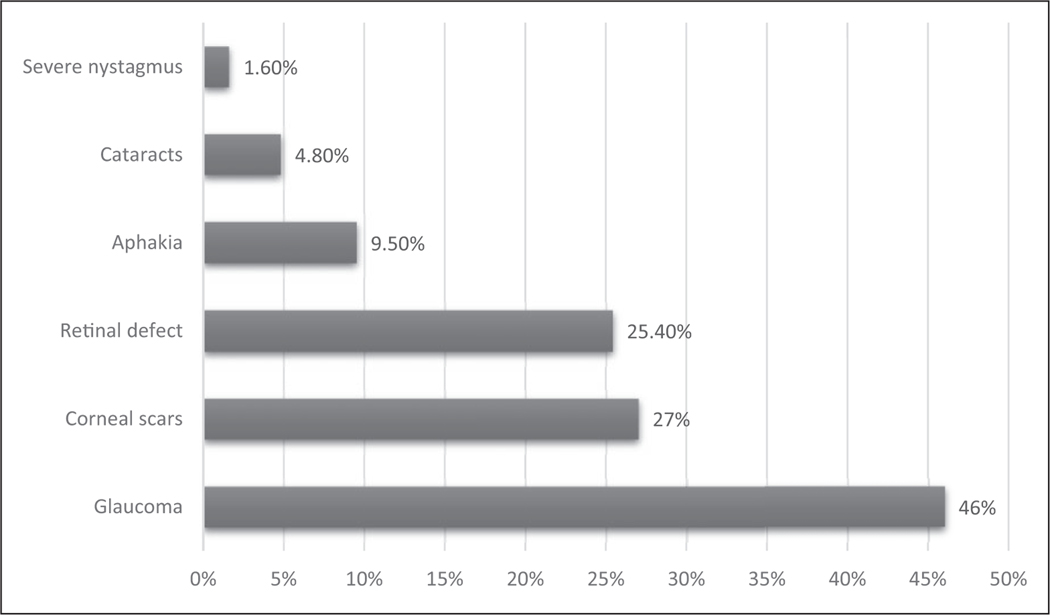
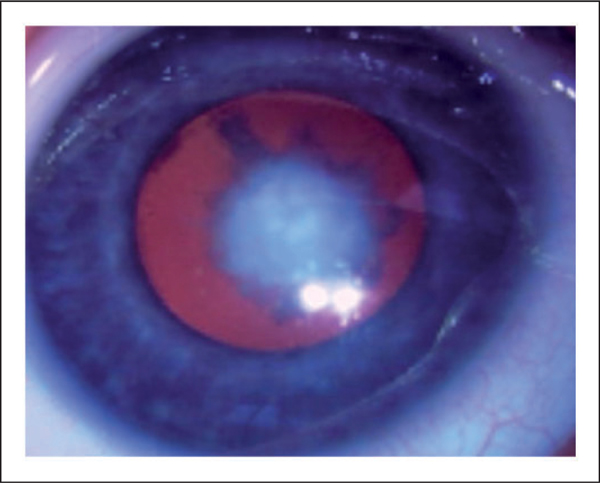
Results: Of 137 patients, all had bilateral congenital cataracts. Nystagmus was reported in 69.3% of cases, glaucoma in 54.7%, strabismus in 35.0%, and corneal scar in 18.2% of patients. Glaucoma was reported as the most common cause of blindness (46%) followed by corneal scars (41%). Glaucoma occurred in 54.7% of patients and affected both eyes in the majority of cases. Of these patients, 55% underwent surgery for glaucoma, while the remaining patients used medications to control their eye pressure. Timolol and latanoprost were the most commonly used medications. Although trabeculectomy and goniotomy are commonly used for pressure management, aqueous tube shunts had the best outcomes.
Conclusion: Ocular manifestations in individuals with Lowe syndrome and carriers with OCRL mutation are reported which may help familiarize clinicians with the ocular manifestations and management of a rare and complex syndrome.
Keywords: Fanconi syndrome; Lowe syndrome; OCRL gene; congenital cataract; congenital glaucoma.
Conflict of interest statement
Declaration of conflicting interests
The author(s) declared no potential conflicts of interest with respect to the research, authorship, and/or publication of this article.
Figures
References
-
- Lowe CU, Terrey M and MacLachlan EA. Organicaciduria, decreased renal ammonia production, hydrophthalmos, and mental retardation; a clinical entity. AMA Am J Dis Child 1952; 83(2): 164–184. - PubMed
-
- Attree O, Olivos IM, Okabe I, et al. The Lowe’s oculocerebrorenal syndrome gene encodes a protein highly homologous to inositol polyphosphate-5-phosphatase. Nature 1992; 358(6383): 239–242. - PubMed
-
- Couser NL, Masood MM, Aylsworth AS, et al. Ocular manifestations in the X-linked intellectual disability syndromes. Ophthalmic Genet 2017; 38(5): 401–412. - PubMed
MeSH terms
Substances
Grants and funding
LinkOut - more resources
Full Text Sources
Medical
